A dog who does well without a crate at home does not necessarily need one for daily life. A travel crate can still be useful for hotel stays, visits, recovery periods, or other situations where a familiar, secure resting space helps. Choose a type that fits your dog and your likely trips, then let your dog get comfortable with it before you leave.
Travel · Tue Sep 15
Crate-free adults who still need a travel crate
If your adult dog is comfortable loose at home, you may only need a crate for trips, lodging, or temporary containment. Choose a portable option for the situations you actually expect—and introduce it before travel.
Decide what the crate needs to do
Start with the settings where you expect to use it. A crate for occasional hotel stays has different priorities from one intended for air travel or frequent car trips.
- Hotels and visits: A portable crate can give your dog a designated place to settle and help prevent unsupervised roaming. Check lodging rules before you go; a crate does not replace supervision or permission to bring a pet.
- Car trips: A crate can keep a dog contained, but an ordinary travel crate should not be assumed to provide crash protection. Follow your vehicle and crate manufacturers’ instructions, and consider a restraint or travel system specifically designed and tested for vehicle use.
- Air travel: Rules vary by airline, route, aircraft, and whether a dog travels in the cabin or as cargo. Confirm current requirements with the airline before buying. A crate that works for a hotel may not meet air-travel requirements.
- Temporary separation: A crate may be useful during a short visit or while a household task is underway, but it should not be used to leave a dog confined for longer than is appropriate for that dog.
If you only need containment at your destination, ask whether the hotel or host has a secure room or another suitable option. A crate is not essential for every trip.
Portable crate for calm dogs and occasional stays
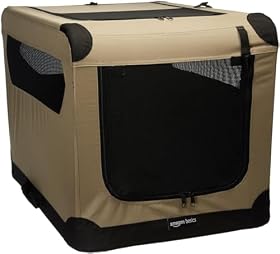 Amazon Basics Portable Folding Soft Dog Crate, Double Door, Collapsible Travel Kennel, Easy to Assemble,…Amazon Basics
$40.14 as of
View on Amazon Amazon Basics Portable Folding Soft Dog Crate, 2-Door, Collapsible Travel Kennel, Top & Front Loading,…Amazon Basics
$39.88 as of
View on Amazon ZOMISIA 36 Inch Collapsible Dog Crate for Large Dogs, Travel Dog Crate GreyZOMISIA
$69.99 as of
View on Amazon
Product prices and availability are accurate as of the date/time indicated and are subject to change. Any price and availability information displayed on Amazon.com at the time of purchase will apply to the purchase of this product.
Choose a style for occasional travel
Soft-sided travel crate
A soft-sided crate is often convenient when low weight and easy storage matter. It may suit a calm dog who is already comfortable in enclosed spaces and will be supervised. It is a poor choice for a dog who chews fabric, claws at doors, or panics when confined. Check the product’s dimensions, setup instructions, ventilation, and stated use before buying.
Folding wire crate
A folding wire crate can work for car trips and stays where you have room to set it up. It is generally more open than a solid-sided kennel, but may be bulkier to carry and store. Check that it locks securely and that its tray and other parts are included or available if you need them.
Hard-sided kennel
A hard-sided kennel can be a practical option when you want a rigid enclosure or need to meet a particular carrier’s requirements. It may be heavier and less compact than a soft crate. Do not assume that any hard-sided kennel is suitable for flying: verify the exact requirements with the airline and kennel manufacturer.
Foldable crate for car trips and lodging
 Collapsible Dog Crate for Large/Medium Dogs - 36" L Foldable Dog Cage No-Tool Assembly, Travel…Gardner Pet
$134.99 as of
View on Amazon Collapsible Dog Crate for Medium/Small Dogs - 28" L Foldable Dog Cage No-Tool Assembly, Travel…Gardner Pet
$89.99 as of
View on Amazon
Product prices and availability are accurate as of the date/time indicated and are subject to change. Any price and availability information displayed on Amazon.com at the time of purchase will apply to the purchase of this product.
Get the size and setup right
The dog should have enough room to stand naturally, turn around, and lie down comfortably. Measure your dog and compare those measurements with the manufacturer’s sizing guidance; size labels are not consistent across brands. For air travel, follow the carrier’s specific sizing and fit rules, which may differ from general home-crate guidance.
Before the trip, set the crate up at home and leave the door open. Add familiar bedding if it is safe for your dog, and let the dog investigate at their own pace. Offer meals, treats, or a favorite chew near or inside the crate, then practice brief periods with the door closed. Build up gradually rather than making the first experience a long trip or overnight stay.
Check that the crate is stable, its fasteners work, and there are no sharp edges or gaps that could catch a collar or paw. Remove a collar or harness if the crate manufacturer advises doing so to reduce snagging risk. Never leave a dog unattended in a crate in a hot vehicle.
Rigid kennel for travel requirements that call for one
 SportPet Airline Compliant LARGE 31.5" Travel Dog Kennel-Durable Plastic Airline Pet Carrier w/ Removable Wheels…SportPet Designs
$105.99 as of
View on Amazon ZOMISIA 36" L Collapsible Dog Crate for Dogs, Heavy Duty Dog Kennel IndoorZOMISIA
$134.99 as of
View on Amazon- Collapsible Dog Crate for Medium/Small Dogs - 28" L Foldable Dog Cage No-Tool Assembly, Travel…Gardner Pet
$89.99 as of
View on Amazon
Product prices and availability are accurate as of the date/time indicated and are subject to change. Any price and availability information displayed on Amazon.com at the time of purchase will apply to the purchase of this product.
When a travel crate is not the right fit
Skip a soft crate if your dog is likely to escape, chew through it, or injure themselves trying to get out. If your dog shows intense distress in confinement, do not try to solve it by buying a sturdier crate alone; ask your veterinarian or a qualified behavior professional for guidance. For a trip that requires air transport, confirm the rules before purchasing equipment or making travel plans.
For a calm adult dog who only needs occasional containment, a portable crate can be a useful travel item without becoming part of the dog’s everyday routine. If the crate is damaged, no longer fits, or cannot meet the requirements of the trip, replace it or choose another suitable arrangement rather than relying on an improvised repair.
FAQ
Does an adult dog need to be crate-trained before using a travel crate?
It helps to introduce the crate gradually before the trip, even if the dog is comfortable at home without one. Practice going in voluntarily and spending short, calm periods inside so travel is not the dog’s first experience.
Can I use a soft-sided dog crate in the car?
You can use one only if it is appropriate for your dog and the way it will be secured, but do not assume it offers crash protection. Follow the vehicle and crate manufacturers’ guidance and consider a vehicle restraint system designed for travel safety.
What size travel crate should I get?
Measure your dog and check the manufacturer’s sizing chart. The dog should generally be able to stand, turn around, and lie down comfortably, but airline and other travel requirements may have different specific rules.
Is a travel crate required for flying with a dog?
Requirements depend on the airline, route, and whether the dog travels in the cabin or as cargo. Check the airline’s current rules and confirm that the specific crate meets them before you buy or travel.