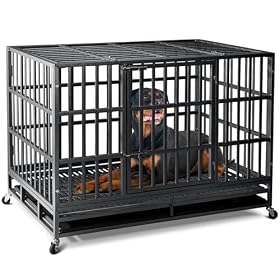
Wheels can make a bulky crate easier to move for cleaning or rearranging. They’re less useful if the crate needs to stay put, the floor is uneven, or the casters don’t lock securely.
Wheels on a large crate: useful or annoying
Wheels are useful on a large dog crate if you regularly move it across a smooth, level floor—for cleaning, changing the room layout, or reaching behind it. They can be annoying if the crate should stay firmly in one spot, the wheels roll or wobble, or the crate needs to cross rugs, thresholds, or uneven flooring. For most homes, stable locking wheels matter more than wheels alone.
When wheels make a large crate easier
A large crate can be awkward to lift and slide, especially when it has a heavy frame or a floor tray. Casters can make occasional repositioning easier and may help protect hard floors from dragging, provided the wheels are suitable for the flooring.
Wheels are most helpful when:
You need to move the empty crate to clean underneath it.
The crate is on a smooth, level surface.
The wheel locks are easy to reach and hold the crate steady.
You have checked that the crate can clear doorways and nearby furniture while rolling.
Even with wheels, moving an empty crate is usually simpler and safer than rolling it with a dog inside. If you need to relocate the crate, take your dog out first.
When wheels become a nuisance
Wheels add height and another point of movement. A crate may feel less planted if its casters swivel freely, don’t lock, or sit unevenly. A dog that leans against or pushes the crate can make that movement more noticeable.
Wheels can also catch on rugs and floor transitions. On carpet, a crate with wheels may be harder to position than one with fixed feet. If the crate will remain in one place, wheels may add little benefit while making it easier to shift accidentally.
Product prices and availability are accurate as of the date/time indicated and are subject to change. Any price and availability information displayed on Amazon.com at the time of purchase will apply to the purchase of this product.
What to check before choosing a wheeled crate
Confirm the wheels lock securely
Check whether the wheels have brakes and whether the locks are accessible once the crate is in its intended position. Look for the manufacturer’s guidance on locking the casters and using the crate on different floors. A lock is useful only if it keeps the crate from rolling during ordinary use.
Check the crate’s stability and fit
Compare the crate’s overall height with nearby furniture, doorways, and any space where you plan to park it. Account for the added height of the wheels, and make sure the crate can sit level. Follow the manufacturer’s stated limits and setup instructions; don’t assume that casters intended for a different crate will fit or support it safely.
Consider your floor and routine
For a crate that moves often on hard flooring, wheels may save effort. For one that stays in a fixed spot, fixed feet or a stable base may be less troublesome. If you want the option to move it only occasionally, check whether the manufacturer offers compatible removable casters or another approved setup.
Product prices and availability are accurate as of the date/time indicated and are subject to change. Any price and availability information displayed on Amazon.com at the time of purchase will apply to the purchase of this product.
Should you add wheels to a crate you already own?
Only use wheels that the crate’s manufacturer identifies as compatible with that crate. The frame, mounting points, and wheel capacity all matter. Avoid improvised attachments or drilling into the crate: a poorly secured wheel can make the crate unstable or create a hazard.
If compatible wheels are available, follow the installation instructions and check that every wheel is firmly attached and locks as intended before putting the crate back into use. If the crate rocks, rolls when locked, or has damaged mounting points, stop using the wheels and contact the manufacturer about the right replacement part or setup.
Bottom line
Choose wheels when you have a clear reason to move the crate and a smooth, level route. Choose stability over convenience if the crate will stay put, your dog pushes against it, or the floor is uneven. A large crate should feel secure in its everyday position, with or without wheels.
FAQ
Are wheels on a dog crate safe?
They can be, if the wheels are designed for that crate, securely attached, and locked when the crate is in use. Follow the manufacturer’s instructions and check that the crate remains stable on your floor.
Should I move a dog in a wheeled crate?
In general, take the dog out before moving the crate. Rolling it with a dog inside can cause shifting or instability, especially over thresholds or uneven flooring.
Can I put aftermarket casters on a large dog crate?
Use aftermarket casters only if the crate manufacturer confirms they are compatible. The mounting method and support capacity matter, and improvised modifications can make the crate unstable.