Buying a second travel crate is usually cheaper upfront than replacing an everyday crate with a larger dual-use model. However, the lower purchase price does not always mean the lower total cost. The better choice depends on whether you need two crates at the same time, how often you travel, how much space you have, and whether one crate can meet your dog's safety and comfort needs in both locations.
Travel · Mon Sep 07
Cost of Buying a Second Travel Crate vs. One Dual-Use Crate
A second travel crate may cost less upfront, but one dual-use crate can be cheaper when it safely handles both everyday living and travel. Compare the full cost, setup, and convenience before deciding.
The basic cost comparison
Use this simple comparison:
- Second-crate setup: existing home crate + travel crate + any extra pad, cover, tray, or storage costs
- Dual-use setup: one crate suitable for home and travel + any accessories needed to adapt it between uses
A second crate is often the practical choice when the home crate stays in one location and the travel crate lives in your vehicle, at a boarding facility, or in another home. A dual-use crate can save money when travel is occasional and moving the crate is easy.
Do not compare only the listed crate prices. Include the cost of accessories, transportation, storage, and the likelihood that you will eventually buy another crate anyway.
Dual-use crate for home and travel
 ZOMISIA 36 Inch Collapsible Dog Crate for Large Dogs, Travel Dog Crate GreyZOMISIA
$69.99 as of
View on Amazon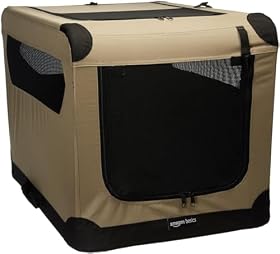 Amazon Basics Portable Folding Soft Dog Crate, Double Door, Collapsible Travel Kennel, Easy to Assemble,…Amazon Basics
$47.22 as of
View on Amazon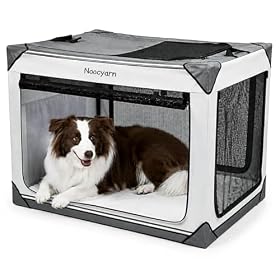 Noocyarn Collapsible Soft Dog Crate 36 Inch, Portable Travel Pet Crate for Large Dogs with…Noocyarn
$53.09 as of
View on Amazon
Product prices and availability are accurate as of the date/time indicated and are subject to change. Any price and availability information displayed on Amazon.com at the time of purchase will apply to the purchase of this product.
When a second travel crate usually costs less
A second crate may have the lower overall cost in these situations:
You already own a suitable home crate
If your current crate is comfortable, correctly sized, and in good condition, buying a smaller travel-focused crate may be less expensive than replacing it with a more versatile model. You also avoid disrupting your dog's established sleeping area.
You travel often or leave the crate in place
A dedicated travel crate can stay in a car, at a vacation home, or with a regular pet sitter. That eliminates repeated lifting and reduces the chance of forgetting the crate before a trip.
Your dog's home and travel needs are different
A sturdy wire crate may work well for home ventilation and visibility, while a lighter plastic or fabric-sided option may be easier to transport. Trying to make one crate do both jobs can mean compromising on weight, portability, or everyday convenience.
More than one person needs the crate
Two crates may be worthwhile if your dog spends time at two homes or if household members travel separately. In that case, the second crate provides ongoing convenience rather than serving as an occasional duplicate.
Dedicated travel crate
 Snagle Paw Portable Dog Crate for Car Travel,Metal Frame Pet Crate,Pet Carrier for Car Back…Snagle Paw
$129.99 as of
View on Amazon Snagle Paw Portable Dog Crate for Car Travel, Collapsible Large Dog Travel Crate with Metal…Snagle Paw
$129.99 as of
View on Amazon PetSafe Happy Ride Collapsible Travel Dog CratePetSafe
$159.99 as of
View on Amazon
Product prices and availability are accurate as of the date/time indicated and are subject to change. Any price and availability information displayed on Amazon.com at the time of purchase will apply to the purchase of this product.
When one dual-use crate can be cheaper
One crate may have the lower total cost when:
- Travel is infrequent.
- You have enough time and space to move the crate between home and the vehicle.
- The crate is light enough for you to carry safely.
- Its dimensions fit your dog comfortably without being unnecessarily oversized.
- It meets the travel method's requirements, such as airline, vehicle, or lodging rules.
- You do not need a crate permanently set up in two places.
A dual-use crate is most economical when it truly works in both settings. A crate that is technically portable but too heavy, awkward, or fragile for regular travel may lead to a second purchase later.
Crate divider for a growing dog
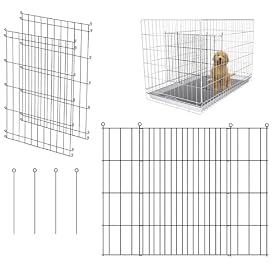 Dog Crate Divider Panel 2-Pack, 20.47" H x 15.74-29.13" W, Glossy BlackMENGSTER
$35.99 as of
View on Amazon Thick Adjustable Dog Crate Divider for 36" Crate, 24"x22.5"Santiway
$17.99 as of
View on Amazon Lonepetu Dog Crate Divider Panel 2-Pack, 20.5" H Kennel DividerLonepetu
$39.99 as of
View on Amazon
Product prices and availability are accurate as of the date/time indicated and are subject to change. Any price and availability information displayed on Amazon.com at the time of purchase will apply to the purchase of this product.
Costs beyond the crate itself
Accessories
A second crate may require another pad, cover, tray, or divider. Some accessories can be moved between crates, but others are sized specifically for one crate. Check whether the additional accessories are optional or necessary for comfort, cleanliness, and safe use.
A dual-use crate may also need travel accessories, such as a washable pad, tie-down solution approved for the crate and vehicle, or a protective cover. Follow the crate and vehicle manufacturer's instructions for securing it. Never rely on an improvised restraint if the crate could move during braking.
Storage
Two crates take more floor or closet space. Measure the folded or assembled dimensions before buying, especially if the travel crate will be stored in a vehicle. A crate that cannot be stored conveniently may be left in an unsafe location or become a daily obstacle.
Moving and setup time
The financial difference may be modest compared with the daily inconvenience of repeatedly collapsing, carrying, and rebuilding one crate. Consider how often you travel and whether another person can help move it. A second crate can pay for itself in convenience even when it costs more initially.
Replacement risk
A crate used in two locations receives more handling and may experience more wear on hinges, doors, latches, wheels, or folding joints. A dedicated travel crate can keep travel wear separate from the crate your dog uses every day.
On the other hand, buying two inexpensive crates may cost more over time if either one has poor door hardware, weak seams, difficult-to-clean surfaces, or a tray that is hard to replace. Compare construction and available replacement parts, not just the initial price.
Travel crate pad
 MidWest Homes for Pets QuietTime XXS Dog Bed - Gray Faux Fur Bolster, Ultra-Soft and…MidWest Homes for Pets
$11.33 as of
View on Amazon
Product prices and availability are accurate as of the date/time indicated and are subject to change. Any price and availability information displayed on Amazon.com at the time of purchase will apply to the purchase of this product.
Compare the sizes before comparing prices
A dual-use crate must be large enough for your dog to stand, turn around, lie down, and change position comfortably, while still being practical to transport. An oversized crate can take up unnecessary vehicle space and may be difficult to secure.
Measure your dog according to the crate manufacturer's sizing instructions. Account for growth if your dog is still young. A crate with a divider can be financially useful because it may accommodate growth without requiring an immediate replacement, provided the finished space is adjusted correctly.
Do not choose a smaller travel crate simply to reduce cost. A travel crate still needs to provide adequate room and ventilation, and it must be appropriate for the mode of transportation.
A practical break-even method
To compare your options, make two lists:
Option A: second travel crate
Add:
- The current cost of a suitable travel crate.
- A second pad, cover, tray, or divider if needed.
- Delivery or transportation costs.
- Storage equipment or space-related costs, if applicable.
- Any likely replacement cost if the crate is intended for frequent use.
Option B: dual-use crate
Add:
- The cost of the one crate.
- A travel pad, cover, or other required accessory.
- Any approved method of securing it during transport.
- The value of your time and effort to move it between locations.
- The cost of a future replacement if the crate is likely to wear quickly from repeated moving.
The second crate is financially favorable when the cost of the dual-use option and its travel accessories exceeds the second-crate setup. The dual-use option is favorable when its purchase price and accessories remain lower and moving it is manageable.
Which choice makes sense for common households?
Occasional road trips
One dual-use crate is often the simplest low-cost option if it is easy to transport and can be secured safely. Keep a washable travel pad with it so the setup does not require buying or moving many accessories.
Frequent weekend travel
A second travel crate is more likely to justify its cost. Leaving it at the destination or in the vehicle saves setup time and reduces wear on the home crate.
Two-household arrangements
Buy a second crate if your dog regularly stays in another home. The convenience and consistent routine are usually more valuable than repeatedly transporting one crate.
Puppies still growing
A crate with a properly fitted divider may reduce replacement costs. Make sure the crate is suitable for travel in its adjusted configuration and that the divider cannot create a hazard.
Limited storage
A single foldable or otherwise portable crate may be the better financial and space-saving choice, but verify its assembled size, folded size, durability, and travel suitability before buying.
Bottom line
Choose a second travel crate when the crate will remain in another location, you travel regularly, or your home and travel needs call for different designs. Choose one dual-use crate when travel is occasional, storage is limited, and you can move and secure the crate without difficulty.
The cheapest decision is not necessarily the crate with the lowest sticker price. Compare the crate, accessories, storage, transportation, durability, and the chance that you will buy a second crate later. If one crate cannot safely and comfortably serve both purposes, buying two appropriate crates is the more sensible long-term cost.
FAQ
Is it cheaper to buy a second travel crate or one larger dual-use crate?
A second travel crate is often cheaper upfront, especially when you already own a suitable home crate. One dual-use crate can cost less overall when travel is infrequent and you do not need a crate permanently set up in two locations.
Can one dog crate be used for both home and travel?
Yes, if the crate is correctly sized, easy to transport, durable enough for repeated moving, and appropriate for the travel method. It must also be secured according to the crate and vehicle manufacturer's instructions.
What extra costs should I include when comparing two crates?
Include a second pad, cover, tray, divider, storage space, delivery, transportation, and possible replacement costs. Also consider whether repeatedly moving one crate creates enough inconvenience to justify a second one.
Is a crate with a divider a good way to reduce costs?
A properly fitted divider can allow a crate to accommodate a growing dog and may delay the need for a replacement. The crate must still be suitable for travel, and the divider must be installed securely and adjusted as the dog grows.