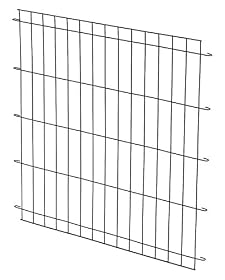
Furniture-style crates blend into living spaces, while wire crates usually offer better ventilation, visibility, portability, and flexibility. The better choice depends on your dog’s behavior, room setup, and how often you move or clean the crate.
A wire crate is usually the better all-purpose choice for ventilation, visibility, cleaning, portability, and puppy training. A furniture-style crate makes more sense when the crate will stay in a main living area and you want it to resemble a side table or other home furniture. The right choice depends less on appearance than on your dog’s chewing habits, comfort with visual stimulation, and how often the crate needs to move.
Quick comparison
Factor
Furniture-style crate
Wire crate
Appearance
Designed to blend with home décor
Clearly looks like pet equipment
Ventilation
Varies by design; enclosed sides may reduce airflow
Strong airflow through the wire sides and top
Visibility
Often more limited
High visibility in every direction
Portability
Usually heavier and less convenient to move
Easier to fold, carry, and relocate
Cleaning
Surfaces may be less accessible; materials vary
Removable trays and open construction are generally easy to clean
Puppy chewing
Wood or composite parts may be vulnerable
Metal is generally more resistant, but not chew-proof
Noise
Solid panels may reduce some visual and sound exposure
Can rattle or amplify movement and tags
Long-term flexibility
Often less adaptable to changing spaces
Commonly works with covers, dividers, and replacement trays
Best fit
Calm dogs and permanent living-room setups
Puppies, travel, training, and practical everyday use
Choose a furniture-style crate if appearance and placement matter most
Furniture-style crates are intended to occupy a visible spot in the home. Their panels, finishes, and table-like tops can make them less conspicuous than a traditional wire crate.
They can work well when:
The crate will stay in one location.
Your dog is calm and does not chew or claw at the enclosure.
You want a more coordinated look in a living room, bedroom, or office.
Your dog does better with reduced visual stimulation.
You do not need to carry the crate frequently.
Before buying, inspect how much of the crate is actually open. Some decorative designs have generous ventilation, while others use narrower openings or more enclosed panels. A crate should have enough airflow for the room and the dog, and it should never be placed where heat can build up.
Important limitations of furniture-style crates
Many furniture-style crates are less forgiving of rough use. A dog that scratches doors, chews edges, or pushes against panels may damage the finish or create sharp splinters and loose pieces. Decorative materials also vary, so confirm that the design is intended for dogs and that the door hardware is secure.
A furniture-style crate may also be a poor choice if you regularly:
Move the crate between rooms.
Take it in the car.
Travel by air or other transport.
Wash out muddy bedding or accidents.
Need to change the crate’s size with a divider.
Do not use a furniture-style crate as a substitute for a properly secured travel crate unless the manufacturer specifically says it is suitable for that use.
Product prices and availability are accurate as of the date/time indicated and are subject to change. Any price and availability information displayed on Amazon.com at the time of purchase will apply to the purchase of this product.
Choose a wire crate if flexibility and function come first
Wire crates are usually the more practical choice for puppies, newly adopted dogs, multi-room homes, and owners who want one crate to serve several purposes. The open sides provide visibility and airflow, and many designs can be folded or moved more easily than furniture-style alternatives.
A wire crate is especially useful when you need to:
Bring the crate on road trips, subject to appropriate vehicle safety practices.
Open visibility is not ideal for every dog. Some dogs settle better when they cannot watch every person, pet, or activity in the room. A properly fitted cover can reduce stimulation, but it should not block ventilation or allow the dog to pull fabric through the wire.
Common drawbacks of wire crates
Wire crates can look industrial in a carefully furnished room. They may also rattle when a dog shifts position, and the open design can expose a dog to more household activity. A dog that is anxious, highly reactive, or easily overstimulated may need thoughtful placement and partial visual coverage.
Wire is also not automatically escape-proof. Determined dogs can bend weak components, manipulate latches, or injure themselves while trying to get out. If your dog has a history of panic, escape attempts, or crate-related injury, consult a qualified trainer or veterinarian before relying on confinement.
Product prices and availability are accurate as of the date/time indicated and are subject to change. Any price and availability information displayed on Amazon.com at the time of purchase will apply to the purchase of this product.
Which crate is better for puppies?
A wire crate is usually the safer starting point for a puppy because it is easier to inspect, clean, move, and resize. A divider can limit the usable area while allowing the crate to accommodate growth. The divider should leave enough room for the puppy to stand, turn around, lie down, and stretch comfortably, but not so much extra space that one end becomes a bathroom.
A furniture-style crate can work for a puppy only if the puppy is not chewing or trying to escape and the design provides adequate ventilation and a secure door. It is usually less attractive as a first crate when frequent accidents or chewing are expected.
Product prices and availability are accurate as of the date/time indicated and are subject to change. Any price and availability information displayed on Amazon.com at the time of purchase will apply to the purchase of this product.
Which crate is better for an adult dog?
Either style can work for a calm adult dog. Choose based on the dog’s behavior and the crate’s location:
Pick a furniture-style crate for a settled dog that will use a permanent crate in a shared living area.
Pick a wire crate if you value easy cleaning, portability, ventilation, or future flexibility.
Consider a covered wire crate if your dog needs a quieter visual environment but you still want the practical benefits of wire construction.
The dog’s comfort matters more than the crate’s appearance. A decorative crate that causes overheating, distress, or escape attempts is not a better choice for the home.
Consider size before style
Measure your dog rather than choosing by breed label alone. The crate should allow the dog to stand without crouching, turn around normally, lie down comfortably, and stretch out. Avoid buying a crate so large that it encourages a puppy to eliminate in one end, unless you are using a correctly positioned divider.
Check the manufacturer’s size guidance and compare it with your dog’s actual measurements. Pay attention to interior dimensions, not only the crate’s outside dimensions. A thick door, tray, divider, or internal frame can reduce usable space.
Also measure the intended location. Furniture-style crates can have wider or deeper outer dimensions than expected, while wire crates need enough clearance for the door to open fully and for you to remove the tray.
Safety and setup checks for either style
Whichever style you choose:
Place the crate away from direct heat, strong drafts, and unstable furniture.
Check that the door latches securely and cannot be opened accidentally.
Inspect for sharp edges, loose fasteners, damaged wire, splintering, or peeling material.
Use a pad that fits without creating an easy chewing target or blocking the door.
Introduce the crate gradually with positive training rather than forcing a distressed dog inside.
Do not leave a dog confined for longer than is appropriate for its age, health, training, and individual needs.
Stop using the crate and seek professional guidance if the dog is injuring itself, repeatedly panicking, or attempting dangerous escapes.
Bottom line
Choose a wire crate when you want the most practical combination of ventilation, visibility, cleaning access, portability, and puppy-friendly flexibility. Choose a furniture-style crate when your dog is calm, the crate will remain in one location, and integrating it into the room is a high priority.
If you are unsure, start with a properly sized wire crate and add a safe cover or attractive placement. It is generally easier to make a functional wire crate fit the room than to make a decorative crate handle heavy chewing, frequent movement, or messy puppy training.
FAQ
Is a furniture-style crate better than a wire crate?
Neither is universally better. Furniture-style crates are better for appearance and permanent indoor placement, while wire crates are usually better for ventilation, cleaning, portability, puppy training, and flexibility.
Are furniture-style dog crates safe?
They can be safe when they provide adequate ventilation, have secure doors, and are made from durable pet-appropriate materials. They are a poor fit for dogs that chew, claw, panic, or repeatedly try to escape.
Do dogs prefer wire crates or furniture-style crates?
Dogs do not all prefer the same style. Some settle better with the open visibility of wire, while others relax more with reduced visual stimulation. Placement, training, size, temperature, and the individual dog often matter more than the crate’s appearance.
Can a wire crate be used as furniture?
A wire crate can be made less visually prominent with suitable placement or a breathable crate cover. Keep the cover from blocking ventilation or allowing the dog to pull fabric through the wire.
Which crate is easiest to clean?
Wire crates are generally easier to clean because they commonly have removable trays and open construction. Always follow the manufacturer’s cleaning instructions and inspect any crate for damage after cleaning.