The best crate cover balances privacy and airflow. Look for breathable fabric, adjustable coverage, secure fasteners, and a fit that leaves vents and doors usable.
A crate cover can make a dog’s space feel calmer and more private, but covering every side with heavy fabric may restrict airflow and trap heat. Choose a cover made from breathable material with adjustable panels, and leave at least one well-ventilated side open whenever your dog is inside. The cover should fit the crate without touching your dog, blocking the door, or covering built-in vents.
What to look for in an airflow-friendly crate cover
Breathable fabric
Look for lightweight, woven fabric rather than thick, tightly layered, or insulated material. Breathability helps heat and stale air escape, especially when the crate is in a warm room or near a sunny window.
A breathable cover does not guarantee safe temperatures. Check the crate area regularly, and do not rely on a cover to make an unsuitable location comfortable.
Adjustable panels
The most useful covers have roll-up or removable panels on the front and sides. This lets you adjust privacy without fully enclosing the crate.
A practical setup may be:
Front panel open while your dog is settling or resting
One side panel open to encourage cross-ventilation
Top and back covered if those areas need more privacy
More of the cover removed in warm weather
Avoid covers that only provide a fully closed or fully open choice if your dog needs partial coverage.
Airflow around the crate
A cover should not press tightly against every ventilation opening. Leave room around the crate’s sides where possible, and do not place the covered crate against a wall, heater, radiator, or direct sunlight.
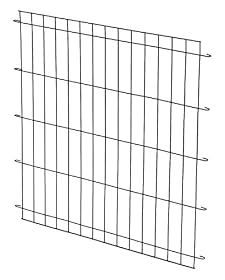
Wire crates usually provide ventilation through their sides and top. If a cover hangs over those areas, make sure the fabric does not collapse against the wire and seal the openings.
Secure attachment
Choose a cover with straps, hook-and-loop fasteners, ties, or another method that keeps it from slipping into the crate. Loose fabric can be pulled through the bars and may become a chewing or entanglement hazard.
Inspect the cover before use if your dog is likely to chew, paw, or pull at it. A cover is not a safe choice if your dog can easily drag it inside or destroy it.
How to choose the right size
Measure the crate’s length, width, and height rather than choosing only by your dog’s weight. Compare those measurements with the cover’s sizing information.
The cover should:
Reach the intended sides without dragging on the floor
Leave the crate door fully accessible
Avoid bunching inside the crate
Allow ventilation openings to remain usable
Fit over accessories such as a divider only if the manufacturer indicates it will
A cover made for a wire crate may not fit a plastic kennel or furniture-style crate correctly. Check the cover’s compatibility with the crate design before ordering.
Product prices and availability are accurate as of the date/time indicated and are subject to change. Any price and availability information displayed on Amazon.com at the time of purchase will apply to the purchase of this product.
How much of the crate should be covered?
There is no single correct coverage level. Many dogs prefer a partially covered crate that blocks visual distractions while maintaining an open front or side. Others may become warm, anxious, or more likely to chew when the crate is enclosed.
Start with limited coverage and observe your dog. Panting, restlessness, repeatedly shifting position, pushing at the fabric, or trying to pull the cover inside are reasons to remove or reposition it. A dog that is overheating, struggling to breathe, or showing signs of distress needs immediate attention, not a different cover setting.
Never use a cover as a substitute for crate training, adequate exercise, or a properly sized crate. The crate should remain large enough for the dog to stand, turn around, lie down, and change position comfortably, as appropriate for the dog and the crate-training plan.
Features that affect everyday use
Washable construction
Dogs can transfer hair, dirt, drool, and odors to a cover. A machine-washable cover is usually easier to maintain than one that can only be spot-cleaned. Follow the care instructions, and keep a replacement available if the crate is used daily.
Door access
Check whether the front panel rolls up completely and stays secured. A panel that falls over the doorway can interfere with entry and exit. If the crate has more than one door, look for a cover designed to accommodate both openings or keep the second door uncovered.
Light control
Some covers are intended mainly to reduce visual stimulation, while others create a much darker space. Darker is not automatically better. A dog that becomes nervous in enclosed spaces may do better with a lighter, partially open cover.
Noise and durability
Fabric that rustles loudly may disturb a sensitive dog. Reinforced seams and durable fasteners can help with regular use, but no cover is chew-proof. Keep the cover outside the dog’s reach if chewing is a concern.
Safe setup checklist
Before leaving your dog in a covered crate, check the following:
The room is at a comfortable temperature and away from direct heat or sun.
At least one major ventilation area remains open.
The door can open and close without catching the fabric.
No loose straps, ties, or panels hang inside the crate.
Your dog cannot pull the cover through the bars.
The cover does not obstruct a divider, tray, or latch.
Your dog has already tolerated the setup while supervised.
Introduce the cover gradually. Drape it over one section for a short period, reward calm behavior, and remove it if your dog becomes distressed or starts chewing. Do not cover the crate during unsupervised use until you know the dog will not pull the fabric inside.
When a crate cover is not the right solution
A cover may not help if the problem is excessive heat, poor crate placement, separation distress, or a crate that is too small. Improve the room setup and address the underlying issue first.
If the crate is in a hot, poorly ventilated, or crowded location, move it rather than trying to solve the problem with a more breathable cover. For persistent anxiety, consult a qualified veterinarian or certified behavior professional. Follow the crate and cover manufacturer’s instructions, particularly for unattended use.
Bottom line
Choose a lightweight, breathable dog crate cover with adjustable panels and secure attachment points. For most homes, partial coverage with an open front or side is a sensible starting point. Prioritize airflow, door access, and your dog’s behavior over complete darkness or full enclosure.
FAQ
Can you completely cover a dog crate?
It is usually safer to leave at least one side or the front open for ventilation, especially in warm conditions. If you use fuller coverage, monitor temperature and your dog’s behavior closely, and follow the cover manufacturer’s instructions.
What is the most breathable material for a crate cover?
Lightweight woven fabrics are generally more breathable than thick, insulated, or tightly layered materials. The cover’s construction and how much of the crate it covers also affect airflow.
Should the front of a crate be covered?
The front does not have to be covered. Leaving it open often improves airflow and preserves easy door access, while covering the top and one or both sides can reduce visual distractions.
How do I stop my dog from pulling the crate cover inside?
Use the cover’s fasteners to secure loose panels, keep fabric outside the bars, and supervise the first uses. If your dog continues chewing or pulling the cover inside, remove it rather than leaving the setup unattended.