The best dog crate for crate training is secure, correctly sized, easy to clean, and comfortable without giving a puppy too much extra space. Use this guide to choose between wire, plastic, and furniture-style crates and avoid common sizing mistakes.
The best dog crate for crate training is one that gives your dog enough room to stand, turn around, lie down, and stretch out comfortably—but not so much room that the crate becomes a place to eliminate. For most puppies, a sturdy wire crate with a divider is the most flexible choice because it can expand as the dog grows. Plastic crates may work better for travel or dogs that prefer a more enclosed space.
What makes a crate good for training?
A crate should support calm, safe confinement rather than function as punishment. Look for these basic qualities:
Correct interior size: Your dog should be able to stand naturally, turn around, lie down, and stretch without being cramped.
Secure construction: Doors, latches, hinges, and panels should not flex easily or create gaps that could catch a paw, collar, or nail.
Easy cleaning: A removable, leak-resistant tray is especially useful during puppy training.
Good ventilation: Air should circulate freely around the crate.
A suitable entry: The door should open fully and give your dog a clear path in and out.
Stability: The crate should not slide, tip, or collapse when the dog moves around inside it.
Avoid choosing a crate solely by the dog’s current weight. Body length, shoulder height, and expected adult size are usually more useful when selecting the interior dimensions.
Wire vs. plastic dog crates
Wire crates: the most flexible training option
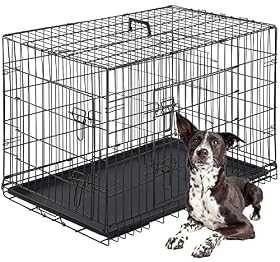
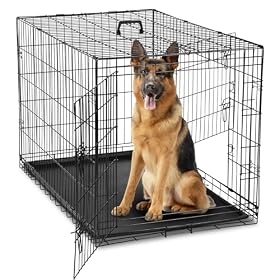
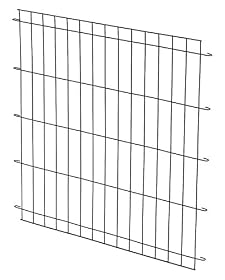
Wire crates are often a practical starting point for puppies because many include a removable divider. The divider lets you use one crate while gradually increasing the available space as your dog grows.
Advantages include:
Strong ventilation on all sides
A clear view of the room for dogs that settle better when they can see you
Easy access through a large door
Removable trays for cleanup
Broad availability in different sizes
The open design can be less comfortable for dogs that become overstimulated by activity around them. A properly fitted cover can make the crate feel more private, but leave enough ventilation and keep the cover away from dogs that might pull or chew it through the bars.
Plastic crates: more privacy and useful travel protection
Plastic crates have solid sides with ventilation openings. They can provide a darker, more enclosed environment and are often convenient for vehicle travel when the specific crate is approved and secured for that use.
They may be a good fit for dogs that relax better with less visual stimulation. However, they can be harder to clean thoroughly after accidents, and the enclosed design may retain heat more readily in warm conditions. Check ventilation, door security, and the manufacturer’s travel guidance before using one in a vehicle.
Furniture-style crates: attractive but not always ideal for training
Furniture-style crates can blend into a living space, but appearance should come after safety and practicality. Some have less ventilation, smaller doors, or materials that are difficult to clean. They are generally better considered after a dog is already comfortable with crating and is unlikely to chew the panels or door.
Product prices and availability are accurate as of the date/time indicated and are subject to change. Any price and availability information displayed on Amazon.com at the time of purchase will apply to the purchase of this product.
How to choose the correct crate size
Measure your dog while standing:
Measure from the floor to the top of the head or ears, whichever is higher.
Measure from the nose to the base of the tail. Do not include the full tail length.
Add a modest amount of room so the dog can stand, turn, lie down, and stretch.
The crate should not be so large that a puppy can sleep in one end and use the other end as a bathroom. A divider solves this problem by allowing the crate to grow with the dog.
If your dog is between sizes, compare the crate’s interior dimensions, not just its advertised size label. Also account for a thick crate pad, which reduces usable space. A large-breed puppy may need an adult-size crate with a divider, while a small adult dog may need a compact crate without one.
Product prices and availability are accurate as of the date/time indicated and are subject to change. Any price and availability information displayed on Amazon.com at the time of purchase will apply to the purchase of this product.
Features that matter during crate training
A removable tray
A removable plastic or coated tray makes accidents easier to handle. Check that the tray slides out without requiring you to dismantle the crate and that the edges are not sharp or easily chewed.
A divider panel
A divider is one of the most useful accessories for puppy training. It should attach securely and leave no dangerous gaps along the sides or bottom. As your puppy grows, move it gradually rather than giving access to the entire crate at once.
Door placement
A front door is standard. A second side door can make placement in a room easier, but additional doors also mean more latches and hardware to inspect. Whichever design you choose, make sure the door cannot be pushed open from inside and that the latch is not accessible to a determined chewer.
Rounded and protected edges
Inspect corners, wire ends, hinges, and latch areas. Dogs can injure teeth, gums, paws, or nails on rough welds and exposed hardware. Do not use a crate with bent panels or a damaged door.
A washable surface
Choose a pad or mat that fits without leaving large gaps around the edges. For puppies or dogs prone to chewing, a simple, durable, washable surface may be safer than a thick plush bed. Remove any bedding the dog tears apart or ingests.
Making the crate comfortable without creating problems
Place the crate in a calm part of the home where your dog can be near the family but is not constantly exposed to foot traffic. Introduce it gradually with treats, meals, and short periods of relaxed door closure. Never force a frightened dog into the crate or use it as a place of punishment.
A crate cover can reduce visual distractions, but do not block ventilation. Keep bedding, covers, and toys free from loose threads, stuffing, or pieces that could be swallowed. Avoid leaving a collar or harness on an unattended crated dog if it could catch on the crate.
Crating does not replace exercise, training, social interaction, or bathroom breaks. Puppies generally need more frequent breaks than adult dogs, and the appropriate duration depends on age, health, temperament, and training progress.
When to choose a different crate style
Choose a wire crate when you want adjustable space, maximum airflow, and easy visibility. Choose a plastic crate when your dog prefers privacy or you need a more enclosed travel-oriented design. Consider a furniture-style crate only when its ventilation, strength, door access, and cleanability meet the same standards as a conventional crate.
If your dog repeatedly escapes, bends panels, damages the door, or shows signs of panic, do not simply move to a stronger crate without addressing the cause. Speak with a veterinarian or qualified behavior professional if the dog may be experiencing separation distress, confinement anxiety, or self-injury risk.
Replace a crate when the tray is cracked, the door no longer latches securely, the frame is bent, or there are sharp or exposed parts. If your growing dog has outgrown the crate and the divider cannot provide an appropriate fit, move to the next suitable size.
FAQ
What type of dog crate is best for crate training?
For many puppies, a wire crate with a secure divider is the most practical choice because it provides ventilation, visibility, a removable tray, and adjustable space as the dog grows. A plastic crate may be better for a dog that prefers a more enclosed environment.
Should a puppy’s crate be large or small?
It should be large enough for the puppy to stand, turn around, lie down, and stretch comfortably, but not so large that the puppy can use one end as a bathroom. An adult-size crate with a properly positioned divider is often useful for growing dogs.
Is a crate pad necessary?
A pad is not required, but a washable, well-fitting pad can make the crate more comfortable. For puppies or dogs that chew bedding, use a durable surface and remove any material the dog tears, swallows, or cannot safely tolerate.
Should I cover my dog’s crate?
A cover can reduce visual distractions and make some dogs feel more secure. Use one that does not restrict airflow, and supervise its use if your dog might pull it through the crate or chew it.
How long can a dog stay in a crate?
There is no single safe duration for every dog. Age, health, bladder control, exercise, temperament, and training progress all matter. Puppies usually need frequent bathroom and activity breaks, and crating should not replace exercise, social contact, or gradual training.