The best furniture crate for a living room should look at home without compromising your dog’s safety or comfort. Use this guide to compare crate styles, sizing, materials, and practical features before buying.
A furniture crate can make a living room feel less like a kennel area, but the attractive finish is only one part of the decision. The best furniture crate for a living room has enough interior space for your dog to stand, turn around, lie down, and stretch; adequate ventilation; a secure door; and materials that can withstand your dog’s habits.
Furniture-style crates are most suitable for calm, crate-trained dogs that are not determined chewers or escape artists. If your dog panics when confined, scratches at doors, or destroys wooden furniture, a heavy-duty metal crate may be the safer choice.
What to look for in a living-room furniture crate
Correct interior size
Measure your dog before comparing crate exteriors. Your dog should be able to:
Stand without crouching
Turn around comfortably
Lie down fully on their side
Change positions without getting wedged against the walls
Measure from the floor to the top of the head or ears while standing, then add some clearance. Measure from the nose to the base of the tail, then add room for comfortable movement. Use the manufacturer’s interior dimensions rather than exterior dimensions when available.
A crate that is too small is uncomfortable, while one that is excessively large may be less useful for house-training a puppy. A divider can let you buy an appropriately sized crate for a growing dog, but only if the crate is designed to accept one and the divider is secure.
Ventilation on multiple sides
A furniture crate should not be enclosed like a cabinet. Look for open slats, mesh panels, or other ventilation on more than one side. Airflow matters especially when the crate sits against a wall or in a warm room.
Decorative panels should not block the door, rear, or side ventilation. Avoid placing the crate in direct sun, beside a heat register, or where blankets and furniture could restrict airflow.
A door that is secure and convenient
Check whether the door opens from the front, side, or both. A front door is usually easiest for daily use, while a second door can help when the crate is positioned in a corner.
The latch should close reliably and resist being nudged open by a dog’s nose or paw. A sliding or swinging door also needs enough clearance to operate without hitting a wall or nearby furniture. If the crate will be used overnight, make sure you can reach the latch easily in low light.
A durable, cleanable interior
Wood-look furniture crates vary widely in construction. Some use solid wood, while others use engineered panels, laminate, veneer, or a combination of materials. The finish should be smooth, with no exposed staples, sharp edges, loose trim, or chewable hardware inside the dog’s reach.
Look for a removable tray or another surface that can be wiped clean. A fabric pad can improve comfort, but the crate floor should still be usable without the pad in case of accidents. Avoid designs with deep grooves or unfinished edges that can hold moisture and odors.
Stability and weight
A furniture crate should not slide when your dog enters, exits, or shifts position. A wide base, sturdy frame, and non-skid feet can help protect both the floor and the crate.
Remember that a furniture crate may be heavier and harder to move than a wire crate. Confirm that it will fit through the intended doorway and that the floor can support the crate, your dog, and any accessories inside it.
Furniture crate styles for a living room
End-table style crates
These are designed to sit beside a sofa or chair and provide a flat top for lamps, books, or decor. They work well when the crate will remain in one location, but the top must be strong and stable enough for the items you plan to place on it.
Keep cords, candles, glass objects, and small decor away from the crate if your dog could reach them through the openings.
Slatted wood-style crates
Slatted designs often blend into traditional or modern living rooms better than exposed wire. The gaps should provide ventilation without allowing your dog’s jaw or paws to become trapped. Inspect the slats and joints regularly for loosening, splitting, or chewing damage.
Metal-frame furniture crates
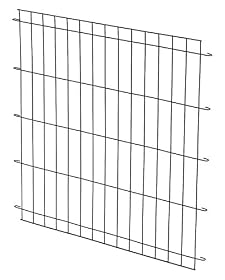
Some furniture-style crates combine a metal enclosure with a wood-look top or exterior panels. These can offer better resistance to chewing than an entirely wooden design while still looking more finished than a basic wire crate.
Check whether the decorative panels reduce airflow or make cleaning difficult. The dog’s enclosure, not just the exterior finish, should determine the crate’s durability.
Product prices and availability are accurate as of the date/time indicated and are subject to change. Any price and availability information displayed on Amazon.com at the time of purchase will apply to the purchase of this product.
When a furniture crate is not the best choice
Choose a different crate style if your dog:
Chews wood, laminate, trim, or door hardware
Has escaped from crates before
Bends or breaks wire doors
Panics, bites, or repeatedly throws their body against the crate
Is not yet comfortable with confinement
For these dogs, prioritize a crate rated for escape resistance and discuss severe confinement distress with a veterinarian or qualified behavior professional. Do not use a decorative crate as a substitute for gradual crate training.
A puppy that is still having frequent accidents may also be easier to manage in a crate with a removable plastic or metal tray. If a furniture crate has a fixed or difficult-to-clean floor, it may be inconvenient during the training stage.
Product prices and availability are accurate as of the date/time indicated and are subject to change. Any price and availability information displayed on Amazon.com at the time of purchase will apply to the purchase of this product.
Placement in the living room
Place the crate where your dog can see and hear normal household activity without being in the busiest traffic path. Avoid locations beside exterior doors, loud speakers, fireplaces, radiators, or direct sunlight.
Leave enough space to open the door fully and remove the tray. Do not push the crate tightly against a wall if that blocks ventilation or prevents inspection of the rear and sides.
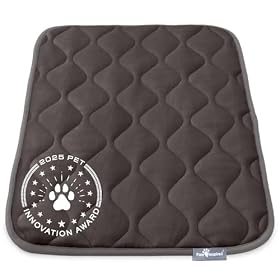
A cover can make a crate feel more private, but do not cover ventilation openings or use a cover your dog can pull inside and chew. A properly sized crate pad should lie flat and leave the door and latch unobstructed.
Product prices and availability are accurate as of the date/time indicated and are subject to change. Any price and availability information displayed on Amazon.com at the time of purchase will apply to the purchase of this product.
How to compare furniture crates before buying
Use this quick checklist:
Compare the listed interior dimensions with your dog’s measurements.
Confirm the crate has ventilation on multiple sides.
Check the door location, swing direction, and latch design.
Look for a removable tray or a clearly cleanable floor.
Inspect the materials for exposed edges, gaps, and chewable trim.
Confirm the crate’s weight and whether it will fit through your doors.
Check whether a compatible divider is available if your dog is growing.
Read the manufacturer’s use and weight guidance rather than relying only on the exterior size.
The most attractive option is not necessarily the best one if its usable interior is small, its door is awkward, or its decorative panels limit airflow.
Bottom line
The best furniture crate for a living room is a secure, well-ventilated crate with enough interior space, a reliable door, a cleanable floor, and construction suited to your dog’s behavior. Choose a furniture-style design for appearance only after confirming that it meets your dog’s size, safety, and durability needs. For strong chewers, escape artists, or dogs with confinement distress, prioritize a purpose-built durable crate instead.
FAQ
Are furniture dog crates safe?
They can be safe for calm, crate-trained dogs when they provide adequate ventilation, enough interior space, a secure latch, and a smooth, cleanable interior. They are generally a poor choice for strong chewers or escape artists unless the manufacturer specifically designs the enclosure for that use.
How do I size a furniture crate for my dog?
Measure your dog standing from the floor to the top of the head or ears and from the nose to the base of the tail. Add clearance so the dog can stand, turn around, lie down fully, and change positions. Compare those measurements with the crate’s interior dimensions.
Can a furniture crate be used for a puppy?
Yes, if it has a secure compatible divider and a floor that is easy to clean. A divider can reduce the usable area while the puppy is small and be moved as the dog grows. Without a divider, an oversized crate may make house-training more difficult.
Should I put a crate cover on a furniture crate?
A cover is optional. Use one only if it does not block ventilation, interfere with the door, or give the dog access to loose fabric. Many furniture crates already provide more visual privacy than wire crates.