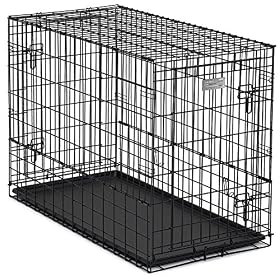
Crate for a dog who must ride in an SUV cargo area
An SUV cargo-area crate must fit the vehicle securely while giving your dog enough room to stand, turn, and lie down naturally. Measure the cargo space, compare crate dimensions, and prioritize a crate designed for vehicle travel when appropriate.
What do you need help with?
Open an answer, or tell us what we should cover next.
Answered in this guide
Choose a safe crate for an SUV cargo area
Choose among travel-rated, plastic, wire, and soft-sided crates based on how the crate will be used in the vehicle. Prioritize models designed for vehicle travel when appropriate and check the manufacturer’s safety claims carefully.
Measure your dog so the crate allows natural standing, turning, sitting, and lying down. Use the dog’s measurements rather than breed labels or weight alone when comparing crate dimensions.
Position the crate correctly, use compatible attachment points and hardware, and check that it cannot slide, tip, or rotate. Perform a dry run with the empty crate before taking a long trip.
Keep ventilation openings clear, avoid tight placement against vehicle panels or the liftgate, and consider how quickly the cargo area can heat up. Make sure you can access the crate when needed.
Request a topic and help us choose what to build next.
Check whether a cracked crate is safe for car travel
Train your dog to stay comfortable in the crate during rides
Choose a crate that meets airline travel rules
Compare specific SUV travel crates by safety and price
Requests help us prioritize the next guide. No email required.
One anonymous request per topic.
A crate for an SUV cargo area needs to do more than fit your dog. It must fit through the vehicle opening, leave room for ventilation and access, stay clear of the liftgate, and be secured so it cannot slide during normal driving. Start by measuring both your dog and the SUV cargo area before choosing a crate style or size.
Measure the dog first
Your dog should be able to stand naturally, turn around, sit without crouching excessively, and lie down comfortably. Measure:
Length: From the nose to the base of the tail, then add room for a natural lying position.
Height: From the floor to the top of the head or ears while standing. Use the taller measurement if your dog’s ears stand upright.
Width: Measure the dog at the widest point, usually the shoulders or hips.
Do not choose a crate solely by weight range. Two dogs with the same weight can require very different crate dimensions. Compare your measurements with the crate’s interior dimensions, not just its exterior size.
For travel, avoid sizing so large that the dog can be thrown around inside during sudden braking. The crate should provide comfortable movement without excessive unused space.
Measure the SUV cargo area carefully
Cargo-area measurements alone are not enough. Check the entire route the crate must take:
Measure the cargo opening at its narrowest points.
Measure the opening height with the liftgate raised.
Measure the cargo floor from the rear seats to the liftgate or the nearest obstruction.
Check the width between wheel wells.
Account for sloped seatbacks, side panels, cargo hooks, and trim.
Check whether the crate door can open once the crate is in position.
Confirm that the liftgate can close without touching the crate.
Use the crate’s exterior dimensions for vehicle fit. A crate may have a suitable interior but be too wide or tall to pass through the SUV’s rear opening.
If you use a cargo cover, divider, barrier, or third-row seats, measure with those parts in their actual positions. Folding a seat down can change the available length but may not create a level or stable surface.
Product prices and availability are accurate as of the date/time indicated and are subject to change. Any price and availability information displayed on Amazon.com at the time of purchase will apply to the purchase of this product.
Choose the crate style for the trip
Travel-rated or impact-tested crates
If the crate will be used primarily in a vehicle, look for a model specifically designed and tested for vehicle travel. Read the manufacturer’s information carefully: claims may apply only when the crate is installed in a particular direction, attached at specific points, or used with compatible restraint equipment.
No crate should be treated as a guarantee of protection in a serious collision. Follow the crate manufacturer’s installation instructions and your vehicle owner’s manual.
Plastic travel crates
Plastic crates are often enclosed on several sides and can help create a more sheltered space. Check the ventilation openings, door construction, and whether the crate has approved attachment points for vehicle use. Confirm that the shell will not press against the liftgate or interior trim.
Wire crates
Wire crates can provide broad airflow and visibility, but many ordinary home wire crates are not designed or tested as vehicle restraints. They may also be awkward to secure in an SUV cargo area. Use one in a vehicle only if the manufacturer specifically supports that application and provides a safe way to anchor it.
Soft-sided crates
Soft crates are convenient for calm dogs and short trips, but they are generally not a substitute for a rigid travel crate in a collision. They can also be damaged by dogs who scratch, chew, or push against the fabric. Check the manufacturer’s intended use before relying on one for regular SUV travel.
Product prices and availability are accurate as of the date/time indicated and are subject to change. Any price and availability information displayed on Amazon.com at the time of purchase will apply to the purchase of this product.
Plan how the crate will be secured
A crate that can slide, tip, or rotate is not properly installed. Look for a crate with clearly identified attachment points and use only compatible straps, anchors, or hardware recommended by the manufacturer.
Do not assume that a cargo-area tie-down loop is suitable for every strap or load. Check the SUV manual to understand the purpose and load limits of the vehicle’s anchors. Keep restraint straps away from the dog’s neck and paws, and do not route them in a way that can deform the crate door.
The crate should sit on a stable surface. A thick, soft bed can make the crate less stable, reduce interior space, or allow the dog to shift more than intended. Use only bedding that fits without blocking ventilation or creating a chewing hazard.
A cargo barrier can help keep the dog out of the passenger compartment, but it does not replace securing the crate. Likewise, a strap around a crate that has no suitable attachment points may not provide the protection you expect.
Product prices and availability are accurate as of the date/time indicated and are subject to change. Any price and availability information displayed on Amazon.com at the time of purchase will apply to the purchase of this product.
Check airflow, temperature, and access
The cargo area can heat up quickly, especially with the vehicle parked. Leave ventilation openings unobstructed and avoid placing the crate tightly against side panels or the liftgate. Never leave a dog unattended in a parked vehicle when temperature conditions could become unsafe.
Before buying, confirm that you can:
Reach the crate door from outside the SUV.
Remove the dog without climbing over seats or cargo.
Clean the interior and remove the tray.
See or monitor the dog without blocking airflow.
Open the liftgate in a confined parking space if needed.
Do not cover the crate in a way that restricts ventilation. If your dog becomes distressed, overheated, or unable to breathe comfortably, stop as soon as it is safe and seek veterinary advice when appropriate.
Product prices and availability are accurate as of the date/time indicated and are subject to change. Any price and availability information displayed on Amazon.com at the time of purchase will apply to the purchase of this product.
Account for the crate floor and tray
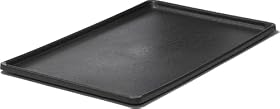
A removable, leak-resistant tray is useful for muddy paws, drool, or accidents. Measure the crate with the tray installed because the tray can affect the interior height and may add to the exterior dimensions.
If the SUV cargo floor is uneven or slopes toward the rear, check whether the crate remains level and stable. Do not improvise with loose boxes or unstable household materials. A purpose-made, securely fitted platform may be appropriate only when it is compatible with the vehicle and does not interfere with tie-downs or cargo-area safety features.
Test the setup before a long trip
After installation, perform a practical dry run:
Put the empty crate in the intended position.
Close the liftgate and all doors.
Check for contact with the glass, trim, seats, or cargo cover.
Attach the restraints exactly as directed.
Push the crate gently in several directions to check for movement.
Place the dog inside while parked and observe posture, ventilation, and comfort.
Take a short, low-speed drive before planning a longer trip.
The dog should enter and exit without squeezing through a narrow opening. If the dog pants heavily, repeatedly tries to escape, or cannot settle, reassess the crate size, location, temperature, and travel routine. A crate is not a solution for severe travel anxiety; ask a veterinarian or qualified behavior professional for guidance.
When a different crate is the better choice
Choose a different size or style if the crate blocks the liftgate, cannot be secured at appropriate attachment points, prevents access to the dog, or leaves inadequate ventilation. A replacement tray may solve a cleaning problem, but it will not fix a crate that is structurally unsuitable for vehicle travel.
If the crate is damaged, its door no longer latches correctly, or its attachment points are bent or cracked, replace it before using it in the SUV. When the cargo area cannot accommodate a properly sized and secured crate, consult the vehicle and crate manufacturers about safer travel options rather than forcing an oversized crate into the space.
Quick buying checklist
Before ordering, confirm:
The interior dimensions fit your dog’s standing, turning, and lying needs.
The exterior dimensions fit through the SUV’s cargo opening.
The liftgate closes without contact.
Ventilation remains open on all sides required by the manufacturer.
The crate is intended for vehicle use if you need travel-specific protection.
Attachment points and restraints are clearly supported by the manufacturer.
The tray, bedding, and door remain usable in the installed position.
The crate can be cleaned and the dog can be reached quickly.
FAQ
Should a dog crate in an SUV cargo area be tied down?
Yes. A crate should be secured so it cannot slide, tip, or rotate during normal driving. Use attachment points and restraint equipment approved or specified by the crate manufacturer, and check the SUV owner’s manual before using cargo anchors.
How much room should a dog have in a travel crate?
The dog should be able to stand naturally, turn around, sit without excessive crouching, and lie down comfortably. Avoid choosing by weight alone; compare your dog’s measurements with the crate’s interior dimensions.
Can I use a regular wire dog crate in an SUV?
Only if the manufacturer supports that use and provides a suitable way to secure it. Many household wire crates are intended for stationary use and should not automatically be treated as vehicle restraints.
Where should a crate sit in an SUV cargo area?
Place it where it fits securely, allows ventilation and door access, and does not interfere with the liftgate, seats, windows, or vehicle safety equipment. Follow both the vehicle and crate manufacturer’s placement instructions.