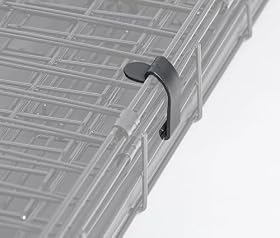
A failing crate latch is a safety issue, especially for dogs that push, paw, or chew at the door. Check the latch alignment, door frame, hardware, and crate setup before deciding whether a replacement latch or a new crate is needed.
Crate door latch failing
If your crate door latch is not catching, popping open, or staying secure, stop using the crate unsupervised until you find the cause. A loose latch can let a dog escape, cause an injury, or leave the door partly closed. Start with simple alignment and obstruction checks, then inspect the latch, door, frame, and mounting hardware.
Check the latch and door alignment
A crate latch often fails because the door has shifted slightly in the frame. This can happen if the crate was moved, folded, bumped, or assembled unevenly.
Empty the area around the door and open it fully.
Close the door slowly while watching the latch pins or locking tabs.
Check whether the pins line up with the holes or slots in the frame.
Lift or press the door gently while closing it to see whether alignment changes.
Make sure the door is not sagging or rubbing against the frame.
If the latch works only when you lift or push the door into position, the door or frame may be bent, the hinges may be loose, or the crate may be sitting unevenly. Do not rely on holding the door in place with a clip or makeshift tie for regular use.
Remove bedding or debris from the latch area
Fabric, hair, dirt, and food can prevent the latch from traveling far enough to lock. Inspect both sides of the door and the receiving holes in the frame.
Use a dry brush or cloth to remove debris. If the manufacturer permits lubrication, use only a small amount of a suitable product and keep it away from areas your dog can lick. Do not force a jammed mechanism, and avoid modifying the latch with tools unless the manufacturer provides repair instructions.
Product prices and availability are accurate as of the date/time indicated and are subject to change. Any price and availability information displayed on Amazon.com at the time of purchase will apply to the purchase of this product.
Inspect for bent bars or a damaged door
Look closely at the door bars, latch rods, hinge points, and frame. Compare the door with the crate opening from several angles. Warning signs include:
A bent door that does not sit flat in the opening
Latch rods that no longer move together
Cracked plastic around a latch or hinge
Welds that are split or broken
A frame that is twisted or no longer square
Sharp edges, exposed wire, or protruding hardware
A slightly bent wire may sometimes be corrected according to the manufacturer’s instructions, but bending it back repeatedly can weaken the metal. A cracked plastic latch or damaged welded frame is generally a replacement-part or replacement-crate issue rather than a quick adjustment.
Product prices and availability are accurate as of the date/time indicated and are subject to change. Any price and availability information displayed on Amazon.com at the time of purchase will apply to the purchase of this product.
Tighten loose hardware carefully
Loose screws, nuts, hinges, or latch mounts can allow the door to shift. With the crate empty, check accessible fasteners by hand and tighten them only as directed by the manufacturer. Do not overtighten plastic components or replace hardware with parts that have sharp ends or the wrong diameter.
After any adjustment, open and close the door several times. Pull gently on the closed door from different points to confirm that the latch remains engaged. This is a basic check, not a substitute for the manufacturer’s repair guidance.
Check the crate setup
A crate that rocks, leans, or sits on an uneven surface can put pressure on the door. Place it on a stable, level floor and make sure the crate panels are fully connected if it is a folding or modular design.
Also check whether a divider, crate pad, cover, or nearby object is pressing against the door. A dog may push against the door because the crate is too small, uncomfortable, too warm, or being used for longer than the dog can comfortably tolerate. The latch still needs to work correctly, but correcting the setup can reduce repeated pressure on the door.
Test the latch before putting your dog back in
Once the obstruction or alignment issue is corrected:
Close the door normally without forcing it.
Confirm that every locking point engages, if the door has more than one.
Pull gently on the door to check that it does not open.
Operate the latch repeatedly to make sure it does not stick or release unexpectedly.
Supervise your dog around the crate before allowing normal use.
Do not use a carabiner, twist tie, zip tie, snap, or external clip as a permanent substitute for a damaged latch. These can create pinch points, prevent emergency release, or fail when a dog applies pressure. Temporary restraints should not be used for unsupervised crating unless the crate manufacturer specifically recommends the accessory.
When to replace the latch or the crate
A manufacturer-approved replacement latch may be reasonable when the crate frame and door are straight, the latch is a separate replaceable component, and the replacement is confirmed to fit that exact crate design.
Replace the crate instead when the frame is bent, the door will not align, welds are broken, plastic is cracked, sharp edges are present, or the correct latch is unavailable. A replacement crate should be selected for the dog’s current size and behavior, with enough room to stand, turn around, lie down, and stretch comfortably without leaving excessive space that encourages unsafe movement.
If the latch fails while the dog is inside, move the dog to another secure area before attempting repairs. If the crate is used for transport, follow the vehicle-crate manufacturer’s instructions and do not use it until the door and locking system are fully secure.
Common causes include door misalignment, a bent frame or door, debris in the latch, loose hardware, or a worn spring or locking part. Check the door alignment and latch movement first, then inspect for damage. Stop unsupervised use until the door stays securely locked.
Can I repair a dog crate latch myself?
You can usually clean the mechanism, remove minor obstructions, and tighten accessible hardware if the manufacturer allows it. Use only compatible replacement parts and do not bend, drill, or modify the crate unless the manufacturer provides instructions.
Is a clip safe to keep a crate door closed?
A manufacturer-approved secondary latch may be appropriate for some crates. Ordinary clips, zip ties, and improvised fasteners are not reliable permanent repairs and may create pinch or escape hazards.
Should I replace the whole crate if the latch is broken?
Replace only the latch when it is a confirmed replaceable part and the door and frame are undamaged. Replace the whole crate when the frame is bent, cracked, sharply damaged, or cannot keep the door aligned.