A dog crate is too small if your dog cannot stand, turn around, lie down naturally, or change position without crowding. Use your dog's measurements and behavior—not weight alone—to choose the next size.
A dog crate is too small if your dog cannot stand upright, turn around without squeezing, lie down in a natural position, and change positions comfortably. Measure the dog before buying a larger crate, then check the crate's usable interior space—not just its advertised outside dimensions.
Signs the crate is too small
Look for these practical signs:
Your dog's back, ears, or head touches the top when standing normally.
The dog cannot turn around without hunching, scraping against the sides, or stepping over bedding.
The dog cannot lie down on its side with legs extended.
The dog consistently spills out of the doorway or avoids entering the crate.
Bedding is bunched up because there is not enough room to reposition.
The dog appears stiff or uncomfortable after resting in the crate.
A growing puppy has outgrown the crate's usable length or height, even if the dog could previously fit.
A crate does not need to be large enough for running or playing. It should provide enough room for normal standing, turning, stretching out, and settling comfortably.
How to measure your dog for a larger crate
Measure while your dog is standing naturally. Do not measure with the dog sitting or hunched.
Measure length
Measure from the tip of the nose to the base of the tail. Do not include the full tail length. Add a modest amount of extra length so the dog can turn and lie down comfortably.
Measure height
Measure from the floor to the highest point of the head or ears, whichever is higher when the dog stands naturally. Add enough clearance for the dog to stand without touching the roof.
For long-backed dogs, use the length measurement as the limiting dimension. For tall or upright-eared dogs, height is usually the limiting dimension.
Check the crate's interior dimensions
Manufacturers may list exterior dimensions, while the dog needs the interior dimensions. Door frames, corner posts, molded plastic, divider panels, and a raised tray can reduce usable space. Compare your measurements with the crate's interior specifications when available.
If the crate is between sizes, the larger suitable crate is generally the safer choice, provided it still fits the intended space and can be secured properly.
Product prices and availability are accurate as of the date/time indicated and are subject to change. Any price and availability information displayed on Amazon.com at the time of purchase will apply to the purchase of this product.
Fix the setup before replacing the crate
A crate can seem too small because the interior has been reduced by accessories or an incorrect configuration.
Remove oversized bedding temporarily
Thick beds, bolsters, blankets, and cushion edges can take up several inches of floor space. Remove them briefly and observe whether the dog can stand, turn, and lie down comfortably. Replace the bedding with a thinner, correctly sized pad if the dog needs less bulk.
Do not leave bedding that the dog can shred and swallow. Follow the crate and bedding manufacturer's safety instructions.
Check the divider position
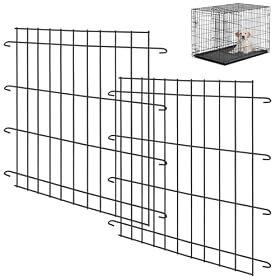
A divider should restrict excess puppy space without pressing against the dog. Move it as the puppy grows, leaving enough room for the puppy to stand, turn, lie down, and change position.
If the divider is already at the back of the crate or the dog is tall enough to touch the top, the crate itself may need to be replaced with a larger one.
Make sure the crate is assembled correctly
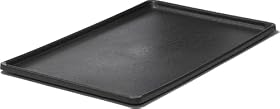
Check that panels, doors, trays, and divider hardware are installed in the intended positions. A misplaced divider or a tray that does not sit fully in its guides can reduce the available floor area or create an uncomfortable raised edge.
Never force a dog into a crate that has a sharp wire end, cracked plastic, a bent door, or loose hardware. Repair or replace damaged parts before use.
Product prices and availability are accurate as of the date/time indicated and are subject to change. Any price and availability information displayed on Amazon.com at the time of purchase will apply to the purchase of this product.
Choose the next crate size by the dog's needs
The right replacement depends on more than breed labels or a weight range. Dogs of the same weight can have very different height, length, and body shape.
Consider:
Adult size: Choose for the dog's expected adult dimensions if buying for a puppy, then use a properly positioned divider.
Body shape: Long-bodied, deep-chested, and tall dogs may need a different crate proportion than a dog of the same weight.
Sleeping position: A dog that sleeps stretched out needs more length than one that curls tightly.
Door and roof design: A low doorway or sloped roof can reduce usable height and access, particularly for tall dogs.
Location: Measure the spot where the crate will sit, including clearance to open the door and remove the tray.
Travel use: A home crate and a vehicle crate may require different dimensions and must be appropriate for their specific use.
A crate that is too large is not automatically unsafe, although excessive space can make house-training harder for some puppies. A divider is usually more practical than buying a series of small crates, as long as the divider is secure and the dog has adequate space.
When a larger crate is the reasonable next step
Replace or upgrade the crate when your dog cannot meet all four basic requirements: stand normally, turn around, lie down naturally, and change position. Also replace it if the dog has outgrown the crate despite the divider being fully moved back, or if damage has created sharp edges, unstable panels, or a door that cannot latch reliably.
A larger crate is not a substitute for gradual crate training. If the dog fits comfortably but refuses the crate, pants heavily, drools, repeatedly tries to escape, or shows signs of panic, address the behavior separately and consult a qualified veterinarian or certified behavior professional when needed.
Do not use a crate for extended confinement simply because it is available. Provide appropriate breaks, exercise, water according to the situation and veterinary guidance, and human supervision based on the dog's age and needs.
Quick sizing checklist
Before buying the replacement crate, confirm that:
Your dog can stand without touching the roof.
Your dog can turn around without squeezing against the sides.
Your dog can lie down on its side with room to reposition.
The measured interior dimensions—not only the product's outside dimensions—fit those needs.
The crate fits the intended location with the door fully open.
Any divider is secure and leaves adequate room as the dog grows.
The door, tray, floor, and panels are sturdy and free from hazards.
If the current crate fails any of the first three checks, stop treating it as a permanent setup and look for a larger appropriately sized crate.
FAQ
How do I know if my dog's crate is too small?
Your dog should be able to stand upright, turn around without squeezing, lie down naturally, and change positions. If any of these actions are difficult or the dog touches the roof while standing, the crate is too small.
Should a dog be able to stretch out in a crate?
Yes. The dog should have enough room to lie down on its side and change position. The crate does not need to provide room for running or playing, but it should not force the dog to curl up.
Is a bigger crate better for a puppy?
A larger crate can work well when paired with a secure divider. Set the divider so the puppy has enough room to stand, turn, lie down, and reposition, then move it as the puppy grows.
Should I measure my dog or use the breed's crate size recommendation?
Measure the individual dog whenever possible. Breed and weight recommendations are useful starting points, but dogs of the same breed or weight can differ substantially in height, length, and body shape.
What should I do if my dog fits the crate but still refuses to use it?
Do not assume the crate is too small. Check for heat, uncomfortable bedding, noise, poor placement, or damaged parts, and work on gradual positive crate training. Panic, repeated escape attempts, heavy panting, or drooling warrant veterinary or qualified behavior guidance.