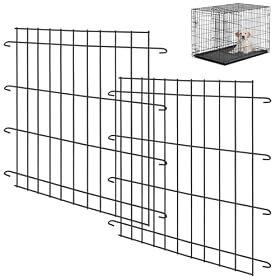
The best crate for a small apartment bedroom is large enough for your dog to stand, turn, and lie down comfortably, but compact, quiet, and easy to place. Compare wire, plastic, and furniture-style crates before buying.
Best crate for a small apartment bedroom
The best crate for a small apartment bedroom should give your dog enough room to stand, turn around, lie down, and stretch without taking over the room. For most apartments, the most useful features are a correctly sized interior, quiet operation, good ventilation, a door that opens safely in a tight space, and a design that is easy to clean.
A crate should not be used as a substitute for exercise, training, or supervised time outside the crate. Choose the crate based on your dog’s actual adult size and behavior, not only the amount of floor space available.
What to look for in a bedroom dog crate
Correct interior size
Measure your dog from the tip of the nose to the base of the tail, then from the floor to the top of the head or ears when standing naturally. The crate should allow your dog to:
Stand without crouching
Turn around comfortably
Lie down fully extended
Change position without pressing against the walls
If you are buying for a puppy, a crate with a divider can make a larger crate practical. The divider reduces the usable space while the puppy is small and can be moved as the dog grows. Avoid making the crate so large that a puppy can sleep in one end and use the other end as a bathroom.
Low noise at night
Noise matters more in a bedroom than in a garage or living room. Wire crates can rattle when a dog shifts position, and metal doors may make a sharp sound when they close. Look for a stable frame, secure latches, and a tray that fits without excessive movement.
A crate pad can reduce noise from paws and shifting, but it should be appropriate for your dog. Dogs that chew or destroy bedding may need a more durable option or supervised bedding training before a soft pad is left in the crate overnight.
Ventilation and visibility
Wire crates provide substantial airflow and allow your dog to see the room. This can help some dogs settle, but visual access may make other dogs more alert to movement, people, or sounds.
Plastic crates offer more enclosed sides and can feel calmer for some dogs, while still providing ventilation through the openings. Do not cover a crate in a way that blocks airflow, traps heat, or allows your dog to pull fabric through the bars.
Door placement
Measure the space where the crate will sit, including the area needed for the door to open. A front door is common, but a second side door can be useful in a small bedroom if the crate must sit against a wall or beside furniture.
Check that the open door will not block a walkway, closet, bedroom door, or emergency exit. Never place the crate where a door could strike it or where the dog could be trapped if furniture shifts.
Easy cleaning
A removable, leak-resistant tray is useful for puppies, older dogs, and any dog still working on house training. The tray should slide out without requiring you to move the entire crate.
For a bedroom, also consider how easily you can clean the crate’s corners, latch, and floor. A crate that is difficult to access may be used less consistently or cleaned less often.
Which crate style works best in an apartment bedroom?
Wire crates: best for airflow and flexibility
Wire crates are often the most versatile choice. They usually provide strong ventilation, clear visibility, and compatibility with dividers, covers, and replacement trays. Many also fold for storage or transport.
The drawbacks are noise, visual stimulation, and a less furniture-like appearance. A fitted cover can make the crate feel more enclosed, but leave ventilation areas open and monitor your dog to make sure the cover is not pulled inside and chewed.
Plastic crates: best for a more enclosed feel
Plastic crates can be quieter and may offer a den-like environment. Their solid sides can also reduce some visual distractions. They are worth considering for dogs that settle better with less activity in view or for owners who want a crate that is easier to move between home and travel.
Check the ventilation openings, handle strength, door security, and interior dimensions. Plastic crates can retain heat more readily than highly open designs, so placement away from heaters and direct sunlight is important.
Furniture-style crates: best when appearance is a priority
Furniture-style crates can blend into a bedroom or living space, but appearance should not outweigh safety and airflow. Some are better suited to calm, crate-trained dogs that do not chew, push, or attempt to escape.
Inspect the construction carefully. A decorative crate should have secure ventilation, a reliable latch, smooth edges, and enough structural strength for your dog. It should not be treated as furniture if your dog can damage the panels or escape through openings.
Product prices and availability are accurate as of the date/time indicated and are subject to change. Any price and availability information displayed on Amazon.com at the time of purchase will apply to the purchase of this product.
Bedroom placement tips
Place the crate in a quiet part of the room where your dog can see you without being in the middle of foot traffic. Keep it away from radiators, space heaters, air-conditioning drafts, direct sunlight, and unstable furniture.
Leave enough clearance to remove the tray and open the door fully. Keep cords, curtains, loose bedding, and small objects outside your dog’s reach. If your dog is new to the crate, begin with positive, supervised sessions rather than closing the door for a full night immediately.
A crate cover can reduce visual stimulation, but it should not turn the crate into a sealed enclosure. Watch for panting, restlessness, overheating, or repeated attempts to remove the cover.
Product prices and availability are accurate as of the date/time indicated and are subject to change. Any price and availability information displayed on Amazon.com at the time of purchase will apply to the purchase of this product.
Features worth buying with the crate
A few accessories can make a small-bedroom setup easier:
Divider: Useful when buying a crate for a growing puppy
Replacement tray: Helpful if the original tray cracks, stains, or becomes difficult to clean
Crate pad: Adds comfort and can reduce rattling, provided your dog does not chew it
Crate cover: Can reduce visual distractions while preserving adequate airflow
Playpen: Gives a puppy more controlled space when a crate alone is too restrictive
Buy accessories by the exact crate dimensions and design. A pad that is too thick can reduce usable headroom, while a loose cover or poorly fitted tray can create chewing, snagging, or escape risks.
Common mistakes to avoid
Choosing the smallest crate that fits
Compact does not mean cramped. A crate that saves a few inches but prevents your dog from stretching or changing position is not an appropriate long-term solution.
Ignoring the dog’s behavior
A quiet furniture-style crate may not be suitable for a dog that chews wood panels or pushes against doors. An open wire crate may be a poor fit for a dog that becomes overstimulated by every movement in the room.
Putting the crate in an inconvenient location
If you cannot open the door, remove the tray, or reach the latch easily, the setup will be frustrating. Measure the complete operating space, not just the crate’s footprint.
Using a cover to solve anxiety
A cover may reduce distractions, but it does not replace gradual crate training. If your dog shows persistent panic, heavy distress, self-injury, or repeated escape attempts, stop and consult a veterinarian or qualified behavior professional.
When to choose a different setup
A crate may not be the right only-space solution for a puppy that needs room for a bed, water, and a safe toilet-training area. A properly secured playpen with a crate inside can provide more controlled space, though it requires more floor area.
If your dog repeatedly bends doors, breaks panels, injures the mouth or paws, or escapes from multiple suitable crates, seek professional guidance before buying a stronger enclosure. The issue may involve anxiety, confinement distress, or an incorrect training approach rather than simply a need for heavier hardware.
Bottom line
For most small apartment bedrooms, start with a correctly sized wire crate if you want airflow, a divider, and easy accessory replacement. Choose a plastic crate if your dog settles better in a more enclosed space or you need a travel-friendly design. Consider a furniture-style crate only when its ventilation, strength, latch, and dimensions genuinely suit your dog.
The best choice is the smallest crate that still provides comfortable movement, fits safely in the room, remains quiet and stable at night, and matches your dog’s behavior.
FAQ
What size crate is best for a dog in a small bedroom?
Choose the crate based on your dog’s interior space requirements, not the bedroom size. Your dog should be able to stand, turn around, lie down fully, and change position comfortably. Use a divider if you are buying for a growing puppy.
Are wire or plastic crates quieter for a bedroom?
Plastic crates can feel quieter and more enclosed, while wire crates may rattle when a dog moves or the door closes. A stable frame, secure latch, well-fitted tray, and suitable pad can reduce noise in either style.
Can I cover my dog’s crate at night?
Yes, if your dog is comfortable with it and the cover does not restrict airflow, trap heat, or become accessible for chewing. Leave ventilation areas open and remove the cover if your dog becomes hot, restless, or distressed.
Should a dog crate be in the bedroom?
A bedroom can be a suitable location if the crate is placed away from heaters, drafts, cords, unstable furniture, and walkways. Keeping the crate nearby may also help some dogs settle during initial training.
Is a furniture-style crate safe for every dog?
No. Furniture-style crates may not suit dogs that chew, push against doors, or repeatedly attempt to escape. Check the construction, ventilation, latch, and interior dimensions, and choose a more robust design when behavior requires it.