The best crate for hotel travel depends on your dog’s behavior, your transportation, and how much portability you need. Learn which crate style fits hotel stays and what features matter most.
Best crate for hotel travel
The best crate for hotel travel is usually a well-ventilated, foldable crate that your dog already knows and can comfortably stand, turn around, and lie down in. For calm dogs, a soft-sided crate is often the easiest to carry and store. Dogs that push, scratch, chew, or try to escape generally need the stronger structure of a wire or plastic crate.
A hotel crate should do more than contain your dog. It should fit in the room, protect floors and bedding, reduce noise, handle accidents, and keep your dog secure when you cannot supervise directly.
Choose the crate style based on your dog
Soft-sided crates: best for portability
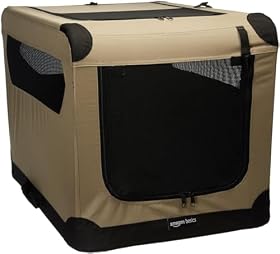
Soft-sided crates are often the most convenient choice for hotel trips. They are lightweight, collapse for transport, and can be carried from a vehicle to a room without much effort. Many have mesh panels for ventilation and visibility.
Choose one if your dog:
Is already comfortable resting in a crate
Does not chew fabric or scratch at mesh
Travels calmly
Will be supervised when crated
Benefits from a quieter, more enclosed space
A soft crate is not a good choice for a dog that panics, pushes through doors, chews zippers, or repeatedly claws at the sides. Fabric can be damaged quickly, and a failed zipper or frame can allow an escape.
Wire crates: best for visibility and ventilation
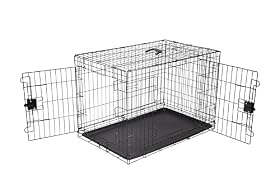
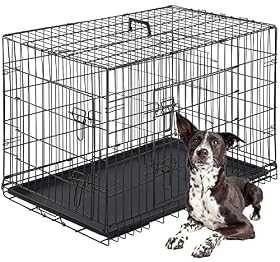
Wire crates provide strong airflow and allow your dog to see the surrounding room. They are useful for dogs that prefer an open view and for owners who want to monitor the dog easily. Many fold flat, although they can be heavier and less discreet than soft-sided designs.
Look for a wire crate with:
Secure latches that your dog cannot operate
A removable tray for accidents
Rounded or covered edges
A divider if your dog is still growing
A folding design that is practical for your vehicle
Wire sides can transmit more sound in a hotel room. A properly fitted cover may help a dog settle, but do not block ventilation or cover the crate if your dog becomes distressed in enclosed spaces.
Plastic crates: best for containment and cleanup
Plastic crates have solid sides, good privacy, and a base that is usually easier to clean after an accident. They can also feel more den-like in an unfamiliar hotel room. The tradeoff is that they are less collapsible and may take up more room during transport.
A plastic crate may be the safer option for a nervous or determined dog, provided the ventilation openings are adequate and the door hardware is secure. Check that the crate can be carried safely and does not flex or separate at its connection points.
How to choose the right size
Your dog should be able to stand naturally without crouching, turn around, and lie down in a normal position. The crate should not be so large that the dog can easily use one end as a bathroom and the other as a sleeping area, especially during travel or overnight stays.
Measure your dog before buying:
Measure from the floor to the top of the head or ears while standing. Add enough room for a natural stance.
Measure from the nose to the base of the tail. Add room for turning and stretching out.
Compare those measurements with the crate’s interior dimensions, not just its outside dimensions.
Manufacturers may list crate sizes by weight or breed, but those labels are only starting points. Dogs with long backs, tall legs, or broad bodies may need a different size than a weight chart suggests.
For a growing puppy, a divider can make a larger crate practical. Use it to create a properly sized sleeping area, then move it as the puppy grows. A divider does not replace checking the crate’s final interior dimensions.
Portable soft-sided dog crates for calm, crate-trained dogs
Product prices and availability are accurate as of the date/time indicated and are subject to change. Any price and availability information displayed on Amazon.com at the time of purchase will apply to the purchase of this product.
Features that matter in a hotel
Easy setup and storage
A crate that is difficult to assemble is more likely to be left unsecured or used incorrectly. If possible, choose a design that opens quickly, folds without excessive force, and fits through the hotel room door and your vehicle’s cargo area.
Before traveling, practice setting it up at home. Your dog should not encounter the crate for the first time in an unfamiliar hotel room.
Secure doors and escape resistance
Inspect the door, latch, seams, and frame. A calm dog may be fine with a basic closure, while an anxious dog may need more robust hardware. Do not rely on a portable crate’s appearance alone; consider what your dog has done with crates, doors, and barriers in the past.
If your dog has escaped from a crate before, choose containment based on the actual behavior. A soft travel crate may be unsuitable even if it is lighter and easier to carry.
Ventilation and temperature control
Hotel rooms can become warm, especially when a crate is placed near a window, heater, radiator, or direct sun. Mesh panels, ventilation openings, and open space around the crate help airflow. Never drape blankets over a crate in a way that restricts ventilation.
Do not leave a crated dog unattended in a vehicle. A hotel room is not automatically safe for unsupervised crating either; follow the property’s pet rules and use conservative judgment based on your dog’s behavior and the room’s temperature.
Accident protection
A removable, waterproof tray is useful with wire crates. Soft-sided crates need a washable, properly fitted mat or liner that will not bunch up and create a chewing hazard. Bring spare bedding and cleaning supplies rather than relying on hotel linens.
Avoid adding thick bedding if your dog shreds or eats fabric. In that situation, a simpler crate surface may be safer, subject to your veterinarian’s advice and your dog’s comfort.
Noise control
Metal doors and trays can rattle on hard hotel floors. Put a thin, stable mat under the crate to protect the floor and reduce movement, but do not use a slippery or unstable surface. Test the crate at home for rattling and door noise.
A cover can reduce visual stimulation for some dogs, but it should be breathable, securely fitted, and compatible with the crate’s ventilation. Do not use a cover to force a dog to tolerate confinement.
Product prices and availability are accurate as of the date/time indicated and are subject to change. Any price and availability information displayed on Amazon.com at the time of purchase will apply to the purchase of this product.
Soft-sided versus wire versus plastic crates
Crate type
Main advantages
Main drawbacks
Best fit
Soft-sided
Light, portable, folds easily, often quieter
Vulnerable to chewing and scratching; harder to clean thoroughly
Calm, crate-trained dogs
Wire
Strong airflow, visibility, removable tray, often folds
Heavier, more exposed, may rattle
Dogs that prefer an open view and need a durable frame
Plastic
Privacy, easier cleanup, solid structure
Bulky and less convenient to store
Dogs that settle better in enclosed spaces or need more containment
There is no universally best crate style. The correct choice is the one that matches your dog’s escape risk, travel habits, cleanup needs, and the amount of space available in the room.
Product prices and availability are accurate as of the date/time indicated and are subject to change. Any price and availability information displayed on Amazon.com at the time of purchase will apply to the purchase of this product.
Hotel travel checklist
Before leaving home, confirm that you have:
The crate and any divider or tray
A familiar mat or safe bedding
Food, water, bowls, and treats
A leash and identification information
Waste bags and accident-cleaning supplies
A crate cover if your dog uses one safely
A spare towel or liner
The hotel’s pet policy and contact information
Place the crate away from the entry door, heater, air-conditioning outlet, and heavy foot traffic. Keep it where your dog can settle without being disturbed, but where you can monitor temperature and behavior.
Never assume a hotel allows a dog to remain alone in a room. Policies may prohibit unattended pets, require a specific crate, or charge for damage. Follow the property’s rules and use a do-not-disturb sign only when permitted.
Prepare your dog before the trip
A new crate should be introduced at home well before travel. Start with the door open, reward voluntary entry, and gradually practice short periods with the door closed. Then introduce normal travel sounds, carrying, vehicle trips, and unfamiliar rooms.
If your dog pants heavily, drools, vocalizes continuously, tries to escape, or injures itself in confinement, stop increasing the duration and seek advice from a veterinarian or qualified behavior professional. A different crate alone may not solve significant travel anxiety.
When to replace the crate
Replace a crate when the frame is bent, the door no longer latches reliably, mesh or seams are torn, the tray is cracked, or your dog can create an opening. Temporary repairs may fail during transport or while you are away from home.
If your dog has outgrown the crate, choose based on current interior measurements rather than the old size label. If the crate is fundamentally too weak for your dog’s behavior, replace it with a more suitable style instead of adding improvised locks or restraints.
Bottom line
For a calm, crate-trained dog, a properly sized soft-sided crate is usually the easiest hotel-travel option. Choose a wire crate when you want strong airflow, visibility, and a removable tray. Choose a plastic crate when privacy, structure, and cleanup are higher priorities. Whichever style you select, introduce it before the trip, verify the interior size, and prioritize secure containment and ventilation over minimum weight or price.
FAQ
Can I use a soft-sided crate for hotel travel?
Yes, if your dog is calm, crate-trained, and does not chew, scratch, or push through fabric or mesh. Soft-sided crates are convenient for carrying and storage but are not appropriate for every dog.
What size crate should I bring to a hotel?
Choose a crate that lets your dog stand naturally, turn around, and lie down comfortably. Measure your dog and compare those measurements with the crate’s interior dimensions rather than relying only on weight or breed labels.
Is a wire or plastic crate better for a nervous dog?
It depends on how the dog responds to visual stimulation and confinement. A plastic crate may provide more privacy, while a wire crate offers more visibility and airflow. Introduce either crate at home and avoid using a design that causes escape attempts or distress.
Should I cover my dog’s crate in a hotel room?
Only if your dog is comfortable with a cover and the cover does not restrict ventilation. A cover can reduce visual distractions, but it should not be used to conceal distress or compensate for an unsuitable crate.
Can I leave my dog alone in a hotel room in a crate?
Only if the hotel permits unattended pets and your dog can remain safely and calmly crated. Many properties prohibit leaving pets alone, so check the rules before booking and follow them.