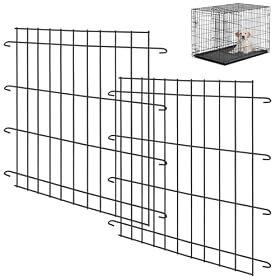
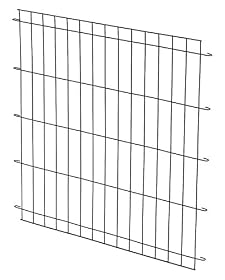
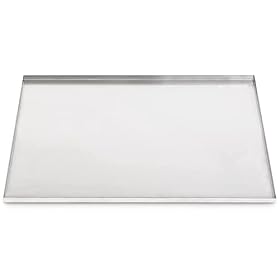
An adult-size crate with a divider can save money and give a growing dog room to mature into the space—but only if the crate can be adjusted to stay appropriately sized during house training.
Buying an adult-size dog crate with a divider can be a practical choice for a growing puppy. You purchase one crate for the dog’s expected adult size, then use the divider to limit the usable space while the dog is young. The setup works best when the crate is sturdy, easy to clean, and sized for the dog’s adult measurements—not simply the dog’s current weight.
When an adult-size crate with a divider makes sense
This approach is usually worth considering when:
Your dog is expected to grow substantially.
You want to avoid replacing a crate every few months.
The crate will be used for sleeping, travel, or short periods of confinement.
You can adjust the divider as the dog grows.
The crate has a secure door and a floor that will not flex under the dog’s weight.
A divider is especially useful during house training. Dogs generally prefer not to soil the area where they sleep, but an oversized crate may give a puppy enough room to eliminate at one end and rest at the other. The divider should provide enough space for the dog to stand up, turn around, lie down comfortably, and stretch out—without leaving a large unused section.
How to choose the adult crate size
Measure the dog rather than relying only on breed labels or weight ranges. Breed-based sizing can be a useful starting point, but individual dogs vary in height, length, and build.
Measure length
Have the dog stand naturally. Measure from the tip of the nose to the base of the tail, not the full tail length. Add enough room for the dog to turn around and lie down comfortably. A dog should not have to curl tightly to fit.
Measure height
Measure from the floor to the top of the head or the highest point of the ears, depending on which is taller. Add enough clearance for the dog to stand naturally without pressing against the crate roof.
For a puppy, estimate adult size using reliable information about the dog’s breed, parents, or expected growth. If the adult size is uncertain, choose a crate with dimensions that provide some flexibility, but avoid buying an excessively large crate solely to cover every possibility.
Product prices and availability are accurate as of the date/time indicated and are subject to change. Any price and availability information displayed on Amazon.com at the time of purchase will apply to the purchase of this product.
What the divider should do
The divider should create a smaller, adjustable living area inside the adult-size crate. It should attach securely to the crate walls and remain in place when the dog leans against it or paws at it.
Look for a divider that:
Can be repositioned without bending or cutting it.
Does not leave wide gaps where a paw, collar, or leg could become caught.
Matches the crate’s interior width and attachment points.
Leaves the dog enough room to move naturally.
Can be removed once the dog is fully grown.
A divider is not a substitute for choosing the correct crate shape. Some dogs need more height, while others need additional length. Long-bodied dogs may need a longer crate even if they are not especially tall. Shorter, stockier dogs may need more width than a narrow crate provides.
Product prices and availability are accurate as of the date/time indicated and are subject to change. Any price and availability information displayed on Amazon.com at the time of purchase will apply to the purchase of this product.
Crate styles to consider
Wire crates
Wire crates are commonly sold with adjustable dividers and provide good airflow and visibility. They are often practical for puppies because the open design makes it easier to monitor the dog and clean the crate. The tradeoff is that some dogs may be more distracted by activity around them.
Check whether the crate includes a divider and a removable tray. A crate sold without a divider may require a separately purchased divider that does not fit every interior design.
Plastic kennels
Plastic kennels offer more visual separation and can be useful for travel if they meet the requirements of the intended carrier or transport method. They are usually less flexible for growing dogs because compatible dividers may be limited or unavailable.
If you want to buy the adult size immediately, confirm that an adjustable divider is actually available for that specific kennel before purchasing it.
Furniture-style crates
Furniture-style crates can blend into a room, but they are not always the best choice for a growing puppy. They may be harder to clean, less adjustable, or less resistant to chewing and scratching. Use one only if the construction, ventilation, door, and floor are suitable for your dog’s behavior and intended use.
Product prices and availability are accurate as of the date/time indicated and are subject to change. Any price and availability information displayed on Amazon.com at the time of purchase will apply to the purchase of this product.
How to set the divider as the dog grows
Start with the smallest section that allows normal movement and comfortable rest. Watch the dog rather than treating the divider position as permanent.
Move the divider back when the dog:
Cannot stand without touching the roof.
Has difficulty turning around.
Cannot stretch out comfortably.
Is consistently crowding the sleeping area.
Has grown noticeably in height or length.
Do not move the divider forward just because the dog has gained weight. Height and length are more important than weight when deciding whether the usable crate area is large enough.
If the dog repeatedly has accidents in the crate, first check the divider position, potty schedule, time spent confined, and cleaning routine. Do not make the space so small that the dog cannot reposition comfortably.
Important features beyond the divider
A removable, washable tray
A sturdy tray makes accidents easier to clean. Check that it slides out without requiring you to lift the entire crate and that it sits flat enough not to rock or rattle.
Secure construction
The door should latch reliably, and the crate should not have sharp edges, loose wires, or openings that could catch a collar. Remove collars, harnesses, and tags when the dog is unattended in a crate unless a veterinarian or qualified trainer has advised otherwise.
Appropriate ventilation
The crate needs adequate airflow on all sides that are not intentionally covered. Never cover a crate in a way that restricts ventilation or allows the dog to overheat.
A stable floor
The crate should sit securely on the floor without sliding or tipping when the dog enters, exits, or shifts position. If the dog is strong or likely to push against the crate, choose construction appropriate for that behavior rather than relying only on the advertised size.
When buying the adult size is not the best choice
A smaller crate may be more practical when:
The dog’s adult size is difficult to predict.
No compatible divider is available.
The puppy is likely to chew or dislodge the divider.
The adult crate is too heavy or awkward for your living space.
You need a crate for frequent transport.
The dog is likely to outgrow the crate’s height or shape before reaching adult weight.
A puppy that is already close to adult size may not benefit much from a divider. In that case, choose a crate based on the dog’s current measurements and expected near-term growth.
Bottom line
Buying the adult-size crate now with a divider is sensible when the dog’s adult dimensions are reasonably predictable and the divider fits securely. Measure for adult height and length, use the divider to limit excess space during growth, and verify that the crate includes—or supports—a compatible divider and washable tray. If the adult size is uncertain or the divider is flimsy, buying a smaller crate first may be the safer and more practical decision.
FAQ
Can I buy one large crate for a puppy?
Yes, if the crate has a secure adjustable divider. Set the divider so the puppy can stand, turn around, lie down, and stretch out, but does not have excessive unused space.
How do I know when to move a crate divider?
Move it back when the dog cannot stand, turn around, or lie down comfortably, or when the dog is consistently crowding the sleeping area. Use the dog’s height and length rather than weight alone.
Does every adult-size dog crate include a divider?
No. Confirm the product listing and manufacturer information before buying. A separately sold divider may not fit every crate, even when the crate appears to have a similar size or design.
Is a wire crate or plastic kennel better for growing dogs?
Wire crates are often easier to adjust because they commonly support dividers and have removable trays. Plastic kennels can provide more visual separation, but compatible dividers may be less available. Choose based on the dog’s behavior, travel needs, ventilation, and cleaning requirements.