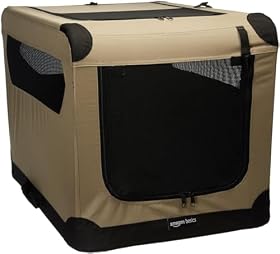
The best crate for an RV fits your dog correctly, allows adequate ventilation, and can be secured without blocking walkways or exits. Here is how to choose the right style and set it up safely.
Crate for an RV
A crate for an RV should give your dog enough room to stand, turn around, lie down, and stretch while fitting securely in the available space. Look for a crate with strong ventilation, a reliable door latch, easy cleaning, and a footprint that will not obstruct an aisle, emergency exit, or essential RV equipment.
An RV crate is not just a smaller version of a home crate. The limited floor space, movement during travel, heat buildup, and need for secure placement all affect the decision.
Measure your dog and the RV space first
Measure your dog before shopping, then measure the exact area where the crate will sit.
For your dog, record:
Nose-to-tail length while standing
Floor to the top of the head or ears, depending on the crate style
Widest body measurement
Weight, if the manufacturer uses weight limits for the crate
Your dog should be able to stand naturally, turn around, lie down, and change positions. Avoid choosing a crate so large that it cannot be secured properly, but do not sacrifice basic movement for a tighter fit.
For the RV, measure the usable floor area rather than the advertised dimensions of a compartment. Check:
Door clearance
Slide-out movement
Aisle width
Cabinet and bed clearance
Access to vents, heaters, and electrical equipment
Nearby emergency exits
The space needed to remove the crate for cleaning
Account for the crate's exterior dimensions, including handles, feet, doors, and any removable tray. A crate that technically fits may still be impractical if the door cannot open fully.
Choose a crate style that matches your RV
Folding wire crates
Folding wire crates provide ventilation and can be easier to store when not in use. They are often practical for larger dogs and for RV owners who want a crate that can also be used at home or at a campsite.
Check whether the folded crate can fit through the RV door or into a storage compartment. Wire sides may also need protection from nearby cabinets or sharp edges. A crate cover can help reduce visual stimulation, but it should not block airflow.
Plastic travel crates
Plastic crates have solid sides that can help contain dirt and may offer a more enclosed environment for dogs that settle better with less visual activity. They can also be easier to wipe clean after muddy or wet travel.
Pay close attention to ventilation openings and the usable interior size. Solid-sided crates may retain more heat if placed in a warm, poorly ventilated part of the RV. Never position one where vents, fans, or windows are blocked.
Soft-sided crates
Soft-sided crates are lightweight and convenient for calm dogs, especially when the crate is used at a campsite or inside the RV rather than during vehicle movement. They are usually a poor choice for dogs that chew, push through mesh, or become highly stressed when confined.
Inspect the frame, zippers, mesh panels, and floor. A soft crate should sit on a stable, level surface and should not be used if your dog can damage it or escape.
Heavy-duty or impact-resistant crates
These may be appropriate for powerful, anxious, or escape-prone dogs, but they can be heavy and difficult to fit in an RV. Their solid construction may also reduce usable interior space and make ventilation especially important.
Choose this style based on your dog's behavior and the manufacturer's intended use. A heavy crate is not automatically safe if it cannot be secured or if it blocks ventilation and exits.
Product prices and availability are accurate as of the date/time indicated and are subject to change. Any price and availability information displayed on Amazon.com at the time of purchase will apply to the purchase of this product.
Plan for travel safety
A crate placed in an RV should not slide, tip, or become a hazard when the vehicle moves. Follow the crate manufacturer's instructions for securing it. Depending on the design and the RV layout, this may involve positioning it against a sturdy structure and using approved restraint points or tie-down methods.
Do not attach restraints to weak cabinet panels, loose furniture, curtain hardware, or parts that are not designed to bear a load. Avoid improvised modifications that could create sharp edges or trap your dog.
During vehicle travel, keep your dog in the safest location allowed by the RV and restraint manufacturer. Never place a crate where it can block the driver's area, an emergency exit, or access to essential controls. If your RV's manufacturer or a qualified pet-travel professional provides specific restraint guidance, follow that guidance over general advice.
A crate is not a substitute for climate control. RV interiors can heat up quickly, even when the weather outside feels moderate. Provide ventilation and monitor temperature. Do not leave a dog unattended in a parked RV unless you can reliably maintain safe conditions and comply with local rules.
Product prices and availability are accurate as of the date/time indicated and are subject to change. Any price and availability information displayed on Amazon.com at the time of purchase will apply to the purchase of this product.
Consider daily living, not just driving
Many dogs will spend more time resting in the crate at a campsite than traveling. Make sure the crate works for normal use:
The door can open without hitting furniture
A removable tray can be taken out and cleaned
Bedding does not reduce standing room
Water can be offered safely when appropriate
The crate does not sit directly beside a hot appliance
Your dog can enter and exit without slipping
A crate pad should fit without bunching or leaving large gaps at the edges. Choose a washable pad with a material suited to your dog's chewing and digging habits. If your dog destroys bedding, use only the type of padding recommended by your veterinarian or crate manufacturer.
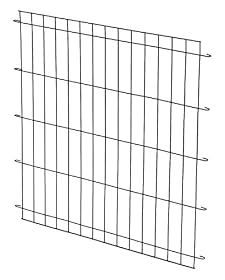
A divider can make a crate more useful for a growing puppy, but it must be installed securely and leave enough room for the dog's current size. Recheck the fit as the dog grows.
Ventilation and placement matter
Good ventilation is essential in a compact RV. Leave air openings unobstructed and avoid placing the crate in a cramped corner surrounded by bedding, clothing, or storage bins.
Do not place the crate:
In direct sun through a window
Beside a furnace, heater, stove, or hot appliance
In a sealed storage compartment
Against a vent or fan where airflow is blocked
In front of an emergency exit
Where another object could fall into it
If you use a cover, use it only when appropriate for your dog and leave ventilation openings clear. A cover should never turn the crate into an enclosed, overheated space.
Help your dog adjust before the trip
Set up the crate at home several days or weeks before traveling when possible. Let your dog investigate it voluntarily, feed treats near the entrance, and build up short periods of relaxed confinement. Practice with the same pad, bowl, cover, and door arrangement you plan to use in the RV.
Do not wait until departure day to discover that the crate door, latch, or setup causes anxiety. If your dog shows persistent panic, attempts to injure itself, or cannot settle, consult a veterinarian or qualified behavior professional before travel.
What to do if the crate does not fit
If the crate is too wide, first check whether a different orientation creates a safer layout without blocking access. Do not remove structural parts, disable the latch, or reduce the interior enough to restrict your dog's movement.
If the only available location is hot, poorly ventilated, unstable, or close to an exit, the space is not suitable. Consider a different crate style, a different RV layout, or a professionally installed restraint solution. A playpen may provide useful space at a campsite, but it is not automatically a safe replacement for a secured travel crate.
Replace the crate if the door no longer latches, the frame is bent, the plastic is cracked, the wire is broken, the tray has sharp damage, or your dog can escape. For major damage or a dog that has outgrown the crate, replacing the unit is usually more sensible than making an improvised repair.
Quick buying checklist
Before choosing a crate for an RV, confirm that:
Your dog can stand, turn, lie down, and stretch
The exterior dimensions fit the planned location
The door opens fully and remains accessible
Ventilation is adequate for the placement
The crate can be secured as directed by its manufacturer
The latch matches your dog's strength and behavior
The tray and bedding can be cleaned easily
The crate does not block an aisle, exit, vent, or control
Your dog has practiced relaxing inside it
The right choice is the crate that fits both your dog and the RV's safety requirements. A compact crate is useful only when it remains stable, ventilated, accessible, and comfortable enough for normal movement.
FAQ
Can I use a regular dog crate in an RV?
Often, yes, provided it fits securely, has adequate ventilation, and does not block an aisle, emergency exit, vent, or control. Follow the crate and RV manufacturer's instructions for placement and restraint.
What is the best crate material for an RV?
The best material depends on your dog's behavior and the RV layout. Wire offers ventilation and folding storage, plastic is easy to clean and more enclosed, and soft-sided crates are lightweight but generally suit only calm dogs that will not chew or escape.
Should a dog be crated while an RV is moving?
Use the travel arrangement recommended by the RV, crate, and restraint manufacturers. The crate or restraint must not slide, tip, obstruct the driver, or block an emergency exit. When in doubt, consult a qualified pet-travel professional.
Can I leave my dog in a crate inside a parked RV?
Only if you can reliably maintain safe temperature and ventilation and local rules permit it. An RV can heat up quickly, so never assume that a shaded or mildly warm location is safe without active climate control and monitoring.