A wire crate is usually the most versatile choice, a plastic crate is often better for dogs that prefer a more enclosed space or frequent travel, and a soft crate works best for calm, crate-trained dogs and temporary use. The best style is the one that matches your dog’s behavior, the crate’s location, and how often you need to move it.
Choosing · Mon Sep 07
Wire versus plastic versus soft crate
Wire crates are versatile and well ventilated, plastic crates offer a more enclosed den-like space, and soft crates prioritize portability. The right choice depends on your dog’s behavior, travel needs, cleanup expectations, and where the crate will be used.
Wire dog crates
Wire crates are a practical default for many homes because they provide strong ventilation, broad visibility, and easy access through one or more doors, depending on the design.
Advantages
- Good airflow on all sides
- Lets your dog see the room and lets you monitor them easily
- Often folds for storage or transport
- Usually works with a divider while a puppy grows
- A removable tray can make routine cleaning easier
- Available in many sizes and configurations
Drawbacks
- The open view can make some dogs overstimulated or unable to settle
- Metal can be noisy when a dog moves, scratches, or bumps the crate
- Open sides provide less protection from drafts and household activity
- A determined dog may bend wire, damage the door, or catch a collar or paw if the crate is poorly made or used incorrectly
A wire crate is a strong fit for a puppy that will need a divider, a dog that spends time in a central room, or an owner who wants one general-purpose crate. A cover can reduce visual distractions, but it should not block ventilation or allow the dog to pull fabric through the openings.
Grow-with-puppy setup
 Lonepetu Dog Crate Divider Panel 2-Pack, 20.5" H Kennel DividerLonepetu
$39.99 as of
View on Amazon Thick Adjustable Dog Crate Divider for 36" Crate, 24"x22.5"Santiway
$17.99 as of
View on Amazon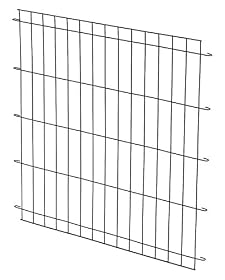 MidWest Homes for Pets Dog Crate Divider Panel for 24-inch Crates, Adjusts Living Space, Fits…MidWest Homes for Pets
$19.99 as of
View on Amazon
Product prices and availability are accurate as of the date/time indicated and are subject to change. Any price and availability information displayed on Amazon.com at the time of purchase will apply to the purchase of this product.
Plastic dog crates
Plastic crates have solid sides with ventilation openings and are often chosen for car travel, air travel when the specific crate meets the carrier’s requirements, or dogs that relax better in a more enclosed space.
Advantages
- Creates a darker, more den-like environment
- Solid sides can reduce visual distractions
- Usually lighter and less exposed than a wire crate
- Can help contain some mess better than an open-sided design
- Often convenient for vehicle transport
Drawbacks
- Less open airflow than a wire crate
- Harder to see the dog without looking through the door
- Solid walls can retain heat if the crate is placed in a warm or poorly ventilated area
- Some dogs can chew or break plastic components
- Cleaning may be less convenient if the design has narrow corners or a fixed floor
For air travel, do not assume that any plastic crate is approved. Check the current airline and manufacturer requirements, including dimensions, door construction, ventilation, fasteners, and water-container rules.
A plastic crate can be a good option for a dog that settles more easily away from household activity. It is also useful when the crate will spend substantial time in a vehicle, provided it is secured correctly and the dog is never left in unsafe temperatures.
Replacement cleanup part
 MidWest Homes for Pets Metal Dog Crate Replacement Pan; 42 inchMidWest Homes for Pets
$61.99 as of
View on Amazon MidWest Homes for Pets Metal Dog Crate Replacement Pan; 36 inchMidWest Homes for Pets
$49.99 as of
View on Amazon
Product prices and availability are accurate as of the date/time indicated and are subject to change. Any price and availability information displayed on Amazon.com at the time of purchase will apply to the purchase of this product.
Soft dog crates
Soft crates use fabric panels over a lightweight frame. They are designed primarily for portability and short-term, supervised use rather than maximum containment.
Advantages
- Light and easy to carry
- Often folds compactly for storage
- Convenient for calm dogs at shows, training classes, visits, or indoor events
- Fabric sides can feel less stark than metal or molded plastic
- Usually quick to set up and take down
Drawbacks
- Not suitable for dogs that chew, scratch, push, or panic in confinement
- Fabric can absorb urine, drool, and odors
- Mesh panels may tear and zippers can fail if a dog works at them
- Less protective from weather, other animals, and impacts
- May be harder to clean thoroughly after an accident
Choose a soft crate only if your dog is already comfortable in a crate and can remain calm without trying to escape. Supervise the first uses, especially if the dog has never been around fabric mesh or zippers. A soft crate is generally a poor choice for an untrained puppy, an anxious escape artist, or unsupervised containment.
Side-by-side comparison
| Factor | Wire crate | Plastic crate | Soft crate |
|---|---|---|---|
| Ventilation | Usually excellent | Good but more enclosed | Depends on mesh and placement |
| Visibility | High | Low to moderate | Moderate to high |
| Portability | Moderate; some fold | Moderate; often useful for vehicles | Usually best |
| Escape resistance | Moderate to high, depending on construction and dog | Moderate to high, depending on plastic and door | Low to moderate |
| Cleaning | Usually straightforward with a removable tray | Can be easy, but design varies | Usually the most difficult |
| Noise | Can be loud | Usually quieter | Usually quieter |
| Privacy | Low unless covered | Higher | Varies by fabric panels |
| Best use | Home, puppies, general purpose | Enclosed resting space and travel | Calm dogs and temporary portable use |
These are general design tendencies, not guarantees. Door hardware, ventilation openings, frame strength, seams, latches, and your dog’s behavior matter as much as the crate material.
Which crate style should you choose?
Choose a wire crate if you want one flexible home crate
Wire is usually the most adaptable option for growing dogs and households that want visibility, ventilation, and a removable tray. Add a correctly fitted cover if your dog becomes distracted by activity around the crate.
Choose a plastic crate if your dog settles better with privacy
Plastic is often preferable when a dog finds an open wire crate too stimulating or when the crate will be used regularly for vehicle travel. Confirm that the crate has enough ventilation and that its size allows the dog to stand, turn around, lie down, and change position normally.
Choose a soft crate if portability matters most
Soft crates make sense for calm, crate-trained dogs attending short events, visiting friends, or staying indoors away from home. They should not be the first choice for a dog that is still learning confinement or has a history of escaping.
Consider two crates for different jobs
Some households use a sturdy wire or plastic crate at home and a soft crate for supervised outings. This can be practical when the dog’s needs differ between overnight rest, car travel, and temporary visits. Each crate should still be introduced gradually and sized appropriately.
Size matters more than material
Measure your dog from nose to the base of the tail and from the floor to the top of the head or ears, then compare those measurements with the manufacturer’s sizing guidance. The dog should be able to:
- Stand without crouching
- Turn around normally
- Lie down fully and change position
- Stretch or rest comfortably
Avoid choosing a crate solely by weight range. Dogs with long bodies, tall ears, or unusual proportions may need a different size than their weight suggests.
A crate that is much too large can make house-training harder for some puppies because the dog may use one end as a bathroom. A wire divider can reduce the usable space while the puppy grows. Never reduce the space so far that the dog cannot move comfortably.
Safety and setup considerations
Place the crate in a stable, well-ventilated area away from direct heat, strong drafts, and cords. Do not leave collars, harnesses, or dangling tags on a crated dog unless the manufacturer and your veterinarian specifically recommend it; they can catch on crate openings.
Inspect the crate before use. Look for sharp wire ends, loose fasteners, damaged plastic, broken latches, torn mesh, and zippers that do not close fully. Confirm that doors latch securely and that the crate cannot tip or slide during normal use.
Introduce any crate gradually with positive associations. A crate is not a substitute for exercise, training, supervision, or veterinary care. If a dog is panicking, injuring itself, or repeatedly trying to escape, stop increasing confinement and consult a qualified trainer or veterinarian.
Bottom line
For most households, a wire crate is the best all-purpose starting point. Choose a plastic crate when privacy, a more enclosed feel, or vehicle use is more important. Choose a soft crate for calm, trained dogs that need a lightweight portable option. The dog’s behavior and the crate’s intended job should decide the material—not appearance alone.
FAQ
Is a wire or plastic crate better for a puppy?
A wire crate is often more adaptable because many designs accept a divider as the puppy grows. A plastic crate can also work if it is correctly sized and the puppy is comfortable with its more enclosed design.
Are soft crates safe for dogs?
Soft crates can be safe for calm, crate-trained dogs when used correctly and supervised. They are not a good choice for dogs that chew, scratch, panic, or try to escape, because fabric, mesh, and zippers can be damaged.
Which type of dog crate is easiest to clean?
Wire crates with removable trays are often the simplest for routine cleaning. Plastic crates can also clean up well, but corners and ventilation areas vary by design. Soft crates are usually the hardest to clean after urine, vomit, or heavy drool reaches the fabric.
Can a dog use a wire crate and a plastic crate?
Yes. A dog can learn to use different crate styles if each is introduced gradually and has adequate space, ventilation, and secure hardware. Keep the routine and positive associations consistent.