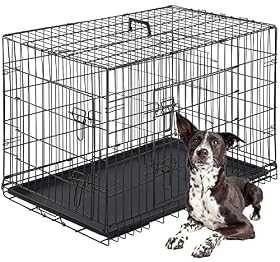
If a double-door dog crate will not fit through your hallway, measure the assembled crate at its widest points, account for door swing and corner clearance, and avoid forcing it through. The safest fix may be a different orientation, a narrower crate, or a crate that folds for moving.
A double-door crate may not fit a hallway even when the crate’s listed width looks smaller than the hallway. Hinges, latches, handles, feet, and the open door can add several inches, while a corner may require enough room to turn the crate. Measure the fully assembled crate and the narrowest part of the route before moving your dog inside it.
Measure the route first
Measure more than the hallway’s straight width. Check:
The hallway’s narrowest point
Doorways and trim
Baseboards, wall corners, and radiator covers
The clearance beneath or around handrails and furniture
The space available to turn at each corner
The height if the crate must be tilted
Use the smallest measurement, not the average hallway width. Also measure the crate’s actual outside dimensions, including feet, corner caps, handles, latches, and any parts that stick out.
A crate that technically fits through a straight section may still be impossible to turn. For a corner, mark the crate’s footprint on the floor with painter’s tape or cardboard. This gives you a quick way to see whether the crate can rotate without striking the walls.
Check the double-door layout
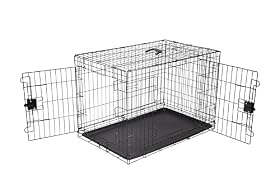
A second door does not necessarily make a crate easier to move through a hallway. On many wire crates, the side door adds hinges and a latch to the crate’s width. The front door may also need to remain closed while the crate is being carried, which increases the effective size if it projects outward.
Before moving it, check:
Which side is the widest when both doors are closed?
Whether a door, latch, or handle projects past the main crate body
Whether the door can be removed according to the manufacturer’s instructions
Whether the crate can be folded without tools
Whether the folded crate is still too large for the hallway or doorway
Do not remove a door, latch, or structural panel if doing so could leave sharp edges or make the crate unsafe. A crate should be fully secured before a dog is placed inside it.
Product prices and availability are accurate as of the date/time indicated and are subject to change. Any price and availability information displayed on Amazon.com at the time of purchase will apply to the purchase of this product.
Try the safest moving orientation
If the crate is only slightly wider than the hallway, a different orientation may solve the problem. With another person supporting it, try moving the empty crate:
Lengthwise through the straight section
With the narrowest side facing the hallway walls
Diagonally through a doorway, if the frame and ceiling provide enough clearance
One end at a time around a corner
Protect walls and floors with moving blankets, but do not drag the crate over flooring that could catch on its feet or base. Lift rather than force it through a tight opening. For a large crate, have two adults carry it, and keep fingers away from hinges and pinch points.
Never attempt to move a dog inside a crate that is catching on walls, door frames, or furniture. Remove the dog first and use a separate safe area during the move.
Product prices and availability are accurate as of the date/time indicated and are subject to change. Any price and availability information displayed on Amazon.com at the time of purchase will apply to the purchase of this product.
Confirm the crate is the right size for the dog
A narrower replacement is only appropriate if the dog still has enough room to stand naturally, turn around, lie down, and change position. The crate should not be selected solely by the hallway measurement.
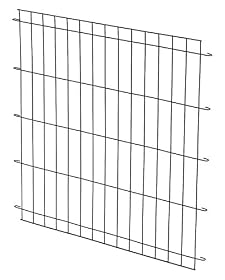
If the dog is still growing, a crate with a correctly installed divider can provide more usable space over time. The divider must be secure and positioned so the dog has a comfortable sleeping area without leaving excessive space for indoor elimination during house training.
Do not reduce the crate size so much that the dog cannot move comfortably. If no crate that fits the hallway provides adequate interior room, consider placing the crate in another part of the home rather than compromising the dog’s space.
Product prices and availability are accurate as of the date/time indicated and are subject to change. Any price and availability information displayed on Amazon.com at the time of purchase will apply to the purchase of this product.
When a different crate is the better solution
Replace or relocate the crate when:
The assembled crate cannot clear the hallway even when angled
The crate would need to be forced, dismantled unsafely, or carried at a dangerous angle
The dog’s correctly sized crate is too large for the available route
The double-door hardware creates the problem and a single-door design would work better
The crate is difficult for one or two adults to handle safely
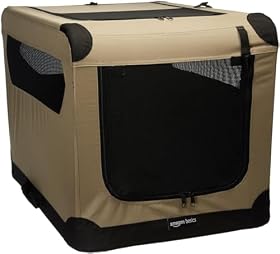
A narrower wire crate may solve a tight hallway, but compare the interior dimensions—not just the outside width. A folding crate can be easier to transport, although its folded dimensions and stability still matter. A plastic kennel may have a different shape that works better through a doorway, but it can also be wider at the base or less convenient to carry.
If the crate is used in one fixed location, moving it through the hallway may be a one-time problem. If you regularly carry it between rooms, choose a design whose assembled and folded dimensions both fit the route.
A quick fit checklist
Before buying or moving a replacement, record:
The dog’s standing height, body length, and turning space needs
The crate’s interior dimensions
The crate’s maximum outside width and length
The folded dimensions, if applicable
The narrowest hallway and doorway measurements
The available turning space at corners
The location of doors, latches, handles, and feet
Whether the crate can be safely disassembled or folded
If the measurements are close, leave extra clearance rather than buying to the exact limit. Walls are rarely perfectly straight, and a crate can be difficult to maneuver even when the numbers appear to match.
FAQ
Can I remove one door from a double-door dog crate to make it narrower?
Only if the manufacturer specifically permits it and the remaining crate has no sharp edges, loose panels, or weakened frame. Removing a door usually does not reduce the crate’s main body width, so measure before attempting it.
How much hallway clearance does a dog crate need?
There is no universal clearance because crate shape and corners vary. Measure the crate at its widest outside points and allow additional room to turn, avoid trim, and keep hands clear while carrying it. Do not plan on forcing a crate through an opening with almost no clearance.
Will a side door make a dog crate easier to use in a hallway?
It can make access easier after the crate is in place, but it does not necessarily make the crate easier to move. Side-door hinges and latches may add width, and the door still needs safe clearance to open.
Should I buy a smaller crate if the current one will not fit?
Only if the smaller crate still lets the dog stand, turn, lie down, and change position comfortably. If it does not, relocate the crate or choose a different shape or folding design instead of reducing the dog’s usable space.