A crate inside an exercise pen can give a puppy a secure sleeping area plus room to move, play, and use designated potty equipment. Here is how to set up the combination safely and decide whether it fits your home.
What do you need help with?
Open an answer, or tell us what we should cover next.
Answered in this guide
Set up a crate and exercise pen as a puppy suite
Put the crate inside, attached to, or beside the exercise pen, with the crate door opening into the puppy’s shared space. Add only safe essentials and keep the arrangement secure and easy to supervise.
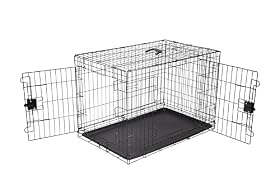
Choose a crate that lets the puppy stand, turn around, lie down comfortably, and stretch out, without leaving enough extra room to use one end as a bathroom.
Stabilize a pen that slides, address climbing or escaping, respond to accidents, and limit chewing risks by adjusting the surface, connectors, accessories, and items inside the setup.
A crate-and-pen setup is a good choice when a young puppy needs a secure sleeping area, limited access, room to move, and a manageable daytime space instead of full house access.
Request a topic and help us choose what to build next.
Compare using a crate alone with using an exercise pen
House-train a puppy to use a designated potty area
Secure a puppy safely for car travel
Move a puppy from the suite to more household freedom
Requests help us prioritize the next guide. No email required.
One anonymous request per topic.
Exercise pen plus crate as a puppy suite
An exercise pen with a dog crate can work as a flexible puppy suite: the crate provides a quiet sleeping space, while the pen adds room for movement, toys, water, and supervised activities. It is especially useful when a puppy cannot yet be trusted with full access to the house. The setup still needs careful sizing, secure attachment, and regular supervision so the pen does not become a place for unsafe chewing or indoor potty habits.
What a puppy suite is
A puppy suite is a defined area that combines:
A correctly sized dog crate for sleeping and resting
An exercise pen surrounding or adjoining the crate
Water in a stable, spill-resistant bowl
A few safe toys
A washable surface or crate tray
A designated potty area only when appropriate for your training plan
The crate should remain the puppy’s calm, sleep-focused space. The pen is the larger activity area. Keeping those functions separate can make the crate easier to use for naps, nighttime sleep, travel, and short periods of confinement.
Product prices and availability are accurate as of the date/time indicated and are subject to change. Any price and availability information displayed on Amazon.com at the time of purchase will apply to the purchase of this product.
Why combine a crate and exercise pen?
More freedom without full house access
Young puppies often need frequent supervision and may chew cords, swallow objects, or have accidents. A pen limits access to a manageable area while allowing more movement than a closed crate.
A gradual transition to independence
You can begin with the crate door open inside the pen, then gradually increase the puppy’s access to larger parts of the home as house manners improve. This is often more practical than expecting a puppy to stay in a crate for every unsupervised period.
A useful daytime arrangement
The combination can be convenient when you need to work nearby, prepare meals, or take a short break while keeping the puppy in sight. It is not a substitute for exercise, training, socialization, or regular bathroom breaks.
Product prices and availability are accurate as of the date/time indicated and are subject to change. Any price and availability information displayed on Amazon.com at the time of purchase will apply to the purchase of this product.
How to choose the crate size
The crate should be large enough for the puppy to stand up, turn around, lie down comfortably, and stretch out in a normal position. It should not be so oversized that the puppy can easily use one end as a bathroom and the other as a bed.
For a growing puppy, a crate with an adjustable divider can be practical. The divider lets you provide only the space the puppy currently needs and move it as the dog grows. Check the divider and crate regularly for bent wire, loose hardware, or openings where a puppy could get its head or paws caught.
Do not select the crate based only on current weight. Compare the manufacturer’s size guidance with the puppy’s expected adult dimensions, body shape, and sleeping position.
Product prices and availability are accurate as of the date/time indicated and are subject to change. Any price and availability information displayed on Amazon.com at the time of purchase will apply to the purchase of this product.
How to choose the exercise pen
The pen should be tall and sturdy enough for the individual puppy. Height alone is not the only concern: some puppies climb, push, or lean against panels, while others can squeeze through wide openings.
Look for:
Panel spacing that cannot trap the puppy’s head or limbs
A stable base or connectors that resist being pushed apart
A door that latches securely
Construction that does not expose sharp edges
Enough floor space for the crate and a comfortable movement area
A layout that leaves the crate door clear
The pen does not need to be enormous. It should provide useful movement and play space without creating a large area where the puppy can repeatedly eliminate away from its sleeping area.
Three practical setup options
Crate inside the pen
Place the crate fully inside the exercise pen with the door opening into the pen. This is usually the simplest arrangement. Secure the crate if the puppy can push it across the floor or tip it against the pen panels.
Keep the crate door from swinging into a position that could trap the puppy. If the door can be removed or safely secured open, follow the crate manufacturer’s instructions.
Crate attached to the outside of the pen
Some setups place the crate against the pen with the crate door opening into the enclosed area. This can preserve more usable floor space, but it creates additional connection points that must be checked carefully.
Make sure there is no gap between the crate and pen where a collar, paw, or jaw could become caught. Do not improvise a connection with loose cords or materials a puppy can chew.
Pen beside the crate
A pen next to a closed crate can be useful when the puppy needs a separate rest period. This arrangement gives you more control over when the puppy has access to the larger area, but the crate must still be positioned so the puppy cannot reach dangerous objects through the bars.
What to put inside
Start with only the items the puppy needs:
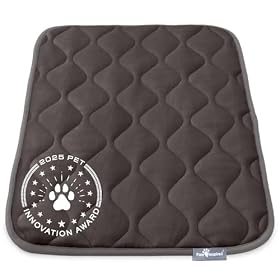
A crate pad or washable bedding, if the puppy is not shredding or eating it
One or two durable, age-appropriate toys
A stable water bowl when water is needed
A safe chew approved for the puppy’s size and chewing style
A washable floor covering if the surface is slippery or difficult to clean
Avoid overcrowding the pen. Loose blankets, plush toys, clips, and household objects can become chewing or swallowing hazards. Remove any item that the puppy tears, guards, or attempts to ingest.
If you use pee pads or another indoor potty option, place them as far from the sleeping crate as the pen allows. Understand that an indoor potty area can slow outdoor house-training for some puppies. Use the approach that matches your veterinarian’s or trainer’s guidance and your daily schedule.
A safe daily routine
A puppy suite works best as part of a routine rather than as constant confinement. A typical cycle may include:
Potty break
Short training or supervised play
Rest in the crate or pen
Another potty break after waking, eating, drinking, or active play
Gradually longer periods of supervised independence
Puppies need frequent bathroom opportunities and age-appropriate activity. The crate should not be used to compensate for a lack of exercise or attention. If the puppy is repeatedly distressed, barking for long periods, trying to escape, or having frequent accidents, reduce the confinement period and reassess the routine.
Common problems and fixes
The puppy pushes the pen across the floor
Move the pen to a less slippery surface, use the manufacturer’s stabilizing accessories if available, and check that all panel connectors are fully engaged. Do not depend on a lightweight pen for a puppy that can lift or collapse it.
The puppy climbs out
Increase supervision immediately and use a more appropriate pen design or height for that dog. Do not add improvised netting, fabric, or objects that could create a strangulation or entanglement hazard.
The puppy eliminates inside the pen
Review the time between potty breaks, especially after sleep, meals, drinking, and play. Clean accidents with an appropriate enzymatic cleaner and avoid making the pen so large that the puppy can easily sleep in one area and eliminate in another. Persistent accidents, diarrhea, straining, or sudden changes should be discussed with a veterinarian.
The puppy chews the crate or pen
Remove damaged items, inspect for sharp edges, and provide safe alternatives while supervising. A puppy that is repeatedly trying to chew or escape may be overtired, under-stimulated, anxious, or confined for too long. Consult a qualified trainer or veterinarian if the behavior is intense or creates an injury risk.
The puppy refuses to enter the crate
Keep the crate door open inside the pen and build positive associations with meals, treats, and calm rest. Never force the puppy inside as punishment. If the puppy shows signs of panic rather than ordinary protest, seek guidance from a qualified trainer or veterinary behavior professional.
When this setup is a good choice
A crate-plus-pen arrangement is often useful when:
You have a young puppy that needs close management
You want a safer daytime area than a closed crate alone
You need to separate a puppy from other pets temporarily
You can supervise and provide regular potty breaks
You want to expand the puppy’s freedom gradually
It may be a poor fit if the puppy can climb or dismantle the pen, if the area cannot be made free of hazards, or if the setup would be used for excessive periods without breaks.
When to move beyond the puppy suite
Begin allowing more household access when the puppy is reliably house-trained, no longer persistently chewing unsafe items, and can settle calmly outside the pen. Expand access one room or supervised area at a time.
Keep the crate available as a voluntary resting place even after the pen is no longer needed. If the crate, pen, tray, or panels are damaged beyond safe repair, replace the affected item rather than continuing to use it with exposed wires, broken latches, or unstable connections.
FAQ
Can a crate stay inside an exercise pen all day?
It should not be treated as an all-day substitute for exercise, training, social contact, and bathroom breaks. The appropriate duration depends on the puppy’s age, health, routine, and individual behavior. Provide frequent breaks and consult a veterinarian or qualified trainer if the puppy cannot settle comfortably.
Should the crate door be open inside the exercise pen?
Usually, yes, when the pen is being used as a larger supervised area. An open crate lets the puppy choose the quiet sleeping space. Make sure the door cannot swing into a position that could trap the puppy, and close the crate only when you are intentionally providing a separate rest period.
How big should the pen be around a dog crate?
It should leave enough room for the puppy to stand, stretch, play safely, and access water without crowding the crate. Avoid making it so large that the puppy can routinely eliminate far away from the sleeping area, especially during house-training.
Is a puppy suite better than a crate alone?
A suite provides more movement and can be useful for supervised daytime management, but it is not automatically better. A crate alone may be appropriate for short rest periods, while a pen can help when the puppy needs a little more space. The best choice depends on the puppy’s age, behavior, training progress, and how often breaks are provided.