The best collapsible crate for travel depends on your dog’s size, behavior, transportation method, and where the crate will be used. Use this guide to choose between soft-sided, folding wire, and other portable designs.
The best collapsible crate for travel is one that fits your dog correctly, folds small enough for your trip, and matches how your dog behaves when confined. A soft-sided crate is usually the easiest to carry for calm dogs and indoor stays, while a folding wire crate is generally a better choice for dogs that scratch, chew, or need more ventilation. For car travel, check the crate manufacturer’s instructions carefully because a portable crate is not automatically crash-tested or suitable as a vehicle restraint.
Quick recommendations by travel situation
Air travel: Check the airline’s current rules before buying. Many collapsible crates are not approved for use in an aircraft cabin or cargo hold.
Hotels, visits, and indoor stays: A soft-sided crate is often the lightest and easiest option for a crate-trained dog.
Road trips with a calm dog: A soft-sided or folding wire crate may work, depending on ventilation, available space, and how the crate can be secured.
Dogs that push, scratch, or chew: Choose a sturdier folding wire crate or another design specifically suited to escape-prone dogs.
Camping or outdoor use: Prioritize durable fabric, protected zippers, washable surfaces, and secure anchoring. A soft crate should not be left exposed to rain or used as a substitute for a secure outdoor kennel.
Choose the right collapsible crate style
Soft-sided collapsible crates
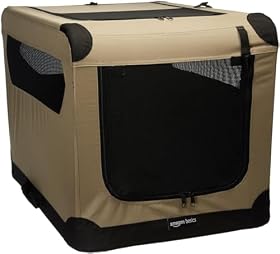
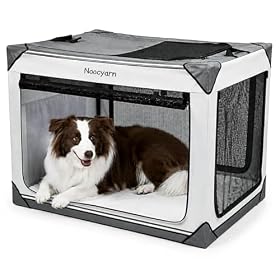
Soft crates typically use a fabric shell over a lightweight frame. They are convenient for travel because they are light, quick to set up, and often include carrying handles, storage pockets, mesh windows, and a removable floor mat.
They work best for dogs that are already comfortable in a crate and do not attempt to escape. Mesh panels improve airflow and visibility, but they can be damaged by claws or teeth. Fabric also absorbs odors and moisture more readily than plastic or metal.
Look for reinforced corners, strong zippers, a rigid base, washable materials, and mesh on more than one side. A door that can be rolled up and secured is useful at a destination, but make sure the fasteners cannot be reached and opened by your dog.
Folding wire crates
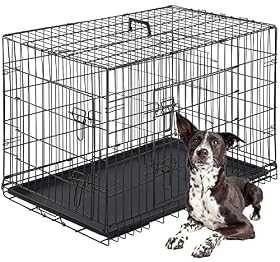
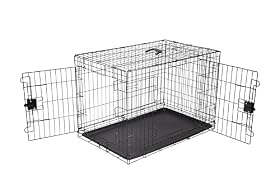
Folding wire crates are heavier and less streamlined than soft crates, but they usually offer better airflow and resist scratching and chewing. Many include a removable plastic tray and a divider panel, which can help adjust the interior for a growing puppy.
A wire crate is a practical choice for road trips, temporary lodging, and dogs that are too active for fabric. However, exposed wire can catch collars, tags, or paws if the crate is damaged or assembled incorrectly. Inspect the joints, latches, and wire before each trip.
Wire crates also need protection from direct sun and cold drafts. A cover can reduce visual stimulation, but never block ventilation or allow fabric to hang where the dog can pull it through the bars.
Folding plastic or hybrid crates
Some portable crates use molded plastic panels, a folding frame, or a combination of hard and soft materials. These can offer more structure than fabric without the weight of a conventional hard kennel.
Check how the panels lock together and whether replacement parts are available. A design that depends on several clips or hinges may be less convenient if a component breaks during travel. Confirm that the crate is intended for your dog’s size and behavior rather than assuming that a rigid-looking shell is escape-proof.
Product prices and availability are accurate as of the date/time indicated and are subject to change. Any price and availability information displayed on Amazon.com at the time of purchase will apply to the purchase of this product.
Get the crate size right
Measure your dog while standing from the tip of the nose to the base of the tail, not including the tail. Then measure from the floor to the top of the head or ears, whichever is higher. The dog should be able to:
Stand without crouching
Turn around normally
Lie down comfortably on their side
Sit without pressing against the top
The crate should not be so large that the dog can use one end as a sleeping area and another as a bathroom, particularly during house-training. For puppies, a divider can provide a properly sized area while allowing the crate to grow with the dog.
Allow room for a thin, appropriate pad, but do not size the crate based on a thick bed that may be removed for travel. Test the crate at home before leaving so you can confirm that your dog can enter, turn, settle, and exit without catching paws or nails.
Product prices and availability are accurate as of the date/time indicated and are subject to change. Any price and availability information displayed on Amazon.com at the time of purchase will apply to the purchase of this product.
Features that matter when traveling
Folded size and carrying weight
Compare both the assembled dimensions and the folded dimensions. A crate may fit your dog well but still be awkward in a trunk, hotel room, or narrow hallway. Check the total weight if you will carry it through parking lots, airports, or stairs.
Handles are helpful, but they do not necessarily make a crate safe to carry with a dog inside. Follow the manufacturer’s instructions for moving the crate and dog.
Ventilation and visibility
Mesh windows, wire sides, and ventilation openings help manage heat and allow air movement. More visibility is not always better: some dogs settle more easily when part of the crate is covered. Any cover should leave sufficient airflow and should not be used in hot, poorly ventilated spaces.
Never leave a crated dog in a parked vehicle, even for a short period. Temperatures inside a vehicle can become dangerous quickly.
Doors and latches
A travel crate may have front, side, or top access. Multiple doors can make placement easier, but each door adds another latch to inspect. Look for closures that are difficult for the dog to operate and that remain fully secured when the crate is folded or moved.
Before each trip, open and close every latch, check the stitching or welds around the door, and look for bent panels or loose hardware.
Cleaning and moisture resistance
Travel often means dirt, spilled water, and accidents. A removable, washable floor is valuable. Soft crates should have fabric that can be wiped down and dried thoroughly; wire crates should have a tray that slides out without catching on the frame.
Avoid packing a wet crate immediately after use. Damp fabric can develop odors or mildew, and a wet pad can make the dog uncomfortable.
Is a collapsible crate safe for car travel?
Not automatically. Many collapsible crates are designed for containment at a destination, not for protecting a dog in a collision. Check the manufacturer’s stated use and any crash-testing information rather than relying on the crate’s appearance.
For vehicle travel, secure the dog according to veterinary and manufacturer guidance. A crate should not slide, tip, or block the driver’s view. Keep the crate away from airbags and do not attach a tether to a soft crate unless the manufacturer specifically allows it. If crash protection is the priority, compare products designed and labeled for vehicle use rather than choosing solely by folding convenience.
How to make a travel crate easier to use
Set it up at home several days or weeks before the trip.
Leave the door open and use treats or meals to create a positive association.
Practice short, calm periods inside before attempting a long journey.
Add a familiar washable pad or blanket, provided your dog will not chew or shred it.
Confirm that the crate fits the intended room, vehicle area, or lodging space.
Pack spare bedding, cleaning supplies, water, and any required medications.
Do not force an untrained dog into a soft crate and assume the crate will contain them during travel. If the dog repeatedly claws through the fabric, damages the door, pants excessively, or shows signs of distress, stop and work on crate conditioning or ask a veterinarian or qualified behavior professional for guidance.
When to choose something other than a collapsible crate
A collapsible crate may not be the right choice for a dog that is highly anxious, destructive, injured, or unable to remain safely confined. A sturdier crate, a properly secured vehicle kennel, or a travel playpen may be more appropriate depending on the situation.
Replace the crate when the frame is bent, fabric is torn near a door or seam, mesh is separating, hinges no longer lock, or latches can open with light pressure. A replacement tray, divider, or cover can solve a limited problem, but structural damage is a reason to replace the crate rather than patch it and hope it holds.
Bottom line
For most calm, crate-trained dogs traveling to hotels or indoor destinations, a lightweight soft-sided crate is the most convenient collapsible option. Choose a folding wire crate when ventilation, durability, or resistance to scratching matters more than low weight. In either case, measure your dog carefully, practice before the trip, inspect the crate every time, and verify that the design is suitable for the specific way you plan to travel.
FAQ
What type of collapsible crate is best for travel?
A soft-sided crate is usually best for a calm, crate-trained dog traveling to indoor locations because it is lightweight and easy to carry. A folding wire crate is generally better for dogs that scratch, chew, or need maximum airflow.
How do I know what size travel crate my dog needs?
Your dog should be able to stand without crouching, turn around normally, sit without touching the top, and lie down comfortably. Measure your dog’s standing height and body length, then compare those measurements with the manufacturer’s interior dimensions.
Can I use a collapsible crate in the car?
Only if the manufacturer says it is suitable for vehicle use and you can secure it correctly. Many portable crates are intended for containment at a destination and are not crash-tested. Never assume that a folding crate provides collision protection.
Are soft-sided crates suitable for puppies?
They can be suitable for a calm, crate-trained puppy, but fabric crates are vulnerable to chewing, scratching, and accidents. A folding wire crate with a divider is often easier to clean and adjust as a puppy grows.
How can I stop my dog from escaping a travel crate?
First, check that the crate is correctly assembled and all doors and zippers are secured. Then practice gradual crate conditioning. If your dog continues trying to escape or damages the crate, choose a sturdier design and consult a veterinarian or qualified behavior professional if anxiety is involved.