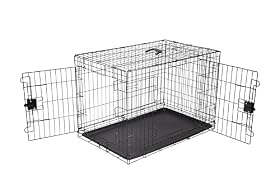
A two-door dog crate is usually the most flexible choice for kitchen placement because it can open toward the room or a nearby walkway. Learn how to choose the right size, door layout, tray, divider, and clearance before buying.
Best crate for two-door kitchen placement
For most kitchens, the best dog crate is a two-door crate with one door on the front and another on the side. This layout lets you position the crate against a wall or cabinet while keeping the usable door facing an open walkway. Before buying, measure the intended location, account for both door swings, and choose a crate large enough for your dog to stand, turn around, lie down, and stretch comfortably.
Why a two-door crate works well in a kitchen
Kitchen layouts often leave limited space around walls, islands, appliances, and traffic paths. A front-only crate may fit physically but force you to open the door into a cabinet, counter, or walkway. A side door gives you another access point when the crate cannot be oriented straight toward the room.
A two-door design can also help with:
Daily access: Use the door that is least obstructed during meal preparation.
Flexible placement: Reorient the crate if furniture or appliances move.
Training: Approach the crate from different directions without reaching over the dog.
Cleaning: A side opening may make it easier to remove a tray or reach a soiled area.
Emergency access: An alternate door can be useful if one side becomes blocked.
The second door is only helpful if it can open safely. A crate that technically fits but has doors blocked by a refrigerator, island, or wall is not a practical kitchen setup.
Measure the kitchen location before choosing a crate
Measure the available floor area, then check the crate’s outside dimensions, not just its listed interior size. Leave enough room to open at least one door fully and to walk around the crate without bumping it.
Check these measurements:
Width and depth of the floor space: Include baseboards and any trim that prevent the crate from sitting flush against a wall.
Door-swing clearance: Open each crate door completely and confirm it will not hit cabinets, an island, an appliance, or a person’s normal walking path.
Height clearance: Make sure upper cabinets, shelves, and countertops do not interfere with the crate or its door hardware.
Tray-removal clearance: Many crates require the tray to slide out from one end. Leave enough space to remove it for cleaning.
Ventilation space: Do not wedge the crate tightly between heat-producing appliances or block ventilation with storage items.
If the crate will sit near a kitchen walkway, place the primary door toward the room’s open area and keep the alternate door accessible without creating a trip hazard.
Product prices and availability are accurate as of the date/time indicated and are subject to change. Any price and availability information displayed on Amazon.com at the time of purchase will apply to the purchase of this product.
Choose the correct crate size
A crate should be large enough for the dog to stand naturally, turn around, lie down, and stretch out. It should not be so oversized that the dog can comfortably use one end as a sleeping area and the other as a bathroom, especially during house training.
Measure your dog while standing and lying down. Compare those measurements with the manufacturer’s interior dimensions, because the usable space may be reduced by the door frame, corner hardware, and tray lip.
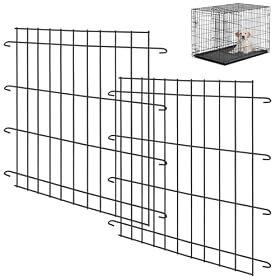
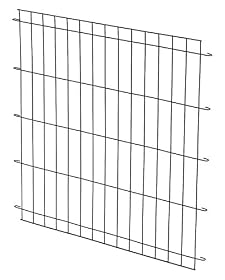
For a growing puppy, a crate with a divider panel can be more practical than buying several crates. Start with the divider positioned to provide appropriate space, then move it as the puppy grows. The divider must be secure and should not leave gaps where a puppy could become caught.
Breed labels such as “small,” “medium,” or “large” are only starting points. Dogs of the same breed can differ substantially in height, length, and body shape, so measurements are more reliable than the label alone.
Product prices and availability are accurate as of the date/time indicated and are subject to change. Any price and availability information displayed on Amazon.com at the time of purchase will apply to the purchase of this product.
Features that matter in a kitchen
Removable, leak-resistant tray
A removable plastic or coated tray makes accidents and spilled water easier to clean. Look for a tray that fits securely and does not slide easily when the dog moves around. A raised edge can help contain minor spills, but it will not prevent every leak.
Check whether the tray can be removed with the crate in its planned position. If it cannot, you may need to move the entire crate whenever it needs cleaning.
Secure door latches
The front and side doors should latch positively and resist casual pushing from inside. Inspect the latch design for gaps that could catch a collar, tag, paw, or toenail. Follow the manufacturer’s instructions for checking and maintaining the hardware.
If your dog is a persistent escape artist, a basic wire crate may not be appropriate. Consider a more robust crate designed for that dog’s behavior, and consult a qualified trainer or veterinarian if confinement attempts create a safety risk.
Ventilation and visibility
Wire crates provide ventilation and visibility on multiple sides, which can suit a kitchen where the dog needs to remain part of household activity. However, an exposed crate may be too stimulating for some dogs. A properly fitted crate cover can reduce visual distractions, but it must not block airflow or allow the dog to pull fabric through the bars.
Plastic crates can provide more enclosure and may be easier to move, but their door placement and ventilation pattern may be less convenient in a tight kitchen. Compare the actual door locations rather than assuming every two-door model has the same arrangement.
Stable construction
The crate should sit level and remain stable when the dog enters, exits, or shifts position. Avoid placing it on an uneven mat that allows it to rock. If the crate slides on smooth flooring, use a suitable non-slip surface that does not interfere with the tray or create a chewing hazard.
Product prices and availability are accurate as of the date/time indicated and are subject to change. Any price and availability information displayed on Amazon.com at the time of purchase will apply to the purchase of this product.
Where to place the crate in a kitchen
A kitchen crate should be close enough for normal household interaction but away from hazards. Favor a calm corner with a clear escape route for people and a door that opens into unobstructed space.
Avoid placing the crate:
Directly beside a hot oven, range, radiator, or heating vent
Under a countertop edge where falling objects could reach the dog
In front of a refrigerator, pantry, or frequently used cabinet
Where spilled cleaners, food scraps, or sharp objects can reach it
In a narrow passage where the open door creates a trip hazard
In direct sunlight that can make the interior excessively hot
Do not use the crate as a barrier to contain the dog during cooking unless the dog is comfortable and the crate is positioned safely. Keep hot cookware, cords, knives, cleaning products, and food that is toxic to dogs out of reach.
Two-door crate buying checklist
Before ordering, confirm the following details on the manufacturer’s product page or instructions:
The crate has a front door and a side door in the locations your kitchen requires.
The outside dimensions fit the space, including baseboards and nearby obstacles.
At least one door can open fully without blocking a walkway.
The tray can be removed from the installed position.
The interior dimensions suit the dog now, or the crate includes a secure divider for a growing puppy.
Both doors use secure, dog-safe latches.
The construction is appropriate for the dog’s strength and behavior.
The crate’s weight is manageable if it must be moved for cleaning.
Replacement trays, dividers, or other parts are available if needed.
When a different setup may be better
A two-door wire crate is not automatically the best choice for every kitchen. A plastic crate may be better if the dog settles more easily with reduced visual stimulation or if the crate needs to be transported regularly. A heavy-duty crate may be more appropriate for a dog that bends wire, opens ordinary latches, or repeatedly injures itself trying to escape.
If your kitchen has no safe door clearance, a crate may not be the right solution for that location. A nearby room, a properly sized playpen, or a gated dog-safe area can provide more usable space without placing the crate in a traffic path.
A crate should not be used as a substitute for exercise, supervision, or a gradual confinement-training plan. Introduce it positively and follow veterinary or qualified training guidance if your dog shows panic, persistent distress, or attempts to injure itself while confined.
FAQ
Should a dog crate door open toward the kitchen or away from it?
Open the main door toward the least obstructed area, preferably away from cabinets, appliances, and high-traffic paths. The second door should remain usable without creating a trip hazard.
Is a two-door dog crate better than a one-door crate for a kitchen?
Often, yes. A front-and-side door layout gives you more placement flexibility and can make access and cleaning easier. It is only an advantage if both doors have safe clearance and secure latches.
How much space should be left around a dog crate?
Leave enough space to open at least one door fully, walk around it safely, and remove the tray. The exact clearance depends on the crate’s door and tray design, so measure the assembled crate rather than relying only on its interior size.
Can a dog crate sit next to the stove?
It is safer to keep the crate away from stoves, ovens, hot cookware, heating vents, and areas where grease or food can splatter. Choose a cooler, calmer location with good ventilation and no falling-object risk.
Do I need a divider in a two-door puppy crate?
A divider is useful when the crate will accommodate a growing puppy. It lets you provide an appropriately sized area now and expand it gradually, provided the divider is secure and leaves no hazardous gaps.