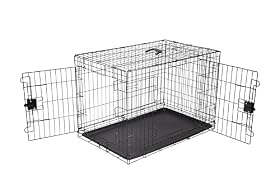
The right crate for a senior dog with arthritis should make resting easier, not force painful movement. Look for a low entry, stable floor, enough room to reposition, and supportive padding that does not overheat or become difficult to clean.
A crate for a senior dog with arthritis should provide a quiet, stable place to rest without requiring painful steps, tight turns, or slippery movements. Choose a crate with enough floor space for your dog to stand, turn around, and lie down comfortably; add supportive bedding with a low step-in height, and place the crate on a nonslip surface in an easy-to-reach part of the home.
What to look for in a crate
Choose the right size
Your dog should be able to:
Stand upright without pressing against the roof
Turn around without twisting tightly
Lie fully on their side with legs extended
Change positions without hitting the crate walls
Avoid sizing up so far that the crate feels unstable or makes house-training harder. For an older dog, however, usable floor space matters more than a very snug fit. Measure your dog while standing and lying down, then compare those measurements with the crate’s interior dimensions—not its exterior size.
If your dog’s size has changed with age, measure again before buying. Weight alone is not a reliable way to select a crate.
Prefer an easy-access door
A door that opens close to floor level is generally easier for a dog with stiff hips, knees, or elbows. Look for:
A low threshold that does not require a high step
A door wide enough for your dog’s shoulders and hips
Smooth edges and hardware that will not catch fur or paws
A latch that caregivers can operate easily
A crate with a side door may work better than one that requires your dog to approach from a narrow end. If the crate has multiple doors, use the opening that allows the straightest, least awkward entry.
Do not remove or modify a crate door unless the manufacturer permits it. A loose or altered door can create a safety hazard.
Stability matters more than portability
A senior dog may be less able to catch themselves after slipping or bumping the crate. The crate should remain steady when your dog enters, exits, or changes position. Wire crates can be practical because they provide ventilation and visibility, but they may need a nonslip mat underneath and a properly fitted tray.
Plastic-sided crates can block drafts and create a more enclosed resting space, but check that the doorway is easy to enter and that ventilation is adequate. Soft-sided crates are usually best only for calm dogs that will not push, scratch, or chew the fabric.
Make the floor supportive and nonslip
The crate floor is often as important as the crate itself. A hard plastic tray or bare wire floor can be uncomfortable for joints, while a loose blanket can bunch up and cause falls.
Has enough cushioning to reduce pressure on hips, elbows, and shoulders
Has a nonslip or stable underside
Is washable and quick to dry
Does not become dangerously hot under your dog
Orthopedic foam can provide useful support, but excessive height can make stepping in and out harder. A low-profile supportive pad may be a better choice than a very thick bed for a dog with limited mobility.
If your dog has accidents, vomiting, or incontinence, choose a washable cover and place an appropriate waterproof layer beneath—not on top of a surface that your dog could easily bunch up. Check the bedding often for dampness, heat buildup, or flattened areas.
Product prices and availability are accurate as of the date/time indicated and are subject to change. Any price and availability information displayed on Amazon.com at the time of purchase will apply to the purchase of this product.
Set up the crate for easier movement
Place the crate where your dog does not need to cross a slippery floor to reach it. A rug with a nonslip backing or a secure rubber mat can help create a stable path. Keep the route clear of furniture, cords, and raised thresholds.
The crate should be:
Away from cold drafts and direct heat
In a quiet area where your dog can still see or hear familiar people
Close enough for regular bathroom breaks
Positioned so the door opens fully without blocking a walkway
A cover can make the crate feel calmer, but do not cover it so heavily that airflow is restricted. Leave ventilation openings clear and monitor whether your dog seems too warm.
Product prices and availability are accurate as of the date/time indicated and are subject to change. Any price and availability information displayed on Amazon.com at the time of purchase will apply to the purchase of this product.
Use the crate for rest, not forced confinement
Arthritis often causes stiffness after inactivity. Encourage your dog to enter voluntarily with treats, meals, or a familiar toy, and allow extra time to stand up and turn around. Avoid pulling, pushing, or lifting a painful dog through the door.
If your dog struggles to rise, repeatedly slips, pants, cries, refuses the crate, or seems more painful after resting, stop using the setup until you can reassess it. These signs may indicate that the crate, bedding, temperature, or duration of confinement is not working—or that your dog needs veterinary attention.
A crate may be useful for short rest periods, travel, recovery, or keeping a dog safely settled. It should not replace regular, veterinarian-approved movement and bathroom breaks. Ask your veterinarian about appropriate activity, pain management, ramps, and safe confinement duration for your dog’s condition.
Common mistakes to avoid
Choosing by weight alone: Body length, height, and turning space are more useful measurements.
Using a slippery tray: Add a fitted, stable surface rather than expecting an arthritic dog to balance on bare plastic.
Adding an oversized bed: Very thick padding can create a high step and make standing harder.
Putting the crate on smooth flooring: Secure the crate and the approach area against sliding.
Leaving bedding that bunches: Replace or secure bedding if it wrinkles under your dog.
Blocking ventilation with a cover: Keep air moving, especially in warm rooms.
Expecting the dog to tolerate long periods: Older dogs may need more frequent bathroom and movement breaks.
When to choose a different solution
A crate may not be the best primary resting space if your dog cannot enter safely, cannot turn around, or becomes distressed when confined. A low-entry orthopedic bed beside a baby gate or a suitably sized exercise pen may provide more room while still limiting access to stairs, slippery floors, or unsafe areas.
If your dog has suddenly become unable to stand, is dragging a limb, appears severely painful, or cannot urinate or defecate normally, contact a veterinarian promptly. For a crate that is bent, unstable, has a damaged latch, or cannot accommodate a supportive pad without restricting movement, replacement is safer than improvising repairs.
FAQ
What type of crate is best for a senior dog with arthritis?
The best choice is one with a stable base, a wide low-threshold door, adequate interior room, good ventilation, and enough space for a supportive pad. Wire or plastic crates can both work if the entry and floor are comfortable and secure.
How big should a crate be for an arthritic dog?
Your dog should be able to stand, turn around, lie fully on their side, and change positions without hitting the walls. Measure your dog and compare those measurements with the crate’s interior dimensions.
Should I use an orthopedic bed in my dog’s crate?
A supportive, washable orthopedic-style pad can help cushion joints, provided it fits securely and does not create a tall or unstable step. A lower-profile pad may be easier for a dog with limited mobility.
Can a senior dog with arthritis sleep in a crate overnight?
Some dogs can, but the appropriate duration depends on mobility, bladder control, pain, and veterinary guidance. Provide a safe entry, comfortable bedding, and enough bathroom and movement breaks; do not force overnight crating if the dog shows pain or distress.