A strong chewer needs more than thick-looking bars. Compare crate construction, door security, spacing, sizing, ventilation, and escape risks before you buy.
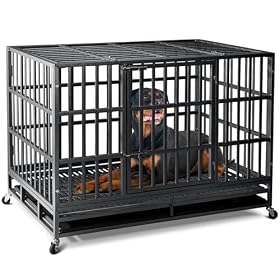
A heavy-duty crate for a strong chewer should resist bending, chewing, prying, and repeated impact without creating sharp edges or trapping hazards. Focus first on secure construction and escape resistance, then choose the correct crate size and a setup your dog can use safely.
What makes a crate heavy-duty?
“Heavy-duty” is not a universal performance standard. Products sold under that label can vary substantially, so inspect the actual construction rather than relying on the name.
Look for:
Strong welded or reinforced joints: A determined dog may target corners, door frames, and connection points rather than the main panels.
A rigid frame: The crate should not flex significantly when you apply moderate hand pressure to the sides or door.
Secure door hardware: Sliding bolts, multiple attachment points, or other locking mechanisms are generally harder to manipulate than a simple lightweight latch.
Chew-resistant surfaces: Metal is usually preferable to fabric, thin plastic, or exposed wood for dogs that chew through housing materials.
Smooth, finished edges: Check the door, welds, corners, and floor area for burrs or sharp projections.
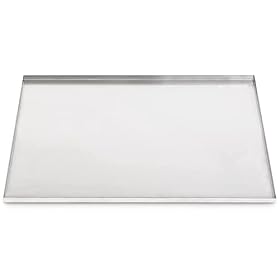
A durable removable tray: The tray should sit securely in its channel and should not give the dog an easy edge to lift or chew.
A heavy crate can still be unsafe if the door can be pushed inward, the dog can reach a loose wire, or the coating flakes off after chewing. Inspect the crate regularly, especially during the first few weeks.
Choose the size by the dog, not the breed label
Your dog should be able to stand upright without crouching, turn around normally, lie down fully, and stretch out comfortably. The crate should not be so large that it encourages one end to become a bathroom area, particularly during house-training.
Measure your dog while standing:
Measure from the floor to the top of the head or ears, whichever is higher, for minimum height.
Measure from the nose to the base of the tail, then add room for turning and stretching, for minimum length.
Measure the widest part of the body for minimum width.
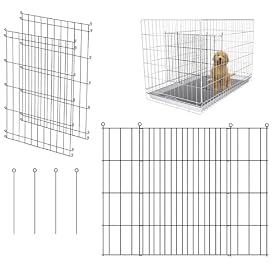
Allow practical clearance rather than buying a crate that fits exactly. If your dog is still growing, a crate with a correctly positioned divider can provide more usable life, but the divider must be securely installed and unable to create a gap or snag point.
A larger crate is not automatically safer. Extra interior space can give a powerful dog more room to build momentum against a door or panel.
Product prices and availability are accurate as of the date/time indicated and are subject to change. Any price and availability information displayed on Amazon.com at the time of purchase will apply to the purchase of this product.
Features that matter for escape artists
Door security
Examine how the door closes and whether your dog can reach the latch from inside. A door with multiple locking points may provide more resistance than one with a single exposed latch. The door should remain aligned when the dog pushes against it.
Do not rely on improvised clips, zip ties, or carabiners unless the crate manufacturer specifically permits them. Added hardware can interfere with the door, create a sharp edge, or prevent quick access in an emergency.
Bar spacing and panel gaps
The gaps should be narrow enough that your dog cannot push its head through. This is especially important for puppies, dogs with narrow heads, and dogs that repeatedly bite or paw at the door.
Pay attention to gaps around the door, tray, divider, and corners—not just the stated spacing between the main bars.
Floor and tray design
A solid tray is easier to clean and does not offer the same bite points as a fabric or wire floor covering. However, a determined dog may still chew a plastic tray. If your dog has already damaged similar trays, look for a compatible replacement material or a crate design that protects the tray edge.
Never leave damaged plastic, exposed wire, or broken tray pieces in the crate. They can cause cuts, choking, or intestinal blockage.
Anchor points and placement
For a dog that repeatedly moves a crate, place it on a stable, level surface and follow the manufacturer's guidance for anchoring. Avoid positioning it next to furniture, walls, cords, blinds, or other objects the dog can use to pull, pry, or injure itself.
A crate intended for travel must meet different requirements from a stationary indoor crate. Use only restraints and mounting methods approved for that crate and vehicle.
Product prices and availability are accurate as of the date/time indicated and are subject to change. Any price and availability information displayed on Amazon.com at the time of purchase will apply to the purchase of this product.
Wire, plastic, and reinforced specialty crates
Heavy-gauge wire crates
Wire crates provide ventilation and visibility and often accept dividers and removable trays. They can work well for dogs that chew less aggressively but may not stop a strong dog that bends bars, attacks welds, or manipulates the door.
Heavy-duty plastic crates
Rigid plastic crates have fewer exposed bars and may be harder to grab with teeth. They can be useful for travel or dogs that become overstimulated by visual access. Confirm that ventilation is adequate and that the crate is approved for the intended type of transport.
Reinforced metal crates
Specialty metal crates are designed with escape resistance in mind, but construction varies. Check door alignment, weld quality, hardware, bar spacing, finish, and tray access. A more substantial crate may also be harder to move, clean, assemble, or fit through a doorway.
Soft-sided crates
Soft-sided crates are generally a poor choice for a dog that chews, claws, or repeatedly tests barriers. Even a durable fabric can fail at a zipper, seam, mesh panel, or corner.
Product prices and availability are accurate as of the date/time indicated and are subject to change. Any price and availability information displayed on Amazon.com at the time of purchase will apply to the purchase of this product.
Safety checks before leaving your dog inside
Before using the crate unsupervised:
Assemble it exactly according to the instructions.
Confirm every panel, bolt, latch, and connector is fully engaged.
Check that the dog cannot reach or dislodge the latch.
Remove collars, harnesses, tags, and dangling accessories that could catch.
Inspect for sharp welds, bent bars, cracked plastic, and loose coating.
Introduce the crate gradually with positive reinforcement.
Monitor early sessions before extending the time alone.
A crate is not a substitute for exercise, training, supervision, or treatment of separation anxiety. A dog that panics and throws its body against any enclosure may injure itself even in a strong crate. Ask a qualified trainer or veterinarian for help if the behavior includes frantic escape attempts, self-injury, heavy drooling, persistent vocalizing, or destruction that occurs only when the dog is alone.
When should you replace the crate?
Replace the crate when the door no longer stays aligned, a latch can be opened from inside, bars or panels are bent, welds are separating, the finish is exposing sharp metal, or the tray is cracked and cannot be replaced safely.
If your dog has defeated multiple crate types, buying an increasingly heavy crate may not solve the underlying problem. Consider whether the dog needs a different confinement area, structured alone-time training, professional behavior support, or veterinary evaluation. Never use a crate that has already caused injury simply because it is difficult to escape.
Buying checklist
Before ordering, confirm:
The interior dimensions fit your adult dog's standing, turning, and lying measurements.
The door hardware is difficult to reach and remains secure under pressure.
The construction protects corners, joints, and tray edges.
Bar or panel gaps are appropriate for your dog's head and paws.
Replacement trays, dividers, and hardware are available if needed.
The crate fits through the intended doorway and into its planned location.
The manufacturer provides clear assembly, cleaning, and safety instructions.
The crate is intended for indoor use, travel, or both, as required.
The best heavy-duty crate is the one that addresses your dog's actual escape method without adding new hazards. If the dog bends wire, prioritize rigid construction and protected hardware; if it chews trays or plastic, focus on edge protection and replacement-part availability; if it panics when confined, address that behavior alongside the equipment choice.
FAQ
What type of crate is best for a strong chewer?
A rigid crate with reinforced joints, secure door hardware, smooth edges, and protected tray and corner areas is usually a better starting point than a soft-sided or lightweight wire crate. The correct choice depends on how your dog tries to escape.
Should I buy a crate one size larger for a strong dog?
No. Choose enough room for the dog to stand, turn around, lie down, and stretch comfortably, but avoid excessive unused space. Extra room can give an escape-prone dog more leverage.
Can a strong chewer use a wire crate?
Some can, but a dog that bends bars, separates welds, or manipulates latches may need a more reinforced design. Inspect the door, joints, gaps, and tray rather than relying on the product label.
Are crate covers safe for dogs that chew?
A cover can be unsafe if the dog can pull it through the bars, chew it, or become tangled in it. Use only a properly fitted cover under supervision, and avoid one if your dog targets fabric.
What should I do if my dog keeps escaping every crate?
Stop using any crate that causes injury and consult a qualified trainer or veterinarian. Repeated escape attempts may indicate anxiety or panic that requires behavior support, not just stronger hardware.