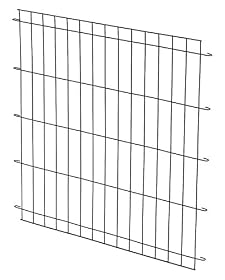
An indoor kennel can provide more room, while a crate offers clearer boundaries and easier transport. The right choice depends on whether your working breed needs a sleep space, short-term confinement, or a larger supervised living area.
What do you need help with?
Open an answer, or tell us what we should cover next.
Answered in this guide
Choose between an indoor kennel and a crate for a working breed
A crate suits sleeping, travel, house-training, and short-term confinement, while an indoor kennel offers more room for supervised activity and longer daytime management.
Match the enclosure to sleeping, training, travel, or daytime use
Use a crate for overnight sleeping, house-training, and travel. An indoor kennel or pen can be better for supervised daytime confinement when the dog needs room to move.
Decide whether a crate-and-kennel combination fits your home
A hybrid setup can give a working breed a dedicated crate for sleep, travel, and rest while providing a larger enclosed area for supervised activity during the day.
Check the features that matter in either enclosure
Measure the dog instead of relying only on breed labels, then check usable space, security, ventilation, visibility, floor protection, and cleanup needs before choosing an enclosure.
Request a topic and help us choose what to build next.
Check whether a cracked crate is safe for car travel
Choose between a crate and a baby gate for home confinement
Choose a furniture-style or wire crate for your dogRead this guide →
Requests help us prioritize the next guide. No email required.
One anonymous request per topic.
An indoor kennel usually provides more usable space than a crate, but a crate is often the better tool for sleeping, house-training, travel, and short periods of calm confinement. For a working breed, the most practical setup may be a correctly sized crate inside or beside a larger indoor pen—provided the dog still gets enough exercise, training, and time with the family.
What “indoor kennel” usually means
The term indoor kennel can describe several setups:
A dedicated dog area in a mudroom, laundry room, or other part of the home
These options are not automatically better than a crate. Their advantages depend on the dog's behavior, the amount of room available, and how the enclosure will be used.
An indoor kennel is generally intended to give a dog room to stand, move around, stretch, and use separate areas for resting and activity. A crate is a more compact enclosure designed for rest, transport, training, and temporary management.
Product prices and availability are accurate as of the date/time indicated and are subject to change. Any price and availability information displayed on Amazon.com at the time of purchase will apply to the purchase of this product.
When a crate is the better choice
A crate is usually the more useful primary enclosure when your working breed needs:
A quiet place to sleep
A predictable rest routine
Help with house-training
Safe confinement during short absences
A secure space after surgery, if approved by your veterinarian
Management during visitors, deliveries, or household work
Working breeds are often active and mentally engaged, but that does not mean they need a very large enclosure for every purpose. A crate can help teach an off-switch when it is introduced gradually and paired with exercise, enrichment, and positive training.
The crate should be large enough for the dog to stand up, turn around, lie down naturally, and change position without being cramped. Avoid choosing a crate so large that one end can become a regular bathroom area, especially while house-training a puppy. For a growing dog, a crate with a properly positioned divider can provide room to expand without requiring a full-size crate immediately.
A crate is not appropriate as a substitute for daily physical activity, training, social contact, or time outside the enclosure. Long periods of confinement can create frustration, anxiety, or unwanted behavior, especially in a high-energy dog.
Product prices and availability are accurate as of the date/time indicated and are subject to change. Any price and availability information displayed on Amazon.com at the time of purchase will apply to the purchase of this product.
When an indoor kennel is the better choice
An indoor kennel or pen may make more sense when your dog needs controlled room to move but cannot safely have access to the entire house. It can be useful for:
A puppy that is not ready for free access
A dog recovering from an injury when limited movement is allowed
Supervised daytime management
A dog that becomes destructive when loose but is stressed by a small crate
Separating a dog from guests, children, or other pets
Creating a defined area in a home office, laundry room, or open living space
A pen is particularly useful when the dog can settle calmly but needs to change positions, play with safe enrichment, or move between a bed and water. However, more space is not always safer. A determined working breed may climb, push, chew, or jump over lightweight panels.
Choose an enclosure with secure connections, a latch the dog cannot operate, and construction appropriate for the dog's size and behavior. If the dog can reach electrical cords, furniture, toxic plants, or other hazards from inside the pen, the surrounding room must be secured as well.
Product prices and availability are accurate as of the date/time indicated and are subject to change. Any price and availability information displayed on Amazon.com at the time of purchase will apply to the purchase of this product.
Which setup is best for common situations?
Overnight sleeping
A crate is usually the simpler choice for overnight sleeping. It provides a consistent sleep location and makes it easier to notice whether a puppy needs a nighttime bathroom break.
An indoor kennel can work for a dog that already settles reliably and does not eliminate, chew, or climb when unsupervised. A crate inside a larger pen may be useful, but the additional space should not be treated as permission to ignore nighttime supervision during puppyhood.
House-training
A crate often gives clearer house-training boundaries because it limits the dog's available space. Take the dog outside on a consistent schedule, including after waking, eating, drinking, playing, and confinement.
A larger kennel can slow training if it has enough room for the dog to sleep in one area and eliminate in another. If a pen is necessary, keep its layout simple and supervise closely.
Daytime confinement
For a short period, a crate may be adequate for a dog that is comfortable resting there. For longer daytime management, a properly secured pen or dog-proof room may provide more appropriate movement.
The correct choice depends on the individual dog and the total daily routine. A larger enclosure does not make extended isolation acceptable, and a crate should not be used simply because it is convenient.
Travel
A crate is the practical choice for vehicle travel when its design and installation are appropriate for the vehicle and the dog's size. Follow the crate manufacturer's instructions and use a restraint or travel system recommended for that specific setup.
An indoor kennel is generally not a substitute for a travel crate. Do not improvise a loose enclosure in a vehicle.
Destructive chewing or escape attempts
A crate can reduce access to household hazards, but it must be strong enough for the dog's behavior. A soft-sided or lightweight crate may not be suitable for a dog that chews, paws, or attempts to escape.
A pen is not automatically more secure. Check whether the dog can climb the panels, push them apart, lift a gate, or reach objects outside the enclosure. Repeated escape attempts can cause broken teeth, torn nails, cuts, or other injuries. If the dog panics when confined, consult a qualified trainer or veterinary behavior professional rather than simply buying a stronger enclosure.
A hybrid setup can work well
For many working-breed households, the most flexible arrangement is:
A correctly sized crate for sleep, travel, and short-term rest
A secure indoor pen or dog-proof area for supervised daytime access
Daily exercise, training, sniffing, and social interaction outside the enclosure
Gradual practice with each type of confinement
The crate can function as the dog's private resting space while the pen provides additional room when appropriate. Keep the crate door open only when the surrounding pen is secure and the dog is ready for that level of freedom.
This setup is not suitable for every dog. Some dogs become frustrated by barriers or guard the crate. Watch body language such as persistent panting, drooling, frantic pawing, repeated escape attempts, freezing, or inability to settle. These signs call for a slower training plan and, when needed, professional guidance.
Features that matter more than the label
Correct size and usable layout
Measure the dog rather than choosing solely by breed name. Consider adult size for a puppy, but use a divider if the crate is initially too large. For a pen, allow enough room for natural movement without creating an enclosure so large that supervision and house-training become difficult.
Door and panel security
Inspect hinges, latches, connectors, and panel spacing. A working breed that can push through weak connections may need a heavier-duty design. Keep the enclosure away from objects that could help the dog climb out.
Ventilation and visibility
The enclosure should have adequate airflow and a comfortable temperature. Some dogs settle better with partial visual coverage, while others become more anxious if their view is blocked. Introduce a crate cover gradually and never use it to conceal signs of distress or overheating.
Floor protection and cleanup
A crate tray should fit securely and be easy to remove. A pen may need a washable mat or a protected floor underneath. Avoid bedding that the dog repeatedly shreds or ingests. For puppies and destructive chewers, use only materials that are appropriate for unsupervised use.
Divider compatibility
A divider can make one crate useful through puppy growth, but it must be secured correctly and positioned so the dog cannot get trapped or chew its hardware. Check the crate manufacturer's instructions for compatible dividers.
How to introduce either enclosure
Begin with the door open and reward the dog for looking at, entering, and resting in the enclosure. Feed meals or provide safe enrichment there if the dog is comfortable. Increase closed-door time in small steps while you remain nearby.
Do not force the dog inside, use the enclosure as punishment, or immediately leave for a long period. Practice after the dog's basic needs have been met, but avoid putting an overstimulated dog into confinement without a calm-down routine.
If the dog has accidents, reduce the amount of unsupervised space and increase bathroom breaks. If the dog chews the enclosure, check whether the design is appropriate, remove hazards, provide approved enrichment, and review the dog's exercise and training routine.
Bottom line
Choose a crate when your priority is sleep, travel, house-training, or a compact rest space. Choose an indoor kennel or pen when your dog needs more supervised room and can remain safe around boundaries. For many working breeds, using both—a crate for rest inside a secure larger area—offers the most practical flexibility, as long as confinement remains limited, positive, and part of a complete daily routine.
FAQ
Is an indoor kennel better than a crate for a working breed?
Not automatically. An indoor kennel provides more room, while a crate is usually better for sleeping, house-training, travel, and short-term rest. The best choice depends on the dog's behavior, age, training, and how long the enclosure will be used.
Can a working breed stay in a crate all day?
A crate should not replace exercise, training, social contact, or bathroom opportunities. For longer daytime management, a secure pen or dog-proof room may provide more appropriate movement, but the dog still needs regular activity and interaction.
Should I put a crate inside an indoor kennel?
This hybrid setup can work well for a dog that is comfortable with both spaces. The crate can provide a private resting area while the pen allows additional supervised movement. Introduce the arrangement gradually and make sure the pen is escape-resistant.
How large should a crate be for a working-breed dog?
The crate should allow the dog to stand, turn around, lie down naturally, and change position without being cramped. For a puppy, a divider can reduce the usable area while allowing the crate to accommodate growth.
Why does my dog try to escape an indoor kennel?
Possible causes include insufficient exercise, anxiety, frustration, poor introduction, an insecure enclosure, or a need to eliminate. Check the setup and routine first. Repeated frantic escape attempts or signs of panic warrant guidance from a veterinarian, qualified trainer, or veterinary behavior professional.