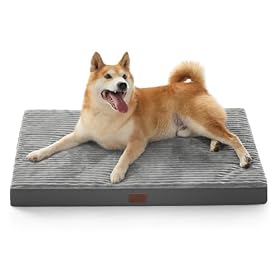
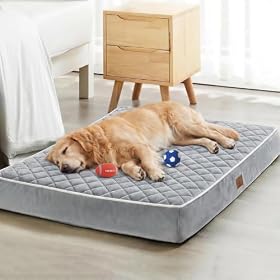
A senior dog needs more than a soft cushion in the crate. Look for a supportive, low-profile orthopedic pad that fits the crate floor without bunching, stays comfortable at the right temperature, and has a removable washable cover.
An orthopedic pad can make a crate more comfortable for a senior dog, especially when stiff joints, arthritis, or pressure-sensitive elbows make a thin mat uncomfortable. The best choice is not necessarily the thickest bed. It should fit the crate floor closely, provide stable support, resist shifting, and have a washable cover that is easy to remove.
What to look for in a senior dog’s crate pad
Supportive foam rather than loose stuffing
A senior dog usually benefits from a pad that cushions pressure points without allowing the body to sink directly onto the crate floor. Foam-based beds are often more stable than loosely filled cushions, which can flatten, clump, or develop uneven areas.
Look for:
A firm or medium-firm base that supports the dog without feeling like a hard board
Enough cushioning for elbows, hips, and shoulders
A relatively even sleeping surface
Construction that is unlikely to form deep permanent dips
“Orthopedic” is not a universal performance standard. Check the product’s construction details rather than relying on the label alone. If your dog has diagnosed joint or mobility problems, ask your veterinarian whether a particular firmness or bed style is appropriate.
A precise fit for the crate
Measure the usable interior floor of the crate, not just the outside dimensions. The pad should cover most of the floor while still allowing the crate door to close freely.
Avoid a pad that is too large or excessively thick. It may buckle against the walls, create a raised edge at the doorway, or reduce the dog’s headroom. A pad that is slightly undersized can also slide around and expose the hard crate tray.
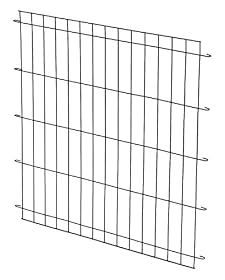
If the crate has a divider, measure the section where the dog sleeps now. A full-size pad may be unsuitable if the divider is still in use.
A stable, low-entry design
Older dogs may have difficulty stepping over tall bolsters or climbing onto raised surfaces. For a crate, a flat or gently edged pad is usually easier to enter and exit than a high-sided bed.
A non-slip bottom can help, but it should not prevent the crate tray from sliding out for cleaning. If the pad moves, consider a correctly sized design first. A loose pad can fold, bunch, or become a tripping hazard when the dog turns around.
A washable, durable cover
Senior dogs may have more accidents, shed heavily, or need frequent cleaning. A removable cover with a full-length zipper is generally easier to wash than a cushion that must be cleaned as one piece.
Check the care instructions before buying. Useful features include:
Machine-washable cover
A water-resistant or waterproof inner liner
Reinforced seams and zipper protection
A cover that can be replaced separately
A surface that does not retain excessive heat or moisture
A waterproof liner can protect the foam, but it may make the pad warmer or less breathable. If your dog overheats easily, prioritize airflow and a washable cover while still protecting the foam from accidents.
Choosing the right pad material
Memory foam or layered foam
Memory foam can conform to the dog’s body and reduce pressure on joints. It may be a good fit for a dog that spends long periods resting, but it can retain heat and may be harder for a weak dog to push up from if it is too soft.
Layered foam combines cushioning with a firmer base. This is often a practical compromise for a senior dog that needs comfort but still needs to stand and turn around easily.
Polyester fiber fill
Fiber-filled pads are often lightweight and washable, but they may flatten or shift over time. They can work for dogs that prefer a softer, nest-like surface, but they are less likely to provide consistent orthopedic support than a well-constructed foam pad.
Cooling fabrics and gel layers
Cooling covers or gel layers may help dogs that sleep warm. They do not replace adequate support, and some dogs may dislike the feel of a slick or cool surface. Make sure any cooling layer remains comfortable at room temperature and does not create a deep, unstable spot.
Product prices and availability are accurate as of the date/time indicated and are subject to change. Any price and availability information displayed on Amazon.com at the time of purchase will apply to the purchase of this product.
Match the pad to your dog’s behavior
A senior dog’s habits matter as much as age.
Chewer or scratcher: Choose a durable cover and avoid exposed foam. Inspect the pad regularly for torn fabric or swallowed filling.
Accident-prone dog: Use a pad with a removable washable cover and a waterproof liner. Keep a spare cover or backup pad available.
Dog that overheats: Choose breathable fabric and avoid excessively thick, heat-retaining foam.
Dog with weak balance: Favor a firm, flat surface with no tall bolsters or slippery cover.
Anxious crate sleeper: A familiar blanket can be placed over part of the pad, but do not cover the entire crate if ventilation is reduced.
Dog that refuses soft beds: Start with moderate cushioning rather than an extremely plush pad. Some dogs prefer a stable surface.
Product prices and availability are accurate as of the date/time indicated and are subject to change. Any price and availability information displayed on Amazon.com at the time of purchase will apply to the purchase of this product.
Check the crate setup before buying
A good pad cannot compensate for an unsuitable crate arrangement. Confirm that your dog can stand without the head touching the top, turn around comfortably, and lie down fully stretched. The pad should not reduce the available space enough to make those movements difficult.
Place the crate on a level surface away from drafts, direct heat, and heavy foot traffic. If the crate tray is cracked, warped, or sharp, replace the tray or crate before adding a new pad. A damaged tray can undermine comfort and allow moisture to reach the floor.
Do not add a pad that blocks ventilation or prevents the door from latching. Follow the pad and crate manufacturer’s instructions, especially if the product includes an electrical heating or cooling component. Heated products require extra caution with senior dogs and should not be used without appropriate supervision and veterinary guidance.
Product prices and availability are accurate as of the date/time indicated and are subject to change. Any price and availability information displayed on Amazon.com at the time of purchase will apply to the purchase of this product.
How thick should a crate pad be?
There is no single ideal thickness for every senior dog. The pad should be thick enough to cushion joints from the crate floor but firm enough that the dog can stand up without sinking deeply.
Consider the dog’s size, weight, mobility, and sleeping position. A heavier dog may compress a very soft pad quickly. A large breed may need a denser support layer, while a small dog may be comfortable on a thinner pad if it has stable cushioning.
When comparing products, pay attention to foam density or layer construction if the manufacturer provides it. Thickness alone does not tell you how supportive a pad will remain.
Product prices and availability are accurate as of the date/time indicated and are subject to change. Any price and availability information displayed on Amazon.com at the time of purchase will apply to the purchase of this product.
When a crate pad is not enough
A new pad may improve comfort, but persistent stiffness, reluctance to stand, repeated nighttime restlessness, limping, or difficulty entering the crate can indicate a health problem. Contact a veterinarian if these signs are new, worsening, or accompanied by pain, appetite changes, weakness, or accidents.
A senior dog that suddenly cannot get comfortable may need medical evaluation rather than a softer bed. Your veterinarian can also advise whether a firmer sleeping surface, pain management, weight control, or mobility support would be appropriate.
Replace the pad when the foam stays compressed, the surface becomes uneven, the cover cannot be cleaned properly, or the dog can reach and ingest damaged filling. If the crate itself is too small for comfortable movement or has become difficult for the dog to enter, replacing the crate may be more sensible than upgrading the pad alone.
Bottom line
For a crate-trained senior, choose an orthopedic-style pad that fits the crate floor closely, has stable cushioning, stays low enough for easy entry, and includes a washable cover with protection for the inner foam. Prioritize the dog’s mobility, sleeping temperature, accident risk, and chewing habits over maximum thickness or marketing language.
FAQ
Can I put an orthopedic dog bed in a crate?
Yes, provided it fits the crate floor without bunching, leaves enough room for the dog to stand and turn, and does not prevent the door from closing or the crate from ventilating properly.
Is memory foam good for a senior dog’s crate?
Memory foam can provide pressure relief, but it may retain heat or be difficult to rise from if it is too soft. A layered or medium-firm design may be a better balance for some senior dogs.
How do I stop a crate pad from sliding?
Start with the correct size so the pad fills the floor without folding. A non-slip bottom can help, but make sure it does not interfere with removing the crate tray or create a chewing risk.
Should a senior dog’s crate pad be waterproof?
A waterproof inner liner is useful for protecting foam from accidents. Choose one with a washable outer cover as well, and consider breathability if the dog tends to overheat.