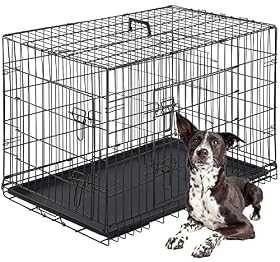
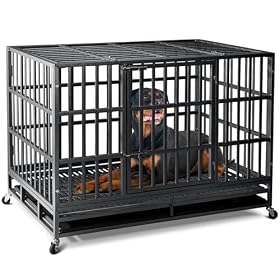
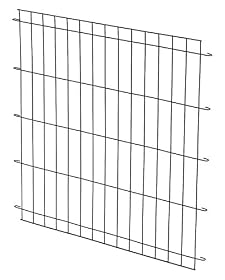
The best large-breed dog crate is one that gives your dog enough room to stand, turn, lie down, and stretch without leaving excessive unused space. Use your dog’s adult measurements, then choose a sturdy crate with a secure door, good ventilation, and a floor that is easy to clean.
The best dog crate for a large breed is usually a sturdy wire or heavy-duty crate sized to your dog’s adult body—not simply the largest crate available. Your dog should be able to stand without crouching, turn around normally, lie down comfortably, and stretch out. A divider can make one correctly sized crate useful while a puppy grows.
How to choose the right crate size
Measure your dog before shopping. Have the dog stand naturally, then measure:
Length: From the tip of the nose to the base of the tail. Do not include the full tail length.
Height: From the floor to the top of the head or the highest point of the ears, whichever is taller when the dog is standing.
Width: Measure across the widest part of the dog’s body.
Add a modest amount of space to the length and height measurements. The finished interior should allow the dog to stand, turn, sit, lie down, and stretch, but it should not be so oversized that one end can become a sleeping area and the other a bathroom area during house training.
Crate dimensions listed by sellers can refer to exterior measurements. Check the interior dimensions, especially if the crate has thick walls, a raised lip, or a divider. Also compare the crate’s usable floor area with your dog’s length and width.
Choose for adult size if your dog is still growing
For a large-breed puppy, an adult-sized crate with a correctly positioned divider is often more practical than buying several crates. The divider should reduce the usable area to a comfortable puppy-sized space and move as the dog grows.
A divider is useful only if it is secure and fits the specific crate. A loose panel can rattle, bend, or create an entrapment risk. Remove it when your dog needs the full interior.
Which crate style works best for large dogs?
Wire crates: the practical all-around choice
Wire crates are commonly useful for large breeds because they provide ventilation and visibility from multiple sides. Many fold for storage, and removable trays make routine cleanup easier. A cover can reduce visual stimulation if your dog settles better with less activity around the crate.
Look for:
A door that latches securely and cannot be opened by a persistent dog
Strong welds and rigid panels that do not flex excessively
A floor pan that fits correctly and is not easy to push out
Adequate ventilation and spacing that prevents paws or jaws from becoming trapped
A crate footprint that fits the intended room without blocking walkways
Wire crates can be less suitable for dogs that bend bars, force doors, or repeatedly chew metal. If your dog has demonstrated escape behavior, choose a more robust design and address the behavior rather than relying only on a heavier crate.
Heavy-duty crates: for escape artists and destructive chewers
A heavy-duty crate may be appropriate when a large dog can damage ordinary wire panels, defeat latches, or injure itself while trying to escape. These crates are typically less portable and can cost more, so focus on the actual failure point: the door, hinges, panel strength, or floor construction.
No crate should be treated as a guaranteed solution for severe panic, separation anxiety, or repeated self-injury. Consult a veterinarian or qualified behavior professional if your dog claws, bites, slams into, or attempts to break out of confinement.
Plastic airline-style crates: enclosed and less visually stimulating
Plastic crates can provide a den-like interior and may help some dogs relax. They can also be useful for travel when the specific crate meets the carrier requirements for the trip. However, large plastic crates may be bulky, have less open ventilation than wire designs, and provide fewer options for expanding the interior as a puppy grows.
Check the manufacturer’s ventilation, door, and travel requirements rather than assuming a crate is suitable for air travel. Airlines and transportation providers can have specific rules.
Furniture-style crates: attractive but not always the best fit
Furniture-style crates can blend into a living room, but large-breed versions can be heavy and difficult to move. Their solid panels may also provide less airflow than a wire crate. Treat appearance as a secondary consideration after size, ventilation, security, and cleanability.
Product prices and availability are accurate as of the date/time indicated and are subject to change. Any price and availability information displayed on Amazon.com at the time of purchase will apply to the purchase of this product.
Features that matter most
Strength and door security
A large dog can exert substantial force against a door, even without trying to escape. Check that the latch is difficult for the dog to manipulate and that the door does not sag when opened. Two doors can make placement easier, but additional doors also mean additional hardware to inspect.
Ventilation and visibility
Good airflow matters in any crate, particularly in warm rooms or for dogs with thick coats. A crate should not be placed in direct sun, beside a heater, or where airflow is blocked by furniture or a cover. If you use a cover, leave ventilation open and follow the crate and cover instructions.
Floor and tray design
A removable tray is helpful for accidents, muddy paws, and routine cleaning. Check whether the tray can be removed without opening the main door and whether replacement trays are available for that crate family. A cracked tray should be replaced; sharp edges can injure a dog or make the crate uncomfortable.
Do not assume a bare wire floor is comfortable. Use a properly fitted crate pad or mat that does not bunch, expose loops, or allow the dog to get caught. If your dog chews bedding or has accidents, start with a simpler, washable option and supervise its use.
Portability and placement
Large crates are difficult to move once assembled. Measure doorways, stair landings, elevators, and the intended location before ordering. Leave enough clearance to open the crate door fully and enough room to clean around it.
For a vehicle, use a crate specifically appropriate for that vehicle and follow the manufacturer’s instructions. A household crate is not automatically a crash-tested travel crate.
Product prices and availability are accurate as of the date/time indicated and are subject to change. Any price and availability information displayed on Amazon.com at the time of purchase will apply to the purchase of this product.
A practical buying checklist
Before choosing a crate, confirm:
The dog’s current and expected adult measurements.
The usable interior dimensions, not just the advertised outside size.
Whether a compatible divider is included or available.
Door latch security and panel rigidity.
Ventilation for the planned location.
Whether the tray, pad, and other replacement parts are available.
That the crate fits through the home’s doors and into its final position.
Whether the dog’s behavior calls for a heavy-duty crate or professional guidance.
Product prices and availability are accurate as of the date/time indicated and are subject to change. Any price and availability information displayed on Amazon.com at the time of purchase will apply to the purchase of this product.
Set up the crate safely
Place the crate in a calm area where the dog can still be part of normal household life. Introduce it gradually with the door open, food rewards, and short periods of comfortable rest. Do not force a frightened dog inside or use the crate as punishment.
Remove collars, harnesses, tags, and dangling accessories before unsupervised crating because they can catch on the crate. Inspect latches, wires, hinges, and the tray regularly. Stop using the crate if your dog is injuring itself, repeatedly panicking, or damaging the structure.
A crate should be used for reasonable periods appropriate to the dog’s age, health, exercise needs, and training. Puppies, elderly dogs, and dogs with medical conditions may need more frequent breaks. Follow veterinary or professional behavior advice when confinement is part of a treatment or management plan.
When to choose a different crate
Replace or change the crate if your dog can no longer stand and turn comfortably, the door or panels are bent, the latch no longer holds securely, or the tray has sharp damage. If the crate is correctly sized but your dog persistently panics or tries to escape, buying an even stronger crate may not solve the underlying problem. Seek qualified help, particularly if there is a risk of broken teeth, damaged nails, overheating, or other injury.
For most large-breed households, start with the correct adult interior size, a secure door, strong construction, good airflow, and a removable tray. Add a compatible divider for a growing puppy, then choose a washable pad or cover based on how your dog actually uses the crate.
FAQ
How big should a crate be for a large dog?
The dog should be able to stand without crouching, turn around, sit, lie down, and stretch comfortably. Measure your dog and compare those measurements with the crate’s usable interior dimensions rather than choosing by the advertised crate label alone.
Is a wire or plastic crate better for a large breed?
A wire crate is often the more flexible household choice because it provides ventilation, visibility, and commonly supports a divider. A plastic crate may suit a dog that prefers a more enclosed space or a specific travel use. Choose based on the dog’s behavior, ventilation needs, portability, and the crate’s interior size.
Does a large-breed puppy need a large crate?
A puppy can use an adult-sized crate if it includes a secure divider that limits the usable space. Adjust or remove the divider as the puppy grows, and make sure the crate remains large enough for normal movement.
Should I use a crate pad with a large dog?
Use a properly fitted, washable pad if your dog does not chew it or get tangled in it. Dogs that destroy bedding or have frequent accidents may need a simpler mat or bare, safe flooring temporarily while those issues are addressed.