The best crate for a German Shepherd is large enough for comfortable movement, secure enough for the individual dog, and suited to how the crate will be used at home, in the car, or during training.
A German Shepherd usually needs a large crate, but the correct size depends on the dog’s measurements rather than breed name alone. For many adult German Shepherds, a 48-inch crate is a useful starting point, while smaller adults, puppies, and unusually large dogs may need a different size. The dog should be able to stand naturally, turn around, lie down, and stretch out without being forced against the sides.
Quick recommendation
For most adult German Shepherds, look first at a large wire crate or heavy-duty crate around 48 inches long, then confirm the interior dimensions against your dog’s measurements. A crate with a divider is helpful for a puppy because it lets you limit the usable space as the dog grows.
Choose based on the dog’s behavior and the crate’s location:
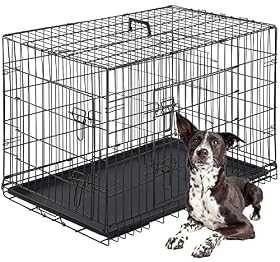
Wire crate: Best for ventilation, visibility, and flexible indoor use. A divider can make it practical for puppies.
Plastic kennel: Better for travel, reduced visual stimulation, and some airline-related uses. Check the carrier’s current travel requirements before buying.
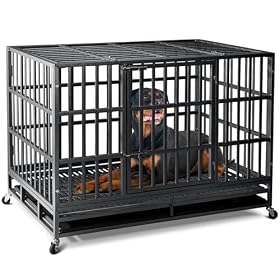
Heavy-duty crate: Worth considering for a dog that bends wire, opens latches, or repeatedly tries to escape. It is not a substitute for gradual crate training.
Furniture-style crate: Suitable when appearance matters and the dog is already calm and crate-trained. It may be a poor choice for a destructive or anxious dog.
How to choose the right size
Measure the dog while standing naturally. Record:
Length: Measure from the nose to the base of the tail, not the tip, then add room for stretching and repositioning.
Height: Measure from the floor to the top of the head or ears, whichever is higher, then allow additional clearance.
Width: Confirm that the dog can turn around comfortably without rubbing against the sides.
Compare those measurements with the crate’s interior dimensions, not just the advertised outside length. Door frames, rounded corners, dividers, and thick plastic walls can reduce usable space.
The dog should be able to:
Stand without crouching
Turn around without difficulty
Lie down on the side or in a natural position
Sit without pressing the head against the roof
Avoid choosing a crate simply because it is the largest available. Excess space can make house-training more difficult for some puppies, especially if the dog can use one end as a sleeping area and the other as a bathroom. A divider solves this problem more safely than buying a small crate and replacing it repeatedly.
Product prices and availability are accurate as of the date/time indicated and are subject to change. Any price and availability information displayed on Amazon.com at the time of purchase will apply to the purchase of this product.
Best crate styles for a German Shepherd
Wire crates
A wire crate is the most versatile indoor option for many German Shepherds. It provides airflow and lets the dog see the room, which can help some dogs settle. It also commonly accepts a divider and removable tray.
Look for:
A door latch the dog cannot easily manipulate
Closely spaced, securely welded bars
A stable frame that does not wobble when moved
A pan that slides out for cleaning
An interior long enough for the dog without relying on the exterior measurement
Wire crates are not ideal for every dog. A determined escape artist may bend the bars, force a door, or injure the muzzle or paws while trying to get out. Never leave a dog unattended in a crate that the dog is actively trying to break out of.
Heavy-duty crates
Heavy-duty crates are designed for dogs that defeat ordinary wire crates. They may use stronger panels, reinforced doors, and more secure locking points. The important features are construction quality and escape resistance, not simply a product label describing the crate as heavy duty.
Before buying, check how the door locks, whether the dog could reach the locking mechanism, and whether there are exposed edges or openings that could catch a collar, paw, or toenail. A heavy crate can also be heavier and less convenient to move, so it may be best as a permanent indoor setup.
Plastic kennels
Plastic kennels block more visual activity than open wire crates and can be useful for travel or dogs that relax better in a more enclosed space. They must still provide enough ventilation and interior room.
Check the door and ventilation design carefully. A plastic kennel should not be used in a hot or poorly ventilated location. For air travel, follow the airline’s current requirements rather than assuming that any large kennel is approved.
Furniture-style crates
Furniture-style crates can blend into a living room, but appearance should come after safety and function. Many are better suited to calm, trained dogs than to puppies, chewers, or dogs with separation anxiety.
Avoid using one if the dog may chew the material, push against panels, or become trapped in decorative openings. Also confirm that the interior remains large enough after accounting for the furniture frame.
Product prices and availability are accurate as of the date/time indicated and are subject to change. Any price and availability information displayed on Amazon.com at the time of purchase will apply to the purchase of this product.
Features that matter most
Secure doors and latches
A German Shepherd is strong enough to expose weak hinges and latches quickly. The door should close squarely, resist lifting or pushing, and have no gap where a paw or muzzle can become caught. If the dog can open the latch, add a manufacturer-approved security measure only if it does not create an entanglement hazard.
Divider panels
A divider is especially useful for a growing puppy. It lets you provide only the space the puppy currently needs, then move the panel as the dog grows. The divider should attach securely and should not leave sharp edges or openings large enough for the dog to become trapped.
Removable tray
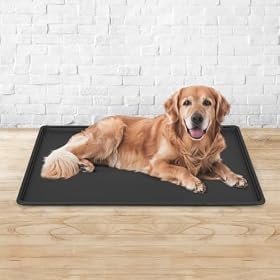
A leak-resistant, removable tray makes accidents easier to clean. Look for a tray that fits securely and cannot be pushed out easily by the dog. Keep a spare compatible tray if the crate will be used during puppyhood or house-training.
Ventilation and visibility
Good airflow is essential, particularly for a large, heavily coated dog. Wire crates offer maximum visibility, while plastic and furniture-style crates offer more visual privacy. A cover can reduce distractions, but it must not block ventilation or allow the dog to pull fabric through the bars.
Stability and portability
A large crate can shift when a dog turns, lies down, or leans against the door. Place it on a level surface and use the manufacturer’s recommended setup. If you need to move the crate often, check its folded size, weight, and whether the panels remain secure after assembly.
Product prices and availability are accurate as of the date/time indicated and are subject to change. Any price and availability information displayed on Amazon.com at the time of purchase will apply to the purchase of this product.
Should you buy a 48-inch crate?
A 48-inch crate is often appropriate for a full-grown German Shepherd, but it is not automatically the right choice. Compare the dog’s height and length with the crate’s interior dimensions. A particularly tall or long dog may need a larger interior, while a smaller adult may be more comfortable in a somewhat shorter crate.
For a puppy, a large crate with a divider is generally more practical than giving the puppy the entire adult-sized interior immediately. Remove the divider only when the dog needs more room and is reliably house-trained.
Product prices and availability are accurate as of the date/time indicated and are subject to change. Any price and availability information displayed on Amazon.com at the time of purchase will apply to the purchase of this product.
Where to place the crate
Put the crate in a calm part of the home where the dog can remain near the family without being in a busy walkway. Avoid direct heat sources, cold drafts, garages with temperature extremes, and locations where the crate could be knocked over.
A crate should not be used as punishment or as a way to confine a dog for excessive periods. Introduce it gradually with rewards, meals, and short calm sessions. Puppies and adult dogs need regular opportunities for exercise, bathroom breaks, training, and social contact.
Common buying mistakes
Measuring the dog but not checking the crate’s interior dimensions
Buying a crate based only on the advertised length
Choosing a decorative crate for a dog that chews or tries to escape
Selecting a divider with unsafe gaps or weak attachment points
Ignoring whether the dog can manipulate the door latch
Covering a wire crate so heavily that airflow is restricted
Assuming a strong crate will solve separation anxiety or panic
Forgetting to measure the doorway, vehicle, and intended placement area
When to replace the crate
Replace the crate if the door no longer latches securely, bars are bent, welds are broken, the tray has sharp cracks, or any opening could catch a paw, collar, or muzzle. Replace a puppy-sized setup when the dog can no longer stand, turn, or lie down comfortably.
If a dog repeatedly attempts to escape, injures itself, or shows severe distress when confined, stop relying on the crate as the solution. Consult a veterinarian or qualified behavior professional, and follow the crate manufacturer’s safety instructions. A stronger crate may reduce escape opportunities, but it does not treat the underlying problem.
FAQ
What size crate does a German Shepherd need?
Many adult German Shepherds fit a crate with an interior length near 48 inches, but the correct size depends on the individual dog. Measure the dog’s standing height, body length, and turning space, then compare those measurements with the crate’s interior dimensions.
Is a 48-inch crate too big for a German Shepherd puppy?
It can be if the puppy has access to the entire interior. A 48-inch crate with a secure divider lets you provide an appropriately sized area while the puppy grows. Expand the space as the dog becomes larger and reliably house-trained.
Are wire or plastic crates better for German Shepherds?
Wire crates usually offer better airflow, visibility, and flexibility for indoor use. Plastic crates can provide more visual privacy and may be preferable for travel or dogs that settle better in an enclosed space. The better choice depends on the dog’s behavior and how the crate will be used.
What crate is best for a German Shepherd that tries to escape?
Consider a properly sized heavy-duty crate with secure, dog-resistant locking hardware, while also addressing the reason for the escape attempts. If the dog is panicked, self-injures, or shows severe separation distress, consult a veterinarian or qualified behavior professional instead of relying only on a stronger crate.
Should a German Shepherd crate have a cover?
A cover can reduce visual distractions for some dogs, but it is optional. Use only a breathable cover that the dog cannot pull through the bars, and do not block ventilation or cover the crate if it makes the dog hotter or more distressed.