A dog escaping a wire crate usually needs more than a stronger latch. Check the crate’s openings, door hardware, fit, setup, and your dog’s stress level in that order—and avoid leaving the dog confined until the escape problem is safe.
A dog escaping a wire crate may be defeating the latch, squeezing through a gap, climbing out, or panicking when confined. Stop unsupervised crate use until you know how the escape is happening, because bent wire, broken teeth, damaged nails, and entanglement can cause serious injuries. Check the crate and your dog in a sensible order, then use a replacement crate or professional help if the behavior is driven by panic or the crate is damaged.
First, identify how your dog gets out
Use a phone or indoor camera during a short, supervised test if your dog can remain calm. Do not leave the dog alone in a crate that has already caused an injury or near-escape.
Look for:
A door that opens because the latch is not fully engaged
A dog pushing or lifting the door with its nose or paws
Bent wire near the door, corners, or roof
A gap between the door and frame large enough for the dog’s head or paw
A removable divider that has shifted or left an opening
A dog climbing over a low side or squeezing through a damaged panel
Collar, tags, harness straps, bedding, or a crate cover catching on the wire
The escape method determines the fix. A dog slipping through a gap needs a different solution from a dog breaking out during a panic episode.
Check the door and wire panels
Inspect every door latch, hinge, corner, and connecting point. Close the door slowly and confirm that the latch fully engages according to the manufacturer’s instructions. Do not rely on a visual impression that the door is shut.
Check whether:
The latch is bent, loose, cracked, or misaligned
The door moves significantly when pushed from the inside
The wire has separated from the frame
The frame is twisted or the crate no longer sits squarely
A clip, pin, or connector is missing
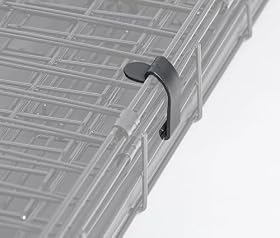
Do not improvise with wire, zip ties, chains, or hardware that could create sharp edges or trap a paw. A temporary external clip may not make a damaged crate safe, especially if the dog is forcefully pushing the door. Follow the crate manufacturer’s approved replacement-part guidance, or replace the crate if the door, frame, or panels are bent.
Product prices and availability are accurate as of the date/time indicated and are subject to change. Any price and availability information displayed on Amazon.com at the time of purchase will apply to the purchase of this product.
Check for gaps and entanglement hazards
A dog may escape through a gap that looks too small at first. Pay particular attention to the bottom corners, door edges, divider edges, and places where the wire meets the frame. The dog’s head should not be able to enter a gap where it could become stuck.
Remove anything that can catch during an escape attempt, including loose fabric, dangling covers, collars, tags, and harnesses. Whether a collar should remain on during crating depends on the dog and the manufacturer’s guidance, but dangling hardware can create an entanglement risk. Never use a restraint, muzzle, or tether inside the crate as a way to prevent escape unless directed by a qualified veterinary or behavior professional.
Product prices and availability are accurate as of the date/time indicated and are subject to change. Any price and availability information displayed on Amazon.com at the time of purchase will apply to the purchase of this product.
Confirm that the crate fits correctly
A crate should allow the dog to stand up, turn around, lie down, and change position normally. An undersized crate can increase stress and make a dog force the door or chew the wire. An oversized crate can give a dog enough room to build momentum against the door or use part of the crate as a launching point.
For a growing puppy, use a correctly secured divider only if the crate design supports it. The divider should not wobble, leave a side opening, or create a climbable step. Adjust it as the puppy grows rather than leaving a large unused section.
Fit alone will not solve separation anxiety or confinement panic, but an incorrect fit can make those problems worse.
Product prices and availability are accurate as of the date/time indicated and are subject to change. Any price and availability information displayed on Amazon.com at the time of purchase will apply to the purchase of this product.
Review the crate setup
Place the crate on a stable, level surface where it cannot slide or tip. Keep it away from stairs, cords, furniture, or walls that could help the dog push, climb, or pull the crate apart. If the crate is in a busy area, move it to a calmer location; if isolation triggers distress, gradual training may work better than simply moving it farther away.
A crate cover can reduce visual stimulation for some dogs, but it can increase heat, block ventilation, or intensify panic for others. Keep ventilation clear and stop using the cover if the dog pulls at it, pants heavily, or becomes more distressed.
Do not add bulky objects to block the door or reduce space. They can become chewable, climbable, or dangerous during an escape attempt.
Consider stress, panic, and reinforcement
Some dogs are not escaping because the crate is defective. They may be responding to separation, noise, confinement, previous bad experiences, or a need to eliminate. Warning signs include frantic scratching, heavy panting, drooling, vocalizing, biting the bars, repeated escape attempts, accidents despite normal house training, or injuries to the mouth and paws.
If these signs appear, stop treating the problem as a hardware challenge. Use shorter, calm crate sessions while you are nearby, reward relaxed behavior, and build duration gradually. Never punish the dog after an escape; punishment can increase fear and make the crate less safe.
A veterinarian can help rule out pain or medical issues. A qualified force-free trainer or veterinary behavior professional is appropriate when the dog shows panic, self-injury, or severe separation-related behavior. A different crate style may reduce opportunities for escape, but it will not replace behavior support when the dog is in distress.
When a different crate is the safer choice
Replace the wire crate when the frame is bent, the door no longer aligns, the latch cannot reliably engage, or the dog has learned to create dangerous openings. Choose a crate that is appropriately sized, has secure doors and intact panels, and is compatible with the dog’s strength and escape behavior.
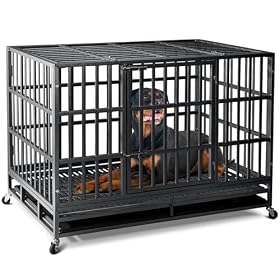
A metal or molded-plastic crate may be worth considering when the dog repeatedly bends wire or catches teeth and paws in the panels. However, a more restrictive crate is not automatically safer for a panicking dog. Introduce any new crate gradually and supervise the first sessions.
If the dog is calm but the crate’s hardware has failed, an approved replacement door, latch, tray, or divider may be reasonable. If the dog is injuring itself or escaping through the structure, replace the unit rather than continuing to patch it.
A safe troubleshooting order
Stop unsupervised crating until the escape route is understood.
Check the latch, hinges, door alignment, and wire for damage.
Inspect gaps, dividers, bedding, collars, tags, and covers for entanglement risks.
Confirm the crate is correctly sized and the divider is secure.
Move the crate to a stable, suitable location and remove climbable or hazardous items.
Watch for panic, separation distress, pain, or a need to eliminate.
Replace damaged hardware or the entire crate when it cannot be made reliably secure.
Get veterinary or qualified behavior help if the dog is injuring itself or cannot remain calm.
A stronger crate can prevent a physical breakout, but the safest solution combines sound equipment with a setup and training plan that does not force a distressed dog to panic inside it.
FAQ
Why does my dog keep escaping the wire crate?
Common causes include a faulty or incompletely engaged latch, bent wire, unsafe gaps, incorrect crate size, an unstable setup, boredom, or confinement and separation distress. Watch a supervised session if possible so you can identify the actual escape route.
How can I stop my dog from opening the crate door?
First confirm that the latch is fully engaged and the door and frame are aligned. Inspect for bending or looseness, and use only manufacturer-approved replacement hardware. Do not rely on makeshift ties or restraints if the door or frame is damaged.
Should I use a crate cover to stop a dog from escaping?
A cover may reduce visual stimulation for some dogs, but it can worsen panic or create heat and ventilation problems. Stop using it if the dog pulls at it, pants heavily, or becomes more distressed, and keep all ventilation openings clear.
Is a wire crate unsafe for a dog that keeps breaking out?
A wire crate is unsafe when it is bent, has dangerous gaps, cannot hold its door securely, or causes repeated entanglement or injury. A different crate style may help with physical breakouts, but panic or separation anxiety still needs gradual training and possibly professional guidance.