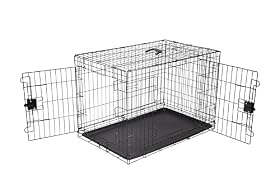
A double-latch dog crate door can add security, but it is not automatically better for every dog. Here is how to choose between double and single latches based on escape behavior, crate style, setup, and daily convenience.
A double-latch dog crate door is usually the better choice for a dog that pushes, paws, noses, or chews at the door. A single-latch door is often simpler and perfectly adequate for a calm dog that stays in the crate reliably. The latch count matters, but the door frame, hinge design, crate construction, and correct sizing matter too.
What the latch actually does
A crate latch keeps the door closed; it does not make the entire crate escape-proof. A dog may defeat a door by manipulating the latch, flexing the door, widening a gap, or pushing against a poorly aligned frame.
Double-latch doors usually secure the door at two points instead of one. That can reduce door movement and make it harder for a determined dog to work one latch loose. Single-latch doors use one closing point and are generally quicker to operate.
Neither style should be treated as a substitute for supervision, proper crate training, or a crate that is appropriately sized and in good condition.
Double-latch doors: strengths and drawbacks
Why choose a double latch?
A double latch is worth considering when:
Your dog has already opened a single-latch crate.
Your dog paws, noses, or presses repeatedly against the door.
The crate will be used during travel or in a busy area where an accidental opening would be a serious problem.
You want less door movement when the dog shifts around inside.
The crate has two doors and you want the primary door secured at more than one point.
Two closing points can provide useful extra resistance, especially when the latches are positioned apart rather than next to each other. The exact benefit depends on the crate’s design, so inspect how firmly the door sits in the frame when closed.
What are the disadvantages?
Double-latch doors take slightly longer to open and close because both latches must be operated. That can be inconvenient when you need to release the dog quickly or frequently.
They also create more parts that can become misaligned, bent, dirty, or difficult to operate. If one latch is engaged but the other is not, the door may appear closed without being fully secured. Always check both closing points before leaving the dog unattended.
A double latch is not automatically stronger. A lightweight door with flexible wire, weak hinges, or large gaps may still be a poor choice for an escape-prone dog.
Product prices and availability are accurate as of the date/time indicated and are subject to change. Any price and availability information displayed on Amazon.com at the time of purchase will apply to the purchase of this product.
Single-latch doors: strengths and drawbacks
Why choose a single latch?
A single latch can be the practical choice when:
Your dog is calm and crate-trained.
The crate is used at home under normal supervision.
You value fast, simple access.
Children, sitters, or multiple family members need to operate the door.
The crate door closes squarely and does not move excessively when latched.
Fewer moving parts can also mean fewer opportunities for a latch to stick or require adjustment. For many dogs, a properly fitted single-latch crate provides sufficient security.
When is a single latch a poor fit?
Be cautious with a single-latch crate if your dog has a history of escaping, bending wire, forcing doors, or becoming highly distressed when confined. A dog that repeatedly attacks the door may eventually damage the latch or the door frame, even if the latch initially feels secure.
If the dog is trying to escape because of separation anxiety, fear, pain, or inadequate exercise, upgrading the latch alone will not solve the underlying problem. Discuss serious escape behavior with a veterinarian or qualified behavior professional, and avoid leaving the dog in a crate it may injure itself trying to escape.
Product prices and availability are accurate as of the date/time indicated and are subject to change. Any price and availability information displayed on Amazon.com at the time of purchase will apply to the purchase of this product.
Double latch versus single latch: which should you buy?
Choose a double latch when security is the priority
A double-latch crate is usually the more sensible starting point for a strong, persistent, or escape-prone dog. It can also be useful when the crate will be transported, placed near an exterior door, or used in situations where an unexpected release could create a safety risk.
Look beyond the latch count. Check that the door closes without flexing, the hinges are secure, the openings are not large enough for the dog to get its jaw or paw caught, and the crate is large enough for the dog to stand, turn around, and lie down comfortably.
Choose a single latch when simplicity is the priority
A single latch is often enough for a calm, properly trained dog. It may be preferable for daily use when the door is opened often and several people need to operate it quickly.
Do not choose a single-latch crate solely because it is easier to open if the dog has already demonstrated that it can defeat that style. Convenience matters, but preventing injury and escape matters more.
Other crate features that matter more than latch count
Correct crate size
The dog should be able to stand up, turn around, lie down, and change position without being cramped. An oversized crate may allow a dog to build enough momentum to push against the door, while an undersized crate can cause discomfort and stress.
For a growing puppy, a divider can let you adjust the usable space as the puppy grows. The divider should be secured correctly and should not create an edge the puppy can pull or chew.
Door and frame construction
Look for a door that sits evenly in its frame when closed. Avoid a crate with a visibly bent door, loose hinge, sharp wire, or latch that only catches when the door is lifted or pushed into position.
A double latch cannot compensate for a weak frame. If the door bows noticeably when the dog pushes on it, consider a stronger crate style rather than relying on an extra closing point.
Crate location and use
A crate in a quiet indoor area may face less pressure than one placed near visitors, other pets, or an exterior exit. For travel, follow the crate and vehicle manufacturer’s instructions and secure the crate as directed. A household wire crate is not automatically suitable for every vehicle or transport situation.
Easy inspection and cleaning
The latch should be easy to see and operate. Hair, dirt, or bedding can interfere with closing. A removable tray can make cleanup easier, but the tray should fit securely and should not create a surface the dog can use to reach or manipulate the door hardware.
How to check a crate door before use
Close the door exactly as the manufacturer directs.
Confirm every latch is fully engaged, not merely resting against the frame.
Push the door gently from several points and look for excessive movement.
Inspect the hinges, frame, and wire for bends, sharp edges, or loose connections.
Make sure bedding, a divider, or the removable tray cannot interfere with the door.
Repeat the check after cleaning, moving, or folding the crate.
Do not modify the latch with wire, zip ties, clips, or improvised hardware unless the manufacturer specifically approves that accessory. Added parts can create sharp edges or snagging hazards.
Bottom line
Choose a double-latch dog crate door for extra resistance when your dog is persistent, strong, or has escaped before. Choose a single-latch door for a calm, crate-trained dog when quick, uncomplicated access is more important. In either case, prioritize a square-fitting door, sturdy frame, safe gaps, correct crate size, and a dog that is comfortable being confined.
FAQ
Are double-latch dog crates safer than single-latch crates?
They can provide extra resistance against a dog that paws or pushes at the door, but they are not automatically safer. Door construction, hinges, frame strength, crate size, and correct use also matter.
Can a single-latch crate be secure enough?
Yes. A properly fitted single-latch crate is often adequate for a calm, crate-trained dog that does not try to manipulate the door.
Should I buy a double-latch crate for an escape artist?
It is a reasonable feature to look for, but examine the entire crate rather than the latch count alone. A determined dog may defeat a flexible door or weak frame even when it has two latches.
Can I add a second latch to a dog crate?
Avoid improvised modifications unless the crate manufacturer provides an approved replacement or accessory. Added hardware can create sharp edges, pinch points, or gaps that may injure the dog.